


Unplucked: Reflecting on Fokofpolisekar’s Swanesan
For 23 years, Fokofpolisiekar has occupied a rare space in South African music. Twenty years after the release of their album, Swanesang, the band is still selling out shows and now extending beyond South Africa to Australia and New Zealand. That kind of longevity, especially in punk and rock, is exceptional. Their impact on local rock feels comparable to the cultural disruption of the Sex Pistols in England: confrontational, catalytic, and generational. They didn’t just make music, they shifted the shape of alternative Afrikaans identity.
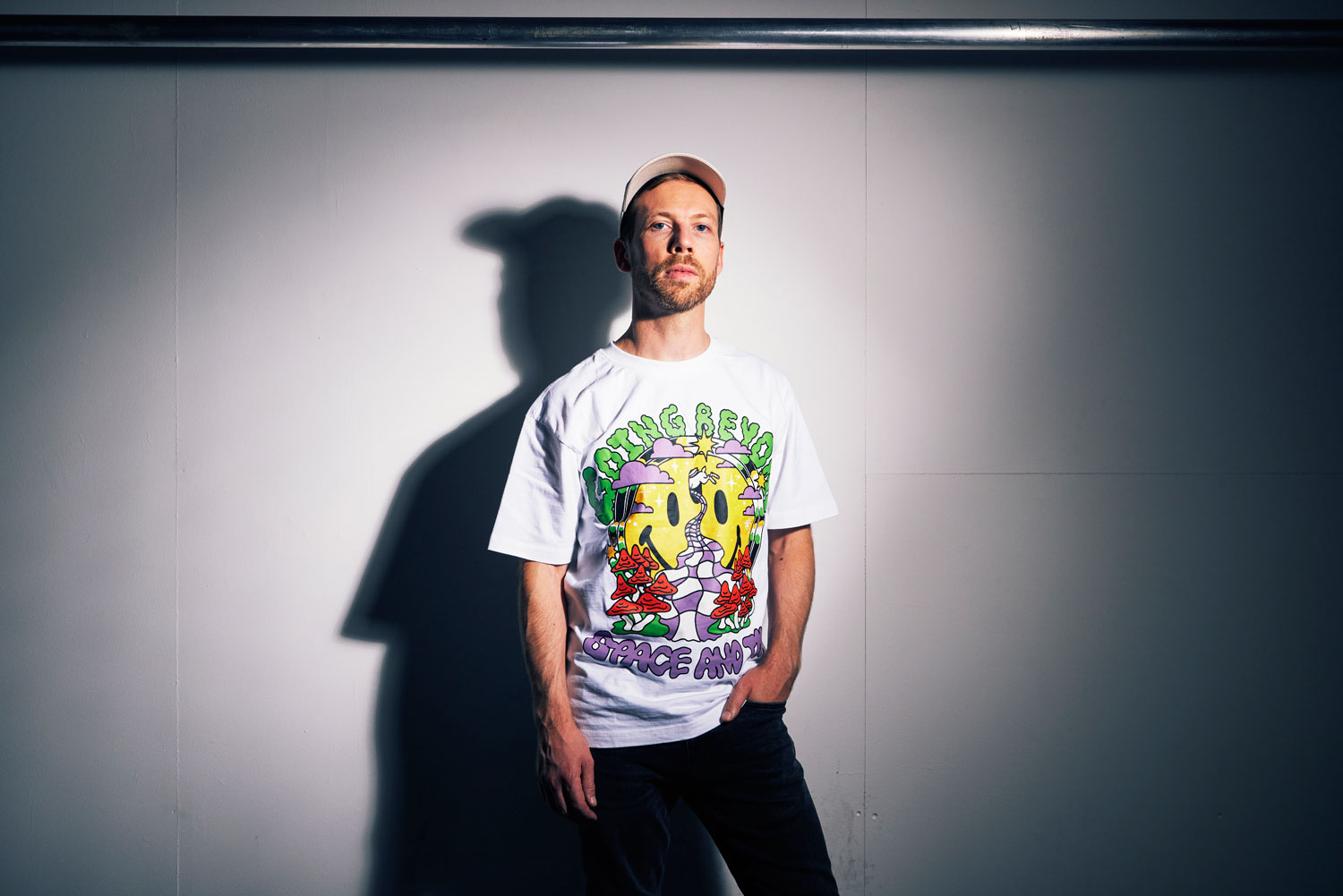
Backseat Mafia had the opportunity to sit down with Hunter Kennedy as he reflects about his time with the band.
Swanesang at 20
Twenty years on, when you hear Swanesang, do you hear who you were, or who you were becoming?
When I listen to Swanesang, I hear depression, anxiety, and someone trying to figure out what to do. We’ve always tried to approach the albums as diary entries, almost documentary, so it’s definitely who we were. Possibly in a transitional stage, but the process of becoming has been ongoing.
When you perform those songs now, do they feel like memories, or do they still carry the same urgency they once did?
I was surprised how much I liked performing them again. They feel like memories, yeh. Some prophetic, some nostalgic. I see some younger people still relating to the unrequited love themes. So, in a way, those might carry the same urgency. I don’t feel the same as I did at 24, thank god, so for me they are nostalgic. A 24-year-old might find comfort in knowing someone else felt as f*cked up as they do.
Why do you think audiences are still showing up and screaming every word back?
I think Wynand does an excellent job marketing the tours, which helps. I’ve heard from a few people that they feel spiritually fulfilled after a show. Like, they remember who they wanted to be. We play these songs all the time, but many people haven’t seen us live since they were in their 20s.
It is heartening to see people bring their kids. That against-the-stream mentality lives on. I think there are myriad reasons, but mainly people getting a chance to travel back in time for a few seconds, or young people who still relate to the outsider state of mind. Doesn’t seem to be a lot of that floating around. It’s become quite a hallowed albeit raucous and energetic, experience.

Identity, Language & Belonging
When you started, did you realise you were shaping something bigger than just a band, almost a cultural shift within Afrikaans music?
I am still unsure whether we can claim that we shaped it. I think it was happening, and we were unwittingly set up to catch that wave. So, I don’t think we realised, but we hoped and in hindsight probably knew deep down that we had to do it. You know, we felt compelled. Our environment was f*cked. We were emotionally f*ked, and we just kept pushing.
I am constantly reminded of the fact that I’m not an Afrikaner. I’m an
Afrikaans-speaking Cosmic Stoic Pantheist into Anime, Gangster Rap, Death Metal, and
Secular Humanism.
Looking back now, how do you understand your role in post-apartheid Afrikaans identity?
I think we’re still figuring it out, but for me, we just gave belonging to people who didn’t want to turn their back on the language, but also didn’t identify with the stereotypical definition of ‘Afrikaner’. I think we’re dealing with a global phenomenon of cultural disintegration; we just focus on a microcosm.
How has your relationship with Afrikaans shifted over the years, as a language, an identity, and a space of expression?
It keeps evolving. I am constantly reminded of the fact that I’m not an Afrikaner. I’m an
Afrikaans-speaking Cosmic Stoic Pantheist into Anime, Gangster Rap, Death Metal, and
Secular Humanism. I am part of a non-localised, non-formal tribe. According to me, we live in a
Post-Afrikaner era. People always refer to Afrikanerdom nostalgically, so whether they realise it
or not, it’s over. And as I said before, it’s a global phenomenon where semantics have broken
down.
Religion and faith were major themes in your early music, often questioning or confronting the church. Looking back now, how do you feel about those songs and the messages you were putting out?
I am happy we challenged an archaic institution of thought control. I don’t argue with people about that sh*t anymore. If you believe it, it’s true for you. I don’t know if I even think objective reality is a thing, so you know… Whatever. I still find Mega-churches sad. But, anthropologically, I find people’s beliefs fascinating. I also find that most Christians don’t actually read the Bible. Those institutions are perfect places to hide when you’re guilty of something, so my mistrust still runs deep in sociopaths hiding behind common perceptions of performative “goodness”. I prefer not to be around people who are convinced that they know the truth.

Touring: Chaos & Camaraderie
Over 23 years of touring, there must be moments that have stuck with you. This can be funny, weird, or even sad. Is there a memory that has stayed with you forever?
So many! I remember eating two hands full of psilocybin mushrooms and Snake finding me, naked, in the KKNK Afrikaans Music Festival’s tented camp, staring at the moon. That was life-affirming.
I remember drunk Francois being shoved out of the way and into a ditch like a bug by Marilyn Manson’s bodyguards at Pükkelpop. I remember carrying our gear out in Potchefstroom, and there was a guy in an apartheid South African flag t-shirt and a flicked knife in his hand who asked us if we were Fokofpolisiekar.
We said no, they are still packing up inside.
And rushed to the safety of our hotel.
Many happy memories, even the sad ones, are dear to me. Many, many sunrises. Deep philosophical chats with strangers I’ll never see again. I can go on forever.
I remember eating two hands full of psilocybin mushrooms and Snake finding me, naked, in the KKNK Afrikaans Music Festival’s tented camp, staring at the moon. That was life-affirming.
Was there a show or audience moment that surprised you in a way you’ll never forget?
Mmm… The live shows almost make up the least of my memory, to be honest. It was the camaraderie that was really memorable on a personal level. It’s been a long time. I mean, first show at Woodstock. First, an Oppikoppi show; the following year, a massive one. The EU tour will always stick with me. The people that we still see after all this time coming to shows. Friends we’ve made for life by doing this. There were epic sorts of Rock ’n Roll moments, obviously. I just don’t really bank those in all honesty.
When you look back at touring life, what’s a story you tell each other, one that still makes you laugh or shake your head?
Once again so many and possibly not ones to be repeated here. I mean, one I can think of now, one of our very first shows were in Lambert’s Bay, and it was just a sh*t show. We only played at like 01:00 in the morning. The PA was like a home HiFi system. I passed out with my head on my amp for a few songs.
What does it mean to take deeply Afrikaans music across the world and what can audiences in Australia and New Zealand expect?
We basically play to expats! But you can expect not to understand a word but feel part of something beautiful. A room full of people moved by critical thinking and fashioning a new identity from the ashes of a problematic cultural inheritance.

Albums as Diaries
Lugsteuring felt like the album that defined your tone, raw, confrontational, unmistakably you. By the time you reached Swanesang, something had shifted. How did your trajectory change between those records?
Lugsteuring’s structures were buckwild. We just completely ignored pop-structure. On Monoloog in Stereo (the following EP) we kind of matured as song-writers and I think you can hear it on Swanesang. Swanesang was a tough album actually. We recorded it in two sessions, because Snake broke his arm falling out of the van.
When you look back at your albums, do you see chapters, distinct emotional seasons or does it feel like one long conversation?
It feels like diaries. I can remember exact moments. Personal moments that inspired the lyrics. It’s cool for me. It’s a literal record. A permanent record.
Is there a lyric or song that has aged with you, something that still feels close to your chest?
From that album? I still feel like “Hoe lank? Hoe lank voor ons hier kan wegkom?”. Ek Skyn (Heilig)’s lyrics hit me every now and then, still.
Was there ever a record that challenged or surprised you in ways you didn’t expect?
Every record has its unique challenges. I try not to expect too much, but I was surprised at Komma’s success as well as Ek Skyn (Heilig)’s success. We had decided to go on hiatus in 2006 after Swanesang’s release because it felt like nothing was working. And then that song popped off on MK (a local Afrikaans music video channel) and it was, like: “Alright boys, looks like we going back on the road”.

The Present Moment
How has the room changed when you write now compared to when you were twenty, what’s different in the energy?
Almost nothing! Lol. Except for that we’re older. It’s not as 24/7 now as it used to be. We actually have other important —more important things— in our lives than the band going for us. Like our children.
The early music carried a very specific kind of anger. Today, what emotion drives the work now?
Kaizen.
Kaizen is a Japanese concept that, as Hunter explains, “represents a mindset of continuous improvement, rather than large, sudden, or revolutionary changes.” It encourages creatives — or anyone striving for growth — to see success as a step-by-step process, built from intentional, incremental choices. Small improvements, compounded over time, lead to a much larger picture.
Dune Rats. Violent Soho. The mighty AC/DC, of course. The Living End. The Chats. Amyll & The Sniffers, Courtney Barnett. I am a massive Nick Cave fan. Just love the man. Cosmic Psychos.
What gets a song going for you guys? An idea, a melody, a feeling, or something unexpected?
All of the above!
Are there any Australian artists that resonate creatively with you?
Yes! Dune Rats. Violent Soho. The mighty AC/DC, of course. The Living End. The Chats. Amyll & The Sniffers, Courtney Barnett. I am a massive Nick Cave fan. Just love the man. Cosmic Psychos. I mean I am a fan of your films as well. Bad Boy Bubby. Chopper. The Castle is an all-time favourite.
You’ve taken time apart, explored solo projects, and still returned together — what is it that has kept Fokofpolisiekar going for 23 years? In today’s industry: streaming, post-COVID shows, and changing audiences etc.
Stupidity! Desperation. Lol. We tried to break up once and we didn’t succeed, so I guess now we’re just stuck with each other. We actually enjoy doing this, so there’s no reason to quit. It’s fun. That’s what keeps us going, I think. We play for a living. How rad is that?
How do you stay relevant without losing yourselves?
Lost myself long ago, thankfully. We don’t try to stay relevant. But if we are relevant, it is maybe because of the fact that we’re just honestly documenting our lived experience at the time of writing. Maybe people relate to that.
If a 20-year-old punk band asked you how to build something that matters, what would you tell them?
Go for it. Don’t over-think it. Be honest. Try and make mistakes. Perfection sucks. Get in the van and tour. Build a scene. Play house parties. Involve your friends.

When people speak about Fokofpolisiekar in another 20 years, what do you hope they say?
Those f*ckers still going?
Swanesang, translated as “The Swan Song,” carries the deeper meaning of a final song. When making this album in 2006, it certainly felt like a truth for Fokofpolisekar, but twenty years later, these iconoclastic provocateurs of society still resonate. Watching them live today, one might think they’ve softened, but that fiery, youthful spirit still burns within them. They remain a voice—a symbol—of pure rebellion and of finding success on their own terms. Looking back, what drove them was simple: living by their truth and standing up for what they believe.
Unapologetically.
This album, and the unfolding of this tour, may be the unplucking of a feather, a swan song in motion. Yet, seeing the success of these shows and knowing more are still to come, it’s clear their music has no intention of letting the curtains close.
Don’t miss Fokofpolisiekar – they’ll will be touring Australia and NZ in March, go HERE for tickets.



No Comment