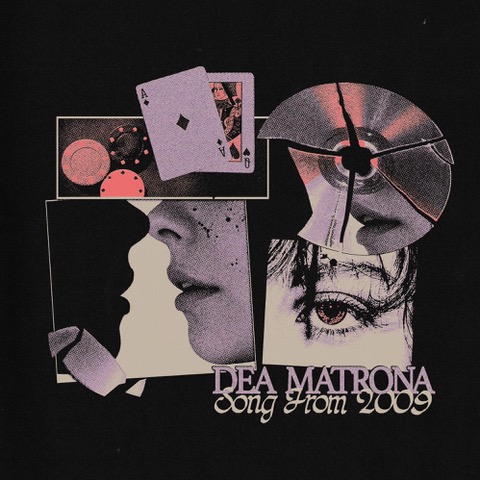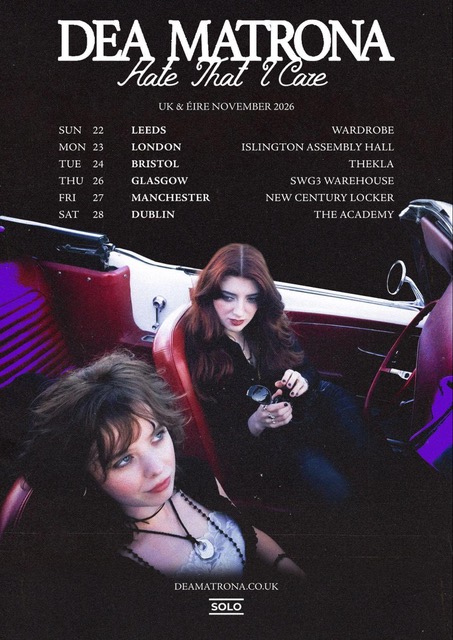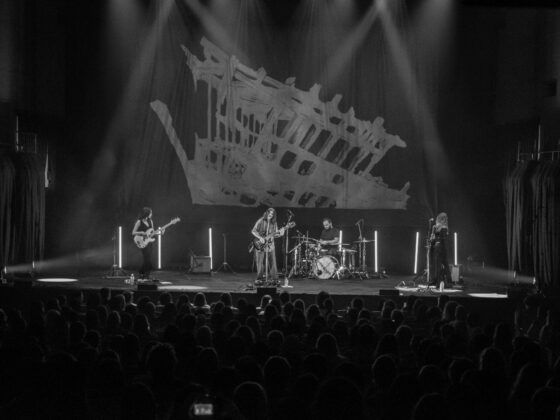
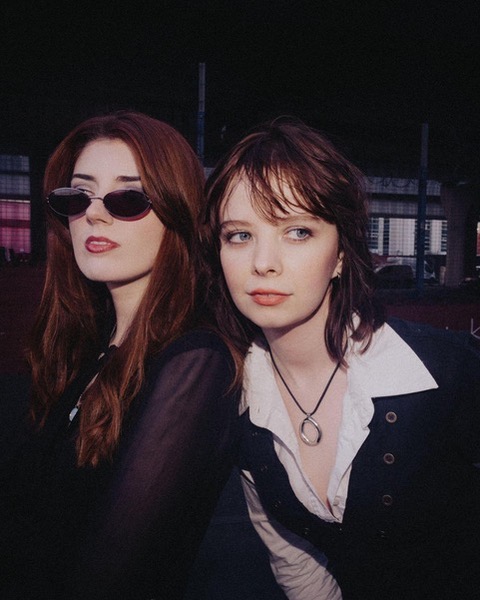
Dea Matrona take to the road again tonight, kicking off the Hate That I Care tour in Leeds. Since I last saw them here, just over 2 years ago, the Belfast duo have crafted their second album, building on their early influences such as Fleetwood Mac and The Cranberries, to produce a work that has a darker, moodier edge.
Ahead of the tour, I caught up with Orláith Forsythe to talk about creativity, identity and staying true to yourself. I wanted to explore the shift in sound, understanding what had moved Orláith and Mollie McGinn in this raw, personal and reflective direction.
“It wasn’t a deliberate thing when we sat down to make the album,” Orláith recalls. “I felt like, as we got older and matured more, we just felt like we had a lot more on our minds and something to say. And you know, the world isn’t always a very nice place! It was really what we were feeling at the time as two women, as two songwriters. I’m really proud of it”
Orláith and Mollie have been playing and writing together since they were teenagers growing up busking on the streets of Belfast. The songwriting process is still rooted in those beginnings, with the pair throwing ideas around between themselves before they began to take shape.
“We sat down together after being on tour for a while and the first song we came up with was Magic Spell. My favourite thing about how this album came about was it really felt like how we started our band, which was very much two teenagers sitting in a room having crazy ideas together and nothing was off the table.” Orláith explains.
“Everything was listened to and welcomed and encouraged between us. And it just felt like such a collaboration between myself and Mollie. And I think that’s my favourite thing about what we do is just that collaborative element of our band. We produce our music and we write it together and it’s always between ourselves and it kind of makes it more special when you put music out into the world because it kind of feels like you’re pushing out like, you know, your own child or something! And you’re like ‘please be nice to them!!’”
As Orláith explained, they’re still very much a DIY band, focusing on writing, performing and producing all their work up to this point. Collaborations aren’t off the table of course, but this has been the way that has produced their success so far, and they’re happy to trust their process at this point.
“I think it comes from always having a vision for our sound and how we want to portray the songs. When we started making music together, it was a very DIY approach because we didn’t have the budget to go and spend loads of money in a studio to make an entire album. And we’ve always wanted to produce our own music from when we were in school together. And it’s just something that we’ve really developed together over the years. And I really like that we’re able to, you know, work on our own sound and everything together as two females, two songwriters.”
That independence, the clarity of their vision is what gives the songs their gravity. This process allows them to explore their own emotions and experiences, driving their music forward to connect so well with their audience. Some songs are more personal than ever before, with the duo exploring their own challenges through their songs.
“I think there’s a lot more honesty on this album about how we feel as individuals that we’ve not necessarily been reluctant to share in the past, but maybe haven’t spoken about or written about.”
This comes through from both songwriters, sharing their emotions more starkly to create moments that they hope will resonate with their audience when they listen to the music.
“For Me, My Own Party was really a song about struggling to kind of fit in with your own identity or in social scenarios and maybe sometimes using alcohol to cope with anxiety in those situations. I feel like it’s been really nice when we play that song that people will come up to us often after the show and say I really relate to My Own Party like they felt like that growing up or sometimes they feel like that still and I think that’s the biggest win as a songwriter when people are able to relate to your lyrics or have their own stories about your song”
Both songwriters are key to the success of the music, and Mollie is no less open in the songs that she contributed to the record. Orláith explains how Mollie created the title track as a way of coping with her own feelings:
“Hate That I Care for Mollie in particular was about how she fell into this like nocturnal routine after we finished touring. And she disconnected from a lot of people. And that song for her was really written about that time for life that she just kind of felt she was masking and you know the relationship with herself and the exhaustion that comes from trying to be honest with people. So I feel like it just touches a lot on our own emotions that we’ve previously put out, which I really like because it’s kind of like a little diary.”
Orláith finds it satisfying when the songs connect with their listeners, but there’s also an element of self-help within the process too. It’s interesting that it’s not something she can always see at the time; there’s almost a delayed therapy session that happens once the work is complete.
“I don’t really realise that I’m processing something at that time and it kind of comes after the song is written and produced and I kind of look back and think, ohhh, I get it now!”
Orláith had already mentioned the formative years of the band growing up in Belfast. There’s still a clear sense of this Northern Irish identity that the band fiercely protect. Standing up for their identity and taking that out on the road, especially in Britain, is something that’s become par for the course for them.
“We sometimes have a lot of work to do to kind of explain where we’re from because we very, very often get told that we’re not Irish. And that’s something we come up against all the time. And we know we’re from the north of Ireland, but people will often say that we’re British and we have to do a lot of work standing up for our own identity.”
This plays out in the music too. Rebel Song is a reflection of their growing up in a country which still remembers The Troubles, and the sectarian divisions in Northern Ireland. It’s also a song that addresses current global disharmony too.
“It was inspired by the struggles of our own country and, you know, the heavy subject of everything that’s happening in Gaza. And that just was really playing in my mind at the time when that song was written.”
We come back to the two teenagers, starting out and having those “crazy ideas in their bedrooms” while they were growing up. 2 albums later, I wondered if this was where they’d always seen themselves and had they become the band they had dreamed of while still at school.
“I didn’t see that happening whenever we were, you know, busking in the streets.” Orláith reflects. “So every opportunity that we have to put our music out there or perform or tour is just really important to us. And it just always reminds me of, you know, that we’re very lucky to be able to do this together for so many years and just being able to continue to make music that people like.”
Is that what keeps them going? I ask what sort of advice would they give to those Belfast buskers, looking back over the last few years?
“ I would always say like, find that reason why you started doing it and keep that with you, like that passion, like you always have to have that inside yourself of that sort of like teenage dream of wanting to play music. I think it’s just really important to have your own vision and stick to it.”
For Dea Matrona, the journey from Belfast buskers to releasing their second album and taking that music on the road is one they clearly don’t take for granted. With Hate That I Care, Orláith and Mollie continue to carve out their own path, trusting their instinct and letting the songwriting guide them. There will be much more to come from the duo, no doubt, but for now, those two teenagers, playing music in their bedrooms are living their dream.