
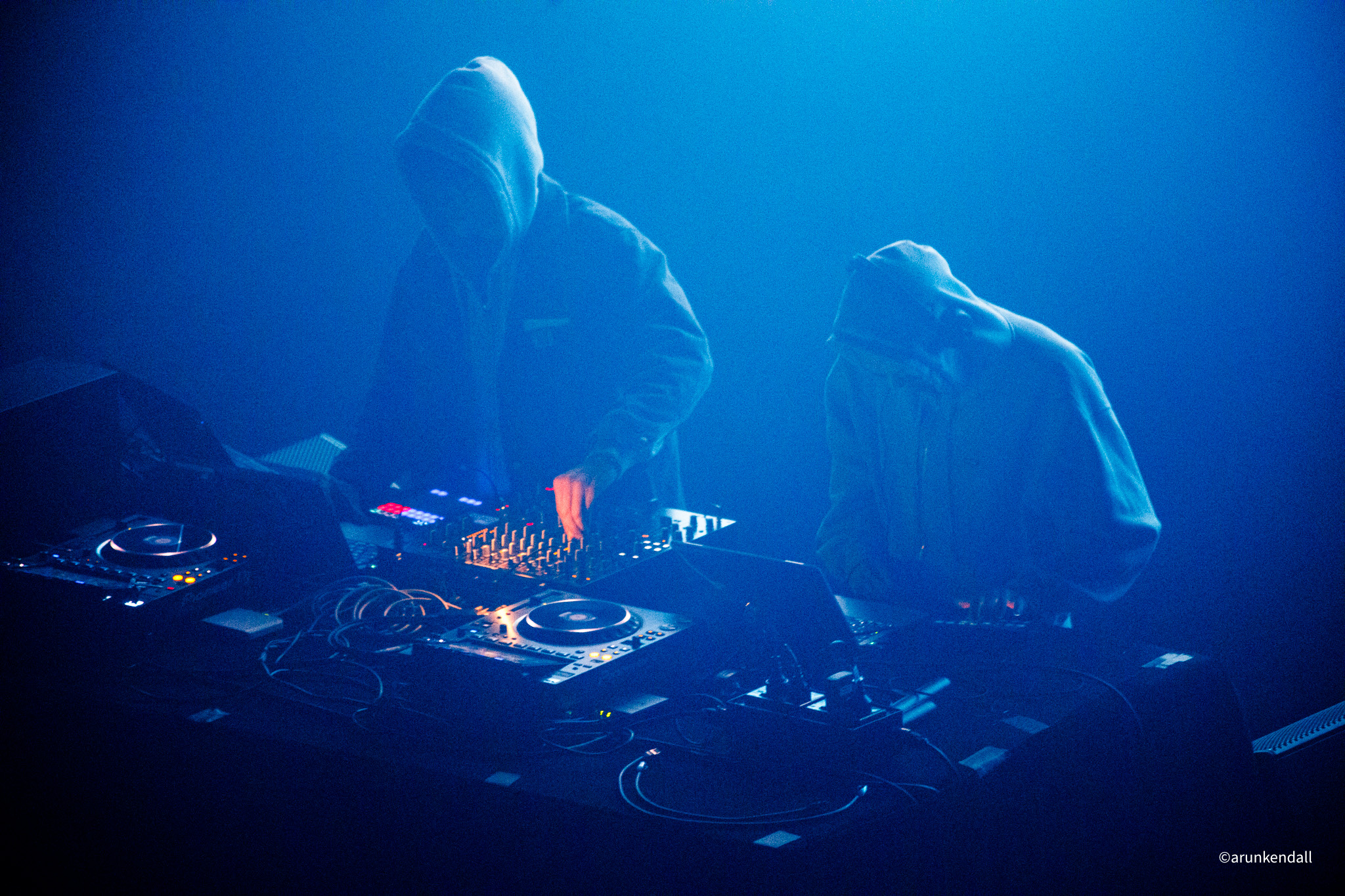
Dark Mofo has long revelled in unsettling certainties, and few performances this year captured that spirit more completely than the mysterious and ethereal Headache. Neither concert nor theatre piece, the project occupied an uncanny space where technology and humanity collided, producing something unexpectedly intimate.
At its centre was not a vocalist but an artificial voice, delivering the poetry of Francis Hornsby Clark with an affect that was simultaneously robotic and strangely compassionate. The absence of conventional human expression became its own emotional language. Every carefully articulated line seemed suspended between machine precision and genuine vulnerability, creating a fascinating tension that held the audience in near silence.
Clark’s writing is extraordinary in this context. Equal parts existential reflection, dry wit and aching self-awareness, the poems explore loneliness, anxiety, connection and the absurdity of contemporary existence. Heard through an AI voice, they acquire another dimension entirely, forcing listeners to question whether empathy resides in the speaker or within themselves.
Behind it all, Vegyn constructed an intricate electronic landscape that functioned as both soundtrack and emotional architecture. His production was understated yet immersive, surrounding the poetry with shimmering textures and fractured rhythms that ebbed and flowed like distant memories.
Particularly effective was his use of familiar musical fragments. Fleeting echoes of The Smiths’ “How Soon Is Now?”, Pet Shop Boys’ “West End Girls”, 10cc’s “I’m Not in Love” and Billy Idol’s “Eyes Without a Face” emerged from the electronic haze before disappearing almost as quickly. They acted like cultural memories surfacing from the subconscious, their emotional resonance deepening Clark’s words without ever slipping into mere nostalgia.
The cumulative effect was remarkable. The sampled melodies carried decades of emotional baggage, while the AI voice stripped away conventional performance, leaving only language and feeling. It became difficult to distinguish where memory ended and technology began.
Visually, the presentation embraced restraint with a large iimersive screen behind the duo. Minimal staging and carefully controlled lighting focused attention entirely on the interplay between text and sound, allowing the audience’s imagination to complete the picture. It was a bold decision that paid dividends, creating one of the festival’s most immersive experiences without relying on spectacle.
What lingered afterwards was not a particular beat or hook but individual lines of poetry, reframed by Vegyn’s evocative sound design and the uncanny warmth of an artificial voice. In lesser hands the concept could have become an intellectual exercise. Instead, it was deeply moving.
Headache challenged assumptions about authorship, performance and emotion, demonstrating that even in an age increasingly mediated by machines, poetry retains the power to cut directly to the heart. It was one of Dark Mofo’s most original and affecting presentations: quietly hypnotic, emotionally rich and impossible to categorise.

Feature Photograph and Gallery: Arun Kendall


