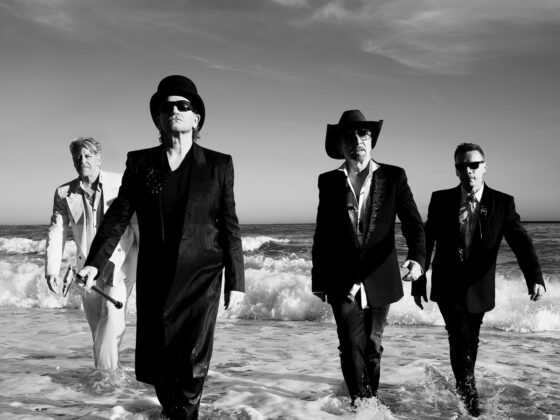
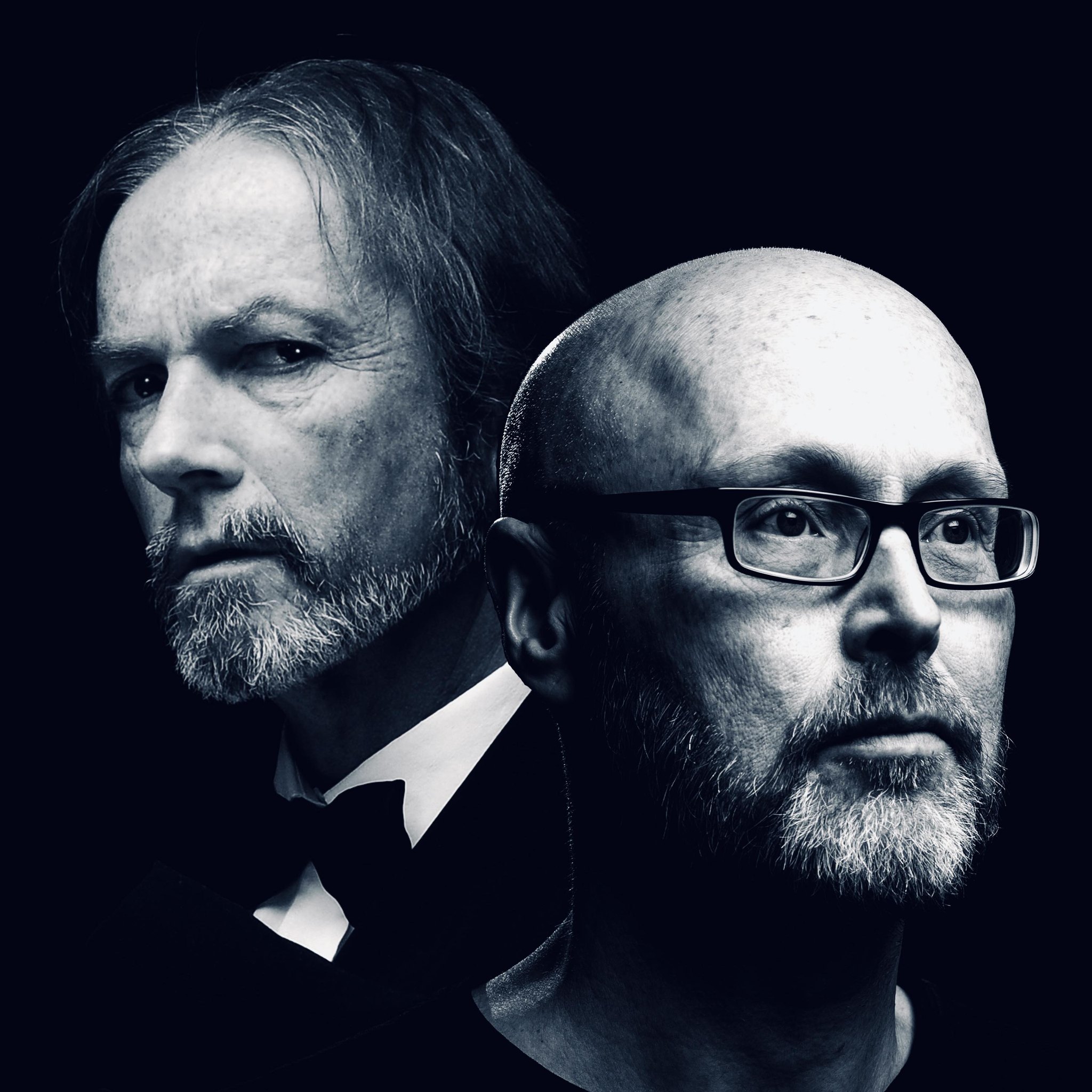
Over the years, writing about Steve Kilbey and Martin Kennedy has become a little like tracing constellations across different skies. Whether reviewing latter-day albums by The Church or previous Kilbey Kennedy collaborations, the thread has always been the same: an almost stubborn commitment to atmosphere, emotion and artistic instinct over convention. Speaking with both Kilbey and Kennedy in past interviews, that creative philosophy has always come through clearly — the sense that songs are not engineered so much as discovered somewhere out in the ether and carefully pulled into focus.
That feeling permeates every second of this new album.
What immediately stands out is just how seamlessly the pair now work together. Earlier Kilbey Kennedy records occasionally felt like fascinating collisions between two distinct musical personalities: Kilbey’s surreal romanticism rubbing against Kennedy’s ambient architecture. Here, those elements feel completely fused. The album unfolds like one continuous emotional landscape, every texture and melodic fragment feeding naturally into the next.
Opening track ‘Reverie’ sets the tone beautifully. Kennedy builds an enormous sense of space almost immediately — soft synth currents drifting beneath chiming guitar figures that feel unmistakably connected to the dreamlike lineage of albums ‘The Hypnogogue’ and ‘Jupiter 13’, but filtered through something far more intimate and meditative. Kilbey’s vocal enters almost conversationally, never overpowering the arrangement but floating inside it. The result feels less like a song beginning than a world slowly materialising around the listener. It’s triumphant and anthemic, pulse quickening with an expanse greater than the universe.
‘Jezebel’ is one of the album’s emotional high points. There’s an extraordinary restraint to the arrangement: muted percussion, spectral keyboard washes and one of Kilbey’s most affecting vocal performances in years. His lyrics here tap into themes he’s explored repeatedly across both his solo work and later Church records — memory, aging, emotional dislocation — but with a clarity that feels especially moving. Rather than obscuring emotion behind abstraction, he allows the melancholy to sit fully exposed. The chorus soars in the ether, spine chilling and beautiful.
‘Dysphoria’ taps into Kennedy’s’s love of prog rock and space age sounds, Kilbey’s vocals passionate and almost trembling with emotion.
There are also moments throughout the record where Kennedy subtly pushes the sonic palette into new territory. Tracks like ‘Dryad’ and ‘Turkey’ are masterclasses in sonic layering, the latter filled with surprising sonic sounds that are alien and mysterious. Tiny ambient textures emerge beneath repeated listens: distant guitar harmonics, almost subliminal electronic pulses, fragments of melody appearing and disappearing at the edge of perception. The headphones experience is extraordinary.
‘You are The One’ is unadulterated and acoustic, like filtered sunshine dappling through the leaves. I swear Kilbey’s vocals have never been better – crackling sometimes, gritty and raw then segueing into delightful beauty as a chorus erupts like a volcano.
One of the album’s greatest strengths is its pacing. Nothing feels rushed. Songs are allowed to breathe, expand and evolve naturally. ‘Disobey’ erupts in a wall of sound before easing over thundering guitars and the usual scaling choruses that are utterly moving.
The single form the album, ‘Serafina’, captures this perfectly, slowly unfolding from fragile simplicity into something quietly transcendent. Kilbey has always possessed a rare ability to make cosmic imagery feel deeply human, and here that balance is pitch-perfect. The song carries the emotional sweep of classic Church material while remaining unmistakably part of the Kilbey Kennedy universe.
‘My Today’ enters with a sombre drone – ethereal and mysterious, Kilbey’s vocals almost channeling Elizabeth Fraser from Cocteau Twins or Jeff Buckley in its grace and complexity. Snickering sounds augment the atmosphere before the track launches like a rocket into the ether: a magnificent wall of sparkles. ‘The Formless Realms’
Martin Kennedy’s production across the album deserves enormous credit. In past conversations, he has spoken about his fascination with mood and sonic immersion, and you can hear that obsession in every detail here.
What continues to fascinate about Kilbey as a writer is the way he approaches language almost impressionistically. In interviews, he has often downplayed literal interpretation, preferring emotional resonance over linear storytelling, and this album may be one of the clearest examples of that philosophy. Lyrics arrive like fragments from dreams — elusive, poetic and emotionally loaded without ever becoming overly self-conscious.
I’ve had the privilege of watching these two work in a studio in Hobart when The Church visited town, and it was so revealing and fascinating to witness – both sparking off each other, Kilbey drawing lyrics on the go from the expansive universe inside his head, Kennedy changing and adapting complex arrangements.
The album never feels nostalgic. Although longtime listeners will recognise echoes of previous Kilbey and Church work, this is not an exercise in revisiting old ground. Instead, it feels like two artists who have reached complete confidence in their shared language. There’s no sense of performance here — no attempt to recreate former glories or chase contemporary trends. The music simply exists on its own terms.
And perhaps that is what makes the album feel so absorbing.
In recent years, I’ve often written about the late-period creative resurgence of The Church — particularly the way those records embraced atmosphere and emotional ambiguity with renewed confidence. This album feels like a natural extension of that evolution, but stripped of even the remaining structural expectations of a traditional rock band format. What remains is pure mood, emotion and intuition.
By the closing moments, the album feels almost less like a collection of songs than a lingering emotional state. It’s immersive, transportive and remarkably cohesive from beginning to end. This is Kilbey and Kennedy at their very best. Where on earth they go to from here, who knows.
Kilbey Kennedy continue to make music for people willing to disappear inside it awhile. Thankfully, they remain utterly uninterested in doing anything else.
‘Things We Did On Earth’ is out on Friday, 15 May and is available via all the usual sites and the link above through Foghorn Records.
On the Thursday night before, you can catch Martin Kennedy playing in All India Radio for the first time ever in his adopted home town, Hobart and you can get tickets here.