
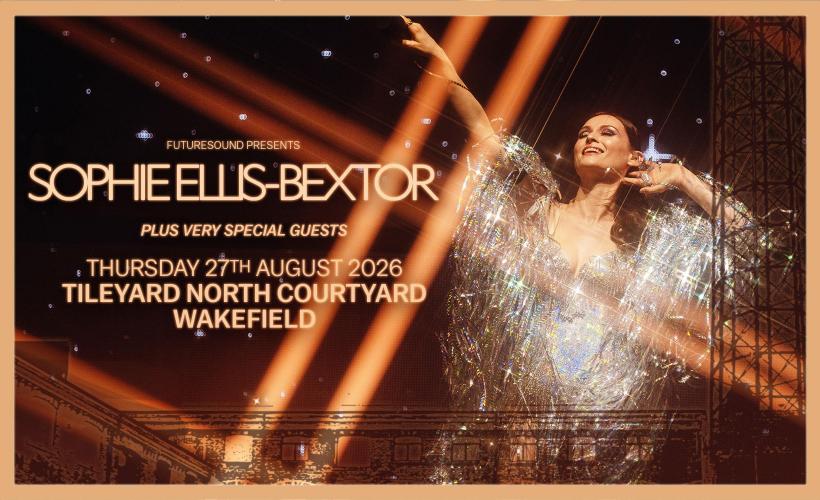
There are some concert nights that begin long before the first note is played. You can feel them gathering in the air as the queues form, the lights around the venue begin to glow and groups of friends arrive with the unmistakable anticipation of people who know they are in for a good evening. By the time the first artist walks onto the stage, the ordinary rhythm of the day has been replaced by something altogether more celebratory. For one summer evening, work, routines and responsibilities are put to one side, replaced by music, conversation, dancing and the shared excitement of being part of a crowd.
That was very much the feeling at Tileyard North in Wakefield as the venue prepared to welcome one of the most colourful live-music line-ups to appear in the city this summer. On Thursday 27 August, the first outdoor concert in Tileyard North’s inaugural live series brought together four artists who, although very different in style and experience, proved to be an exceptionally well-matched combination: Lois, Deco, Scouting for Girls and headline act Sophie Ellis-Bextor.
The setting itself added something to the occasion. There was a sense of discovery about the event, with Tileyard North providing a distinctive backdrop for a large-scale outdoor show while retaining an atmosphere that felt considerably more intimate than the traditional arena experience. As the afternoon moved into evening, the venue gradually filled, the audience stretching out in front of the stage and the mood becoming increasingly expectant. What had initially been a collection of people arriving for a concert slowly became a crowd with a shared purpose: to hear some familiar songs, discover something new and, ultimately, have a very good time.
There was plenty of variety on offer tonight. The bill cleverly bridged generations and musical styles. There was the excitement of seeing emerging performers Lois and Deco take their place on a major outdoor stage, the instantly recognisable indie-pop of Scouting for Girls and, waiting at the top of the bill, the unmistakable disco glamour of Sophie Ellis-Bextor. It was a line-up capable of appealing to an audience who might have discovered these artists at completely different points in their lives.
For some, the evening was about nostalgia. For others, it was about discovering the next generation of pop performers. And for many, the attraction was undoubtedly the chance to see Ellis-Bextor perform the songs that have made her one of Britain’s most enduring dance-pop stars, particularly a certain track that has enjoyed an extraordinary second life in recent years.
What made the evening particularly enjoyable though was the way the concert built progressively rather than attempting to reach its peak immediately. Each act had a role to play in warming up the audience and changing the atmosphere. As daylight began to fade, the mood became more animated; conversations gave way to singing, singing gave way to dancing, and the anticipation surrounding the headline performance became impossible to miss.
By the time the stage lights became the brightest thing in the courtyard, the audience was ready. What followed was an evening that moved effortlessly from fresh young talent to nostalgic indie singalongs before exploding into a full-blown disco celebration. It was energetic without being overwhelming, polished without losing its sense of fun, and above all it captured something that can sometimes be forgotten when talking about live music. A great concert doesn’t necessarily need to be complicated. Sometimes all it needs is a good song, a charismatic performer and a crowd prepared to sing along.
The first challenge of any outdoor concert is getting an audience that is still arriving, finding friends, buying drinks and settling into the surroundings to actually pay attention to the stage. Lois handled that challenge with confidence. Rather than trying to overpower the room, her performance gradually drew people towards the music. There was an appealing directness to her delivery, with a performance style that suggested an artist who is increasingly comfortable commanding a live audience.
There was a freshness to the opening set, too. As the first act on a four-artist bill, Lois had the unenviable job of performing while the daylight was still hanging around and the evening was yet to properly establish its identity. Yet she managed to give the audience a reason to stop talking and start listening. Her set provided a useful reminder of one of the pleasures of a multi-act concert: you get to see artists at very different stages of their careers, and there is something particularly exciting about watching a performer with the potential to become a much bigger name in years to come.
Lois brought energy without making the performance feel forced, and by the end of her set the atmosphere had noticeably shifted. The audience was no longer simply waiting for the bigger names further down the running order. The concert had begun.


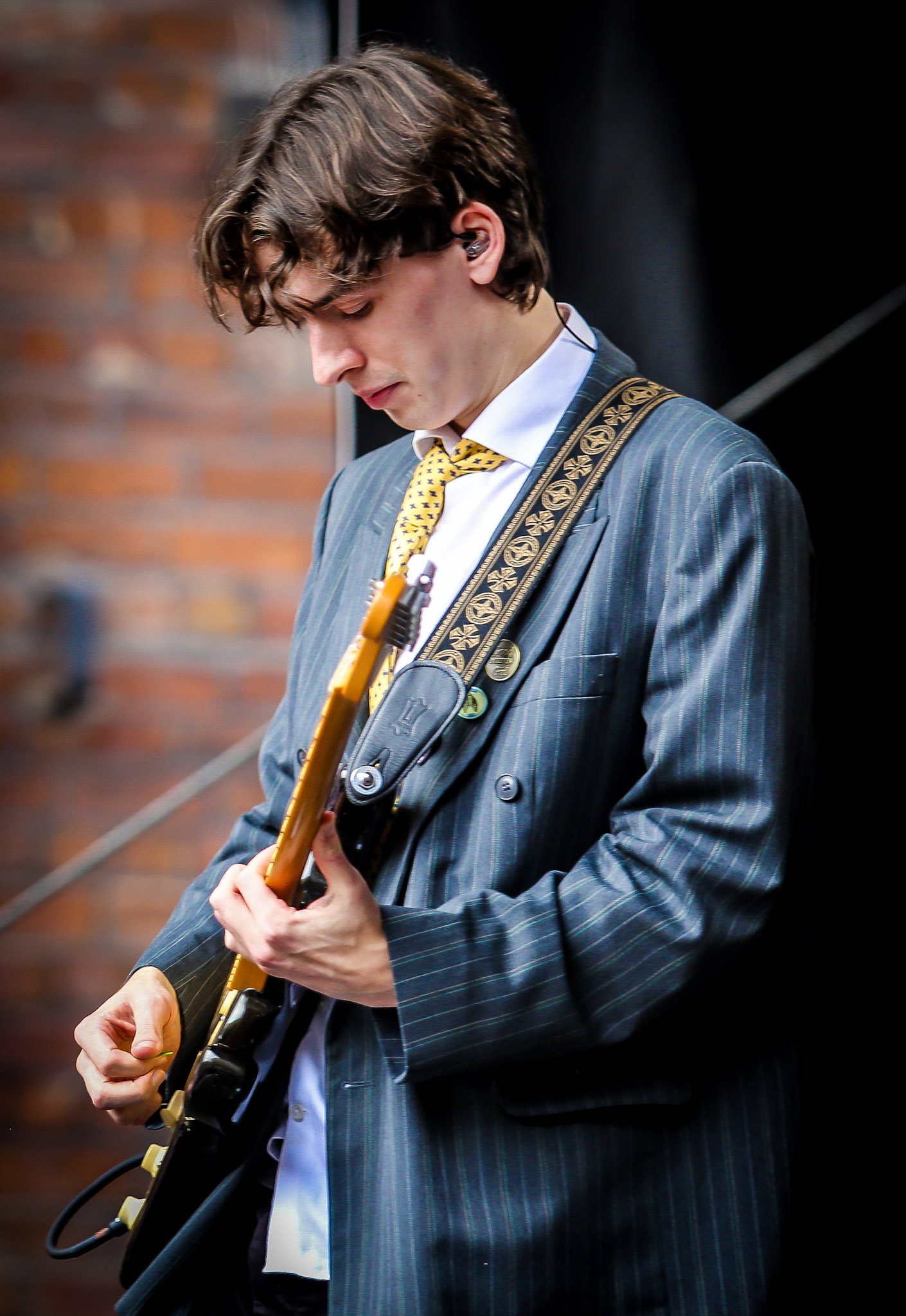
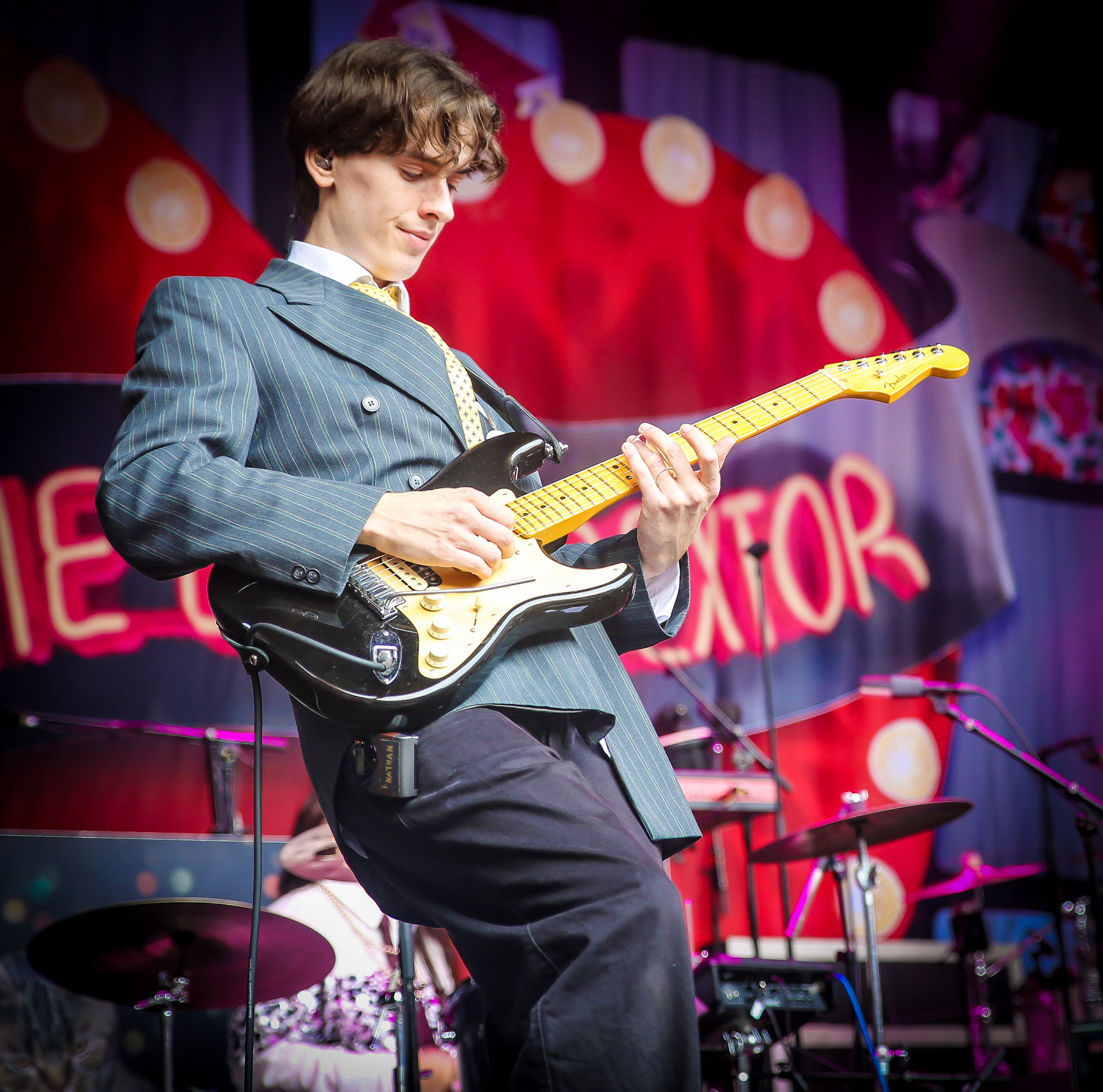


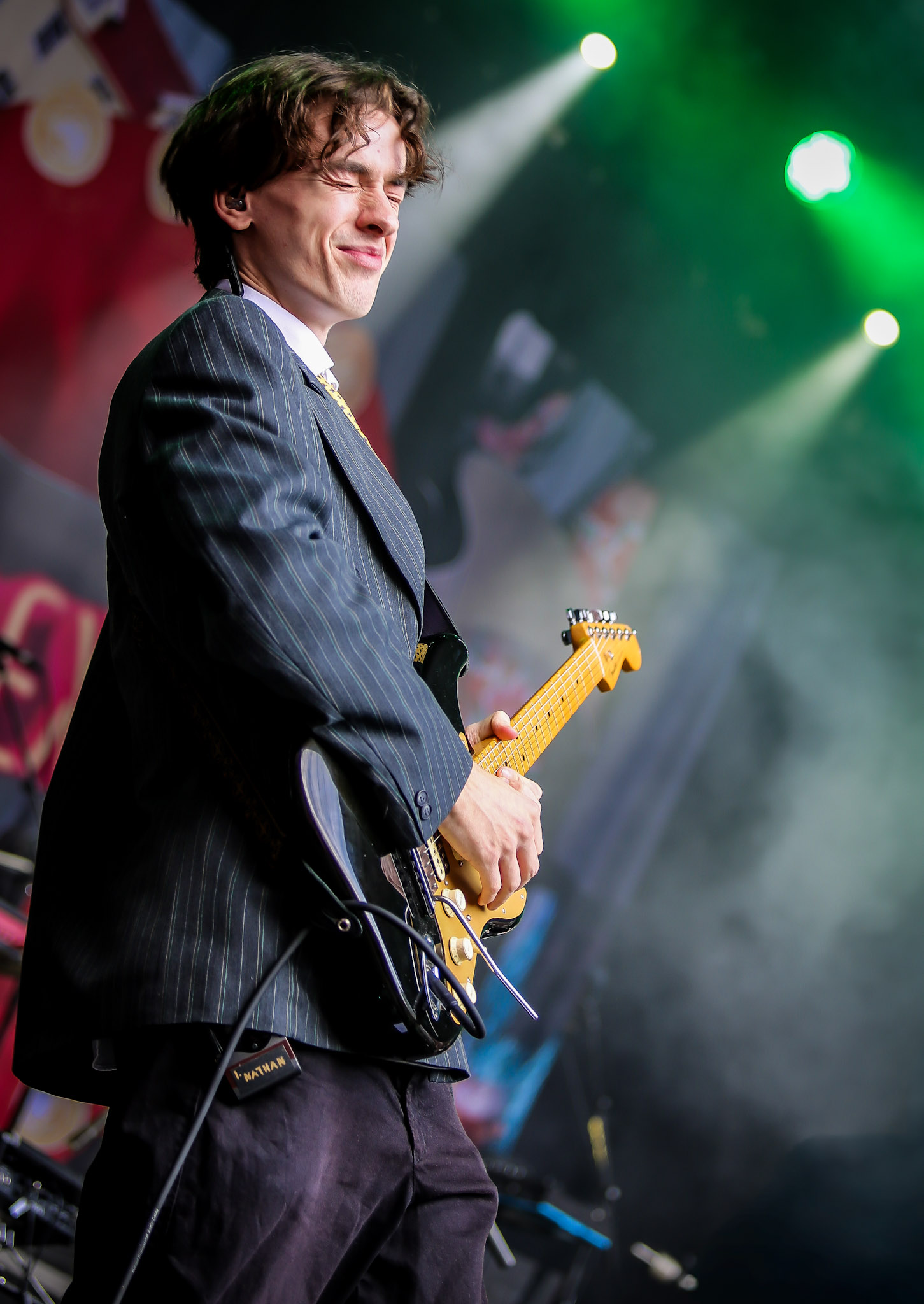

If Lois eased the audience into the evening, Deco pushed the momentum further. There was a noticeably slick feel to Deco’s performance, with a confidence that suited the increasingly lively surroundings. The music had enough immediacy to work in an outdoor setting, where songs need to make an impact quickly and performances have to compete with the inevitable distractions of a summer concert.
Deco looked and sounded like an act enjoying the opportunity. The performance had plenty of movement, personality and pop sensibility, and there was a sense of an artist who understands that a live show isn’t simply about reproducing recorded songs. It is about giving the audience something to remember.
That distinction became increasingly important as the evening progressed. The Tileyard North courtyard was filling up, conversations were becoming louder and anticipation was building. Deco’s job was to keep that anticipation moving in the right direction, and they succeeded. By the end of the set, the audience was properly engaged, and the stage was beginning to feel like the centre of the entire courtyard rather than simply something happening at one end of it.



Then came Scouting for Girls, and suddenly the whole place felt as if it had collectively remembered several different stages of its life. There are few British bands better suited to a summer outdoor concert than Scouting for Girls. Their songs have a quality that encourages participation almost immediately. They are familiar without being predictable, nostalgic without feeling like a tribute act to their own past, and above all they understand the value of a good chorus.
The band arrived to an audience that was now fully warmed up, and their performance had the easy confidence of a group that knows exactly what its audience wants. There was plenty of humour in the delivery, but importantly, the comedy never overwhelmed the music. Scouting for Girls have always had a knack for making their performances feel like a conversation between band and audience, and that was evident here.
Frontman Roy Stride was particularly effective at encouraging the crowd to participate. There was no need for elaborate gimmicks. A raised arm, a shouted instruction or the beginning of a familiar lyric was enough to produce a response, and the crowd responded enthusiastically.
The beauty of a Scouting for Girls performance is that their songs seem to exist somewhere between indie gig, pop concert and giant communal singalong. People who may not have listened to the band for years suddenly know every word. There were moments when the audience seemed almost as loud as the stage.
That was particularly noticeable during the band’s biggest and best-known material. Instead of treating those songs as museum pieces from the late-2000s indie-pop era, Scouting for Girls played them with genuine enthusiasm. The result was infectious.
There was something wonderfully uncomplicated about it. People were smiling. People were singing. People who had arrived looking relatively restrained were now dancing. Couples were arm-in-arm, friends were shouting lyrics at each other, and the space in front of the stage had begun to behave like a proper festival crowd.
Scouting for Girls also demonstrated one of the great strengths of an experienced live band: they know how to pace a set. Songs were allowed to breathe, audience interaction was used to maintain momentum, and the performance steadily built towards the point where the band could leave the stage knowing they had done exactly what a support act should do.
They had made the audience ready for the headliner.






After Scouting for Girls, there was a palpable sense of anticipation. The light was beginning to change. The atmosphere had taken on that particular quality found at outdoor concerts as daylight gives way to evening. The stage lights became more prominent, the crowd edged closer together and conversations increasingly revolved around one question: when is Sophie coming on?
The answer came the moment Sophie Ellis-Bextor appeared, the concert became something different.
There are performers who enter a stage and need to establish their presence. Sophie Ellis-Bextor does not. She walked out with the poise and assurance of someone who has spent decades understanding precisely what she wants a pop performance to look and feel like.
There was glamour, certainly, but there was also something disarmingly warm about her presence. Ellis-Bextor has developed a stage persona that combines the sophistication of a classic disco performer with the friendliness of someone who genuinely appears delighted to be standing in front of an audience.
And Tileyard North proved to be a remarkably good setting for her. The outdoor surroundings allowed the show to develop a festival-like atmosphere, while the relatively intimate scale meant that the performance retained a sense of immediacy. Rather than disappearing into an enormous arena production, Ellis-Bextor remained visibly connected to the audience.
From the outset, the emphasis was on movement. Her music is made for dancing, but she doesn’t simply stand at the centre of the stage and expect the songs to do the work. There is constant physical energy in the performance: movement, gestures, interaction with the crowd and a sense that she is enjoying the music as much as everyone watching.
Her voice, meanwhile, remains one of the most distinctive in British pop. That slightly breathy, cool delivery gives the songs their character, but live it becomes part of a much bigger sound. Against the rhythmic pulse of the disco and electronic arrangements, her vocals retain their elegance while cutting through the music.
It is a combination that has served her remarkably well. Ellis-Bextor’s career has travelled through different musical eras, but she has never sounded particularly trapped by any of them. Instead, her performance demonstrated how naturally her material fits together. Disco, dance-pop and electronic influences flowed into one another, producing a show that felt cohesive rather than retrospective.
And then there was ‘Murder on the Dancefloor’.
There are songs that become hits. There are songs that become an artist’s signature. And then there are songs that somehow escape their original era and become part of the cultural landscape all over again. ‘Murder on the Dancefloor’ is firmly in the third category.
Its extraordinary revival following its appearance in Saltburn introduced the song — and Ellis-Bextor herself — to a new generation. For an artist who originally released the track more than two decades ago, its resurgence has been remarkable.
At Tileyard North, however, there was no sense that the song was being wheeled out simply because everyone expected it. When it arrived, it felt like the natural climax of everything the evening had been building towards.
The response was immediate. The audience erupted, and suddenly the courtyard was exactly what the song promises: a dancefloor. People who had been standing relatively still were moving. Those already dancing went up another gear. The chorus became a mass singalong, and the distinctive rhythm seemed to pull the entire venue together.
For a few minutes, age and musical taste became largely irrelevant. Everyone knew what this song was, and everyone knew what to do with it.
Ellis-Bextor appeared to relish the reaction. Rather than simply delivering the song and moving on, she inhabited the moment, giving the audience room to sing and dance while maintaining the momentum from the stage. It was an excellent example of why a great pop performance is about more than the quality of the song itself. The audience already knew the record. What Ellis-Bextor supplied was the occasion.
The danger of having one enormous signature song is that everything else can become an afterthought. That never really happened here. The strength of Ellis-Bextor’s set was the way she presented Murder on the Dancefloor as one part of a broader musical identity. The disco influence was everywhere, but the show was not simply a greatest-hits exercise.
There was a consistent aesthetic running through the performance: elegant, danceable, knowingly glamorous and completely committed to pop. That commitment is important. Ellis-Bextor has always understood that pop music can be sophisticated without becoming aloof. Her songs can have polished production and club-ready rhythms while remaining accessible enough for a crowd to sing along.
Live, that balance becomes even clearer. The performance was glossy without feeling artificial. It was choreographed and polished without becoming rigid. Most importantly, it was fun. And Ellis-Bextor seemed determined that the audience should have fun too.
Looking back across the whole evening, the four-act line-up worked particularly well because each performer contributed something different. Lois brought the freshness and sense of discovery that comes with an emerging artist. Deco added another layer of contemporary pop energy and helped turn a gathering crowd into a concert audience. Scouting for Girls provided the nostalgia, humour and enormous singalong choruses. Then Sophie Ellis-Bextor took all of that energy and transformed it into a full-scale disco party.
The progression felt almost deliberate. The evening started with people arriving, moved into people listening, then people began singing, and finally people danced.
By the time Ellis-Bextor finished, Tileyard North no longer felt like a venue hosting its first outdoor concert. It felt established.
That may ultimately be one of the most significant aspects of the evening. For Wakefield, having a venue capable of staging a summer outdoor concert with artists of this profile is a welcome addition to the city’s cultural landscape. The setting gave the evening a distinctive character, avoiding the impersonal feel that can sometimes accompany large-scale touring shows.
There was also something appealingly local about the whole thing. This wasn’t a vast stadium spectacle requiring a journey to one of the country’s biggest cities. It was a major pop night happening in Wakefield, with a mixed audience of different ages coming together to enjoy music in a relatively intimate environment.
The combination of Tileyard North’s industrial surroundings, the outdoor setting and the changing light created a visual backdrop that suited the music surprisingly well. As the night developed, the atmosphere became warmer and more celebratory. The venue seemed to grow with the crowd.
Ultimately, this was a concert built around a very simple proposition: give people good songs, charismatic performers and plenty of reasons to dance. It worked.
Lois opened proceedings with promise and energy. Deco continued the build-up with a confident contemporary pop performance. Scouting for Girls delivered a hugely enjoyable set packed with nostalgia, humour and the kind of choruses that turn an audience into a choir.
And Sophie Ellis-Bextor? She delivered exactly what was required from a headline act — and perhaps rather more.
Elegant, energetic and completely at home on stage, she turned the final part of the evening into a celebration of disco, pop and the simple pleasure of being in a crowd with thousands of other people who know the words.
When ‘Murder on the Dancefloor’ arrived, it was the obvious high point, but it worked because the rest of the performance had earned it. The song may have found a spectacular new audience in recent years, but Ellis-Bextor demonstrated that she is far more than the performer of one resurgent hit.
She is an entertainer.
And on a warm August evening in Wakefield, she proved that she knows exactly how to entertain.


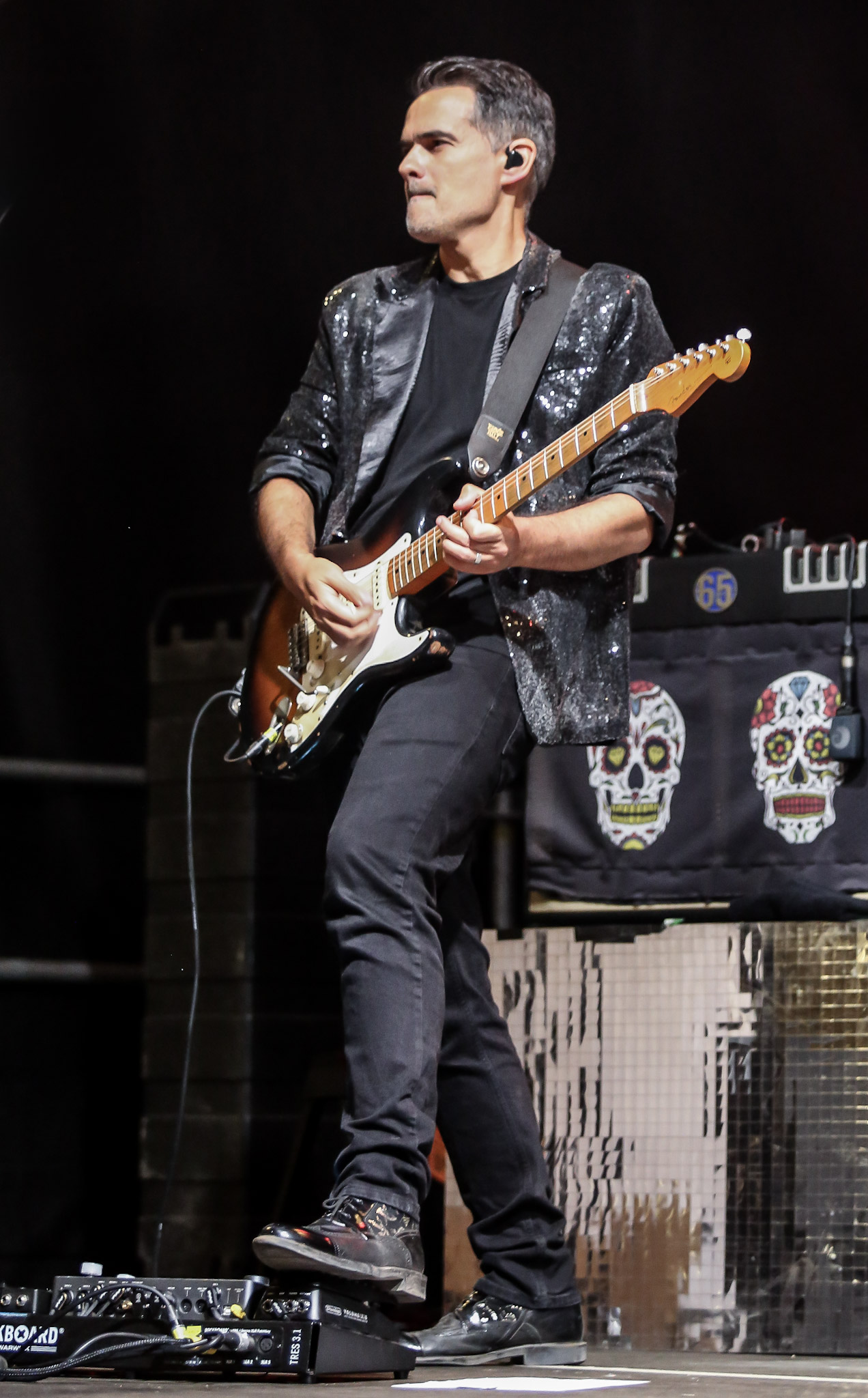






Tileyard North’s first outdoor concert series could hardly have asked for a better opening statement. There was discovery, nostalgia, glamour, dancing and an enormous amount of singing. Most importantly, there were smiles everywhere.
A hugely enjoyable night of live pop — and a very strong debut for Tileyard North’s outdoor concerts.