In Arabic, ‘Nafas’ means breath—and with the Ney, breath is everything. It’s less about control and more about surrender, softening the mind’s urge to interfere and letting the body lead. To find a resonant sound, you have to trust what’s already there—the natural rise and fall of breath. Each inhale and exhale comes like a tide, moving in its own time. All you can do is meet it and ride it. At a certain point, the lines begin to blur—the player, the breath, the sound—until they feel like one and the same.
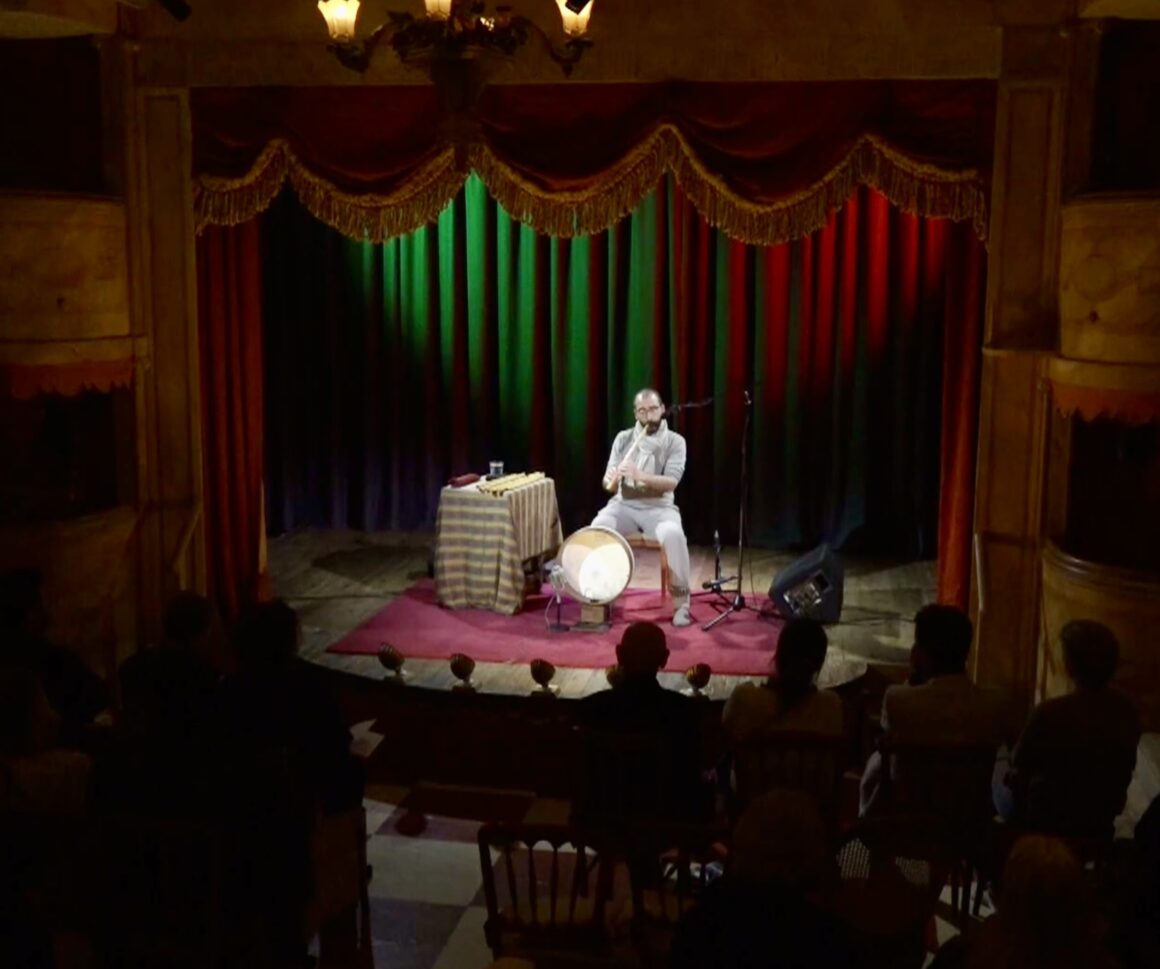
This is what musician Faris Ishaq embodied in full form, in the majestic theatre room of what I feel is one of South London’s best-known secrets, ‘Sands Films Rooms’. Walking into the space, the venue’s long-time managing Director Olivier Stockman was managing this iconic 18th-century film and music venue. There are some places in London that are reminiscent of the grandiosity of a place frozen in time, holding space for true artistry. As he welcomed renowned Palestinian Ney maestro Faris Ishaq to the stage, he encouraged us to be held in the space of the music with the utmost openness and respect.
A Palestinian Nay master, percussionist and composer, Ishaq has carved a distinct voice through one of the world’s oldest instruments—rooted in the traditions of maqam and shepherd playing, yet shaped by contemporary jazz and improvisation. Entirely self-taught before later studying at Berklee College of Music, his work bridges land, memory, and movement through breath.
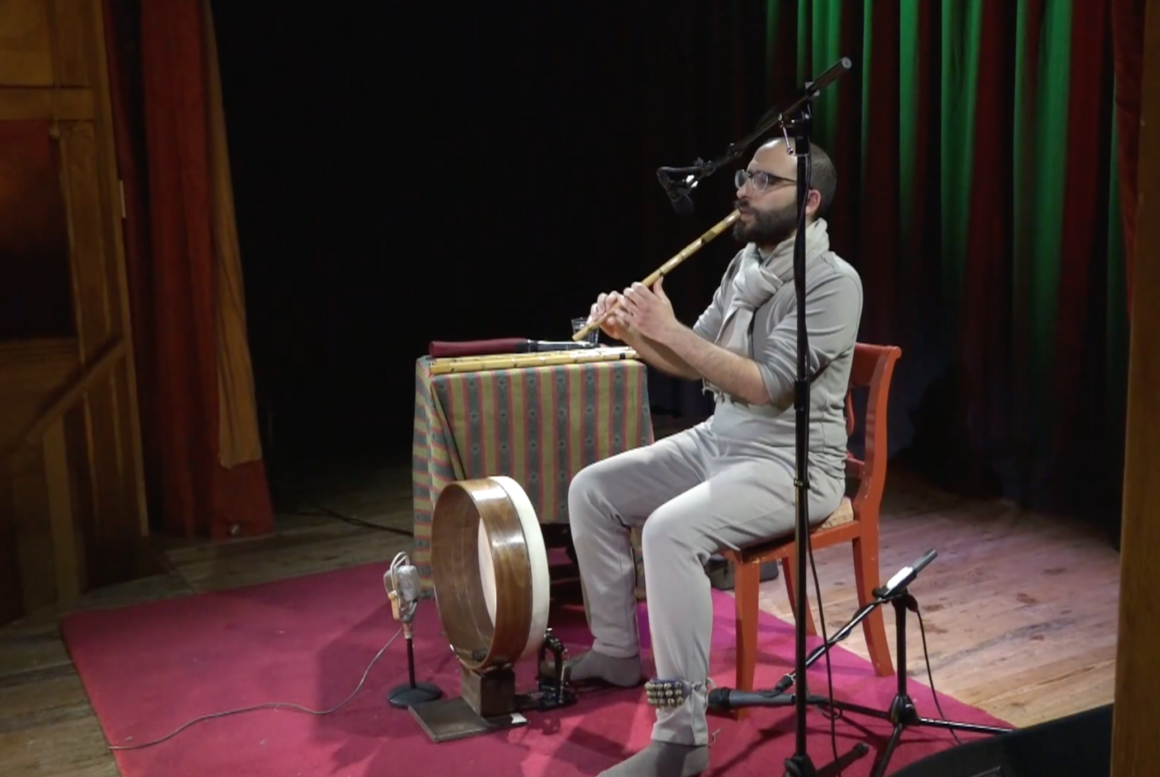
The minute Ishaq graced the stage, surrounded by a beautifully decorated side table with a collective of Neys, a foot bell- tambourine and a frame drum mounted on a wooden block, it was evident that this was to be a concert of pure uninterrupted listening—to what can only be described as a masterclass in acoustic music, with a focus on the breath, and an ultimately embodied method of reinventing one of the oldest carved wooden instruments.
Beginning with two stellar pieces of ‘Ard’ (Earth) and ‘Incense Trail’, Ishaq delivered a technique that seemed purposely simplified to create longer moments of silence in between a sequence of maqam music, woven together with the breath, and ultimately culminating in the most ingenious use of a self-made frame drum attached to a wooden block to enable Ishaq to play his Nay, the drum, and ankle bell all at the same time. It is important to note that the definition of ‘Maqam’ in Arabic is attached to the meaning of one’s journey or purpose in life; this was at the core of Ishaq’s approach, as he would later reiterate that his life quest has been deeply rooted in the search for sound, to ultimately connect to his home of Bethlehem, Palestine.
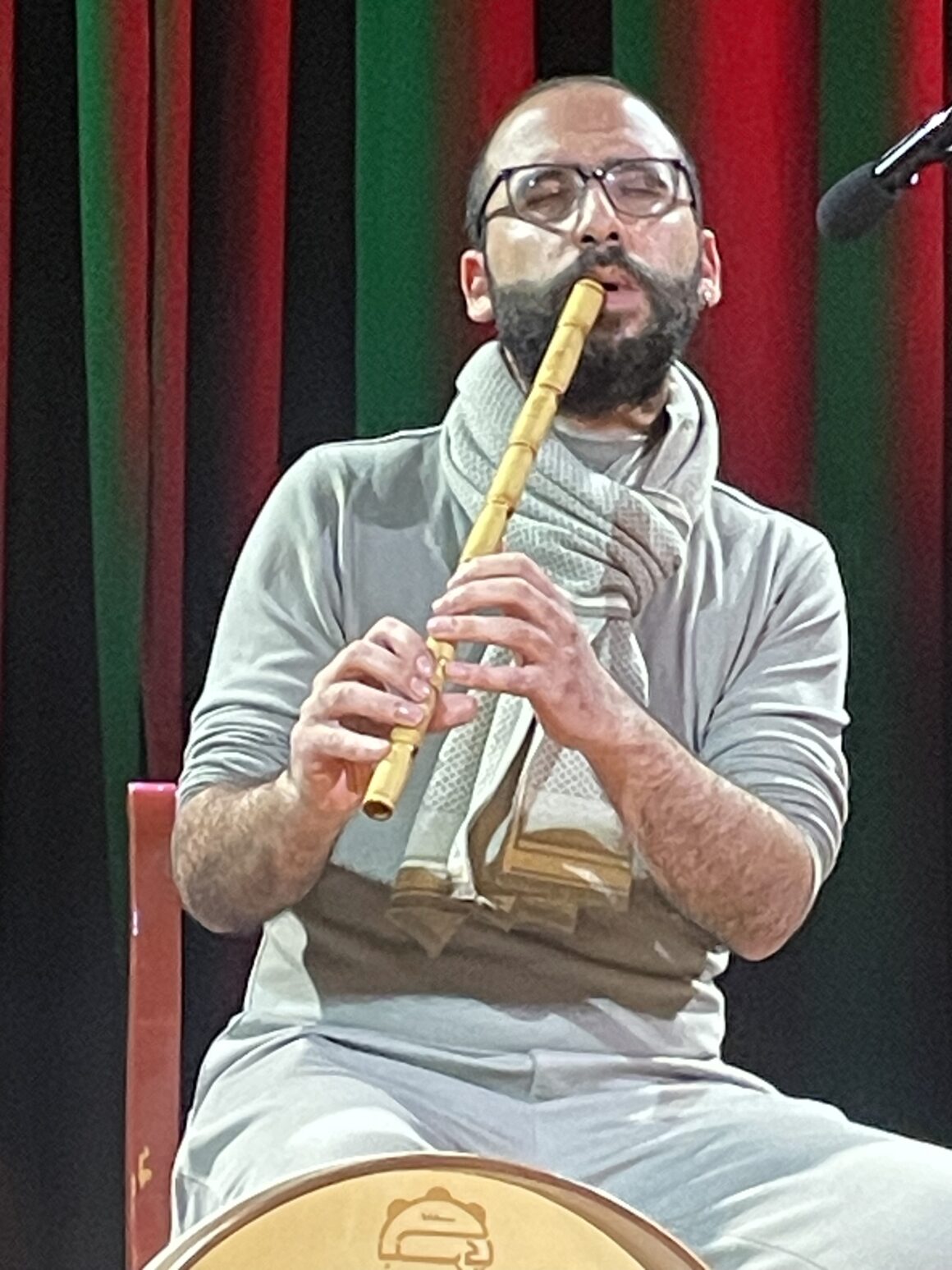
He explained that he was raised in a shepherd’s village of Beit Sahour, or ‘Shepherd’s Field’. The idea that one can be connected to their land, even from a distance, echoed in Ishaq’s melodic and often syncopated sequences. Thus, his choice of range inherent in songs like the more meditative ‘Cane’ and ‘Carved’ took listeners on a journey between land and sea, earth and sky, through higher-pitched bells, to his vocal phonation and frame percussion. It became clear, as he became more engrossed physically and emotionally, that this was a direct conversation between earth and the human self, through the higher manifestation of music so transcendental one can only respond to its call.
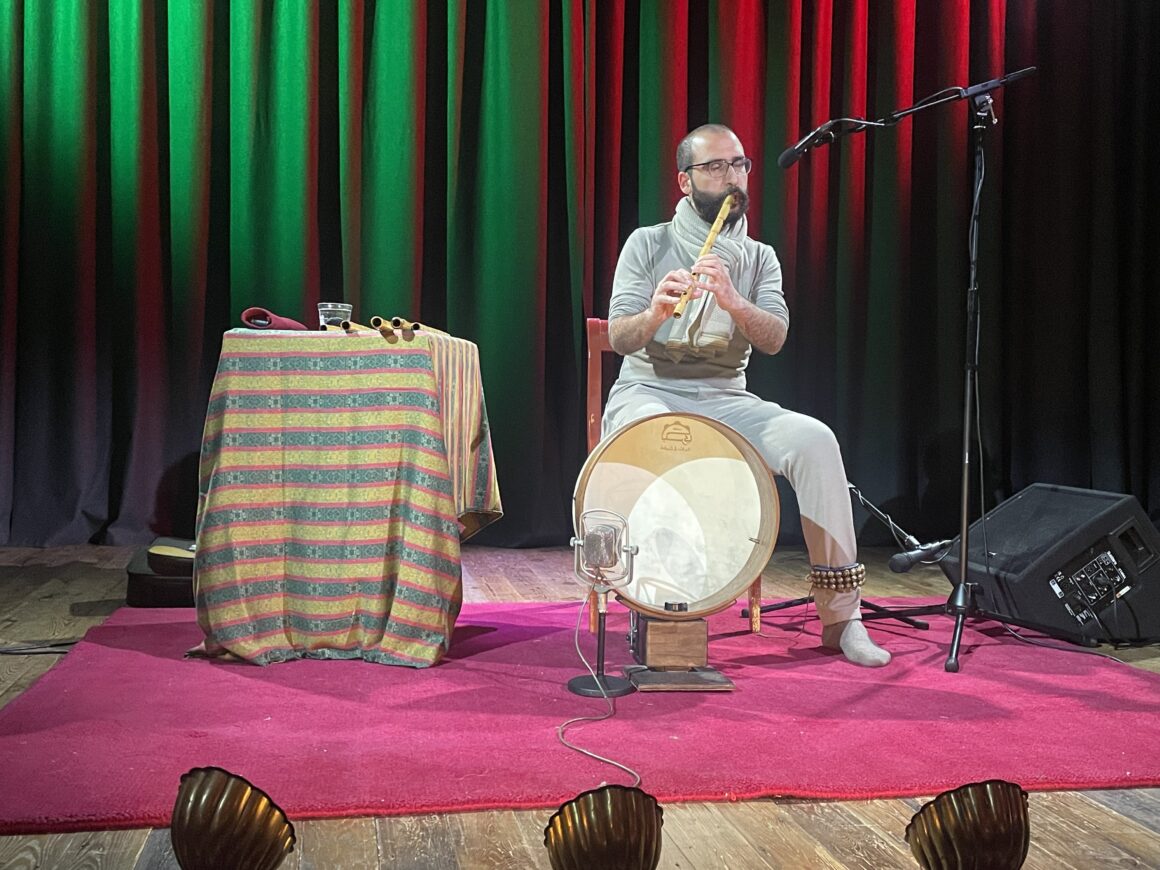
Just like the blues and jazz traditions, of which Ishaq would later divulge he became introduced to whilst a student at the Berklee College of Music, the idea of call and response and improvisation would resonate with his own tradition of maqam, belonging to the Levantine region and particularly his native Palestine. After all, this is what folklore music is and has always been. A particular highlight was when Ishaq extended his multi-instrumentalist mastery to return to the oldest recorded instrument, the human voice. Singing two folkloric songs , one Palestinian and the other Jordanian, the spirited call to celebrate ‘Dabka’, a dance so deeply symbolic of Palestinian heritage, was undeniable. Using the frame drum, inviting the audience to clap whilst he sang, Ishaq would later explain the significance of this tradition of ‘stomping’ the ground as a way of showcasing the dignity of the land. Quite a dignified way of reminding us of the importance of preserving a story we are still living and bearing witness to.
The last two pieces of his set were the very adventurous improvised piece of music, where Ishaq took a step away from his deliberate compositional approach, moving from ‘acoustic illusions’ to lyrical storytelling; it made me wonder if he would ever re-arrange this for an orchestra—it was so richly layered and full of life. Concluding with ‘Moses Snake’, one could catch Ishaq directly maintaining eye contact with the audience, knowing full well that although a quiet, tempered audience, they were very drawn to the overall meditative and captivating presence of his own accord. I urge you to stream his live performance below, courtesy of Sands Films Recording Studio : https://www.sandsfilms.co.uk/music-room-past-streams-watch-now.html.
Find out more about Faris Ishaq’s music and upcoming shows in London – https://www.farisishaq.com
To visit and support performances at Sands Films Rooms visit https://www.sandsfilms.co.uk