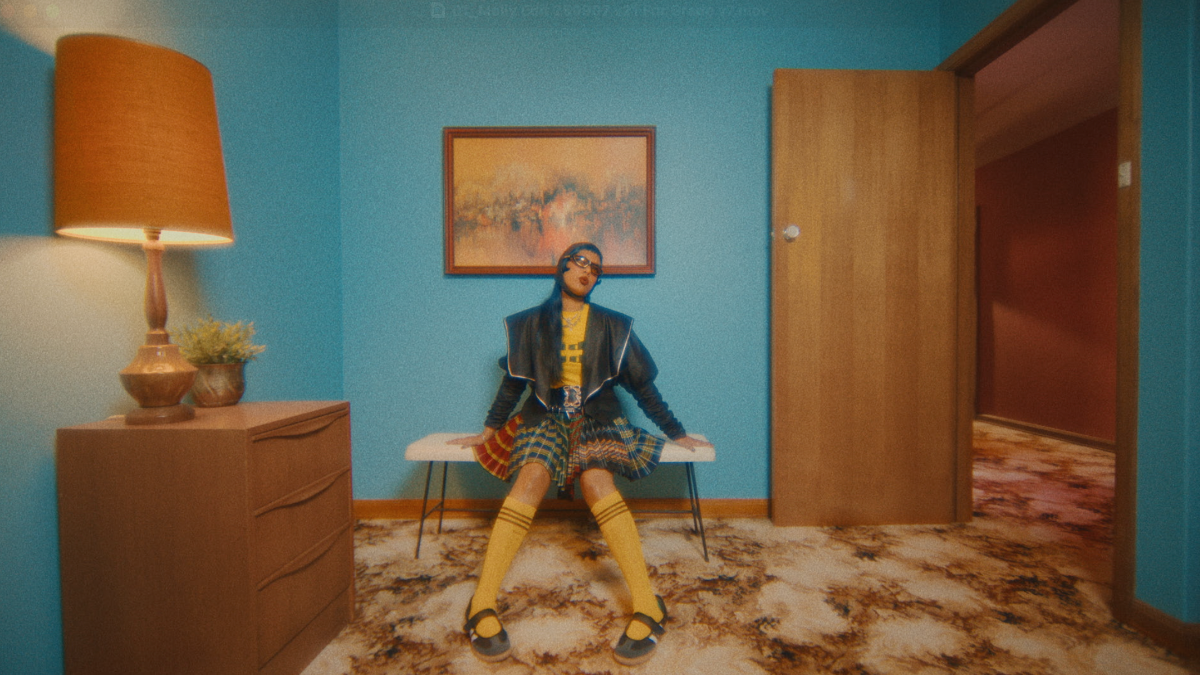
When Ecca Vandal released her self-titled debut in 2017, it felt like somebody had kicked a hole through the polite boundaries of Australian alternative music. Hip-hop, punk, electronica, metal and pop all collided at once inside songs that sounded impatient with genre itself. Then, almost as quickly as she arrived, Vandal seemed to vanish from view.
Rumours of new material slowly taking shape somewhere out of sight. Instead of rushing a follow-up, Vandal disappeared into a strange kind of creative exile alongside fellow musician and partner Richie Buxton, eventually ending up living in his parents’ garage after noise complaints forced them out elsewhere. No internet. No industry noise. Just two musicians pulling songs apart and rebuilding them from scratch.
Nine years later, Looking For People To Unfollow finally arrives sounding like somebody refusing to smooth themselves out for public consumption. And Ecca Vandal has re-entered the fray, appearing at Coachella Valley Music and Arts Festival and also detonating on Jimmy Kimmel Live!
The album moves recklessly between styles, often within the same song. Opening track ‘Airplane Mode’ initially drifts in with soft lounge textures that feel almost suspiciously calm before ‘Eyes Shut’ detonates everything around it. The track lashes out at institutional abuse and religious hypocrisy with a level of fury that immediately resets the emotional temperature of the album. From there, Vandal barely pauses for breath.
‘Sorry!Crash!’ throws punk guitars against hyperactive drumming while still somehow finding room for an oddly melodic chorus. ‘Bleed But Never Die’ is pure repetition-as-hook, its stuttering refrain lodging itself in your head almost immediately, while ‘Cruising to Self Soothe’ turns isolation into something strangely triumphant.
There’s humour buried throughout the record too. ‘‘MOLLY’ arrives with a wiry, needling riff that burrows straight into the track’s nervous energy, Vandal balancing sarcasm, chaos and craving without ever fully separating one from the other. Dance in Debt’ erupts from a patronising spoken introduction (“Girls may seem silly and opinionated”) into thirty seconds of cathartic release, Vandal turning frustration with patriarchal condescension into something chaotic and strangely liberating.
What makes the album compelling is not simply its intensity but how suddenly it changes direction. ‘Okay Not To Be Okay’ and ‘Levitate Part 1 + 2’ pull back from distortion entirely, drifting into groove-heavy introspection that highlights how instinctively Vandal moves between rap, alternative rock and electronic music. ‘Then There’s One’ folds in references to her South Asian heritage through rhythm and melody without turning the moment into empty aesthetic decoration. Even ‘Did A Little More To Forget’ begins like a ghostly 1930s torch song before mutating into fractured rap.
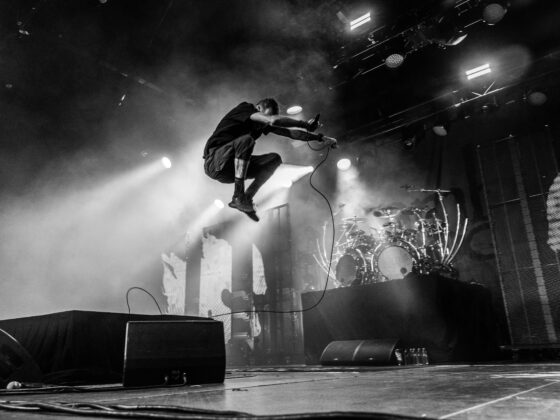
Recently, Backseat Mafia caught Vandal on tour Australian with Deftones, where she steadily bent (perhaps) sceptical fans toward her world through sheer force of performance. That same unpredictability drives Looking For People To Unfollow. The album rarely settles long enough to become comfortable.
There’s also something worth noting about timing here. Just as Genesis Owusu delivered one of the strongest Australian releases of the year, Vandal returns with a record equally uninterested in playing safely within genre lines. Both artists, children of immigrant families, are making some of the country’s most forward-thinking music at the exact moment political discourse continues obsessing about immigration. Neither album turns that reality into a slogan, but its presence lingers anyway.
For all its stylistic chaos, Looking For People To Unfollow is held together by Vandal herself. Every sudden shift, every collision between punk abrasion and melodic vulnerability, feels connected to the same restless creative instinct. After nearly a decade away, she hasn’t come back sounding polished or cautious. She sounds like somebody who has spent nine years quietly building pressure until the whole thing finally bursts through the walls.