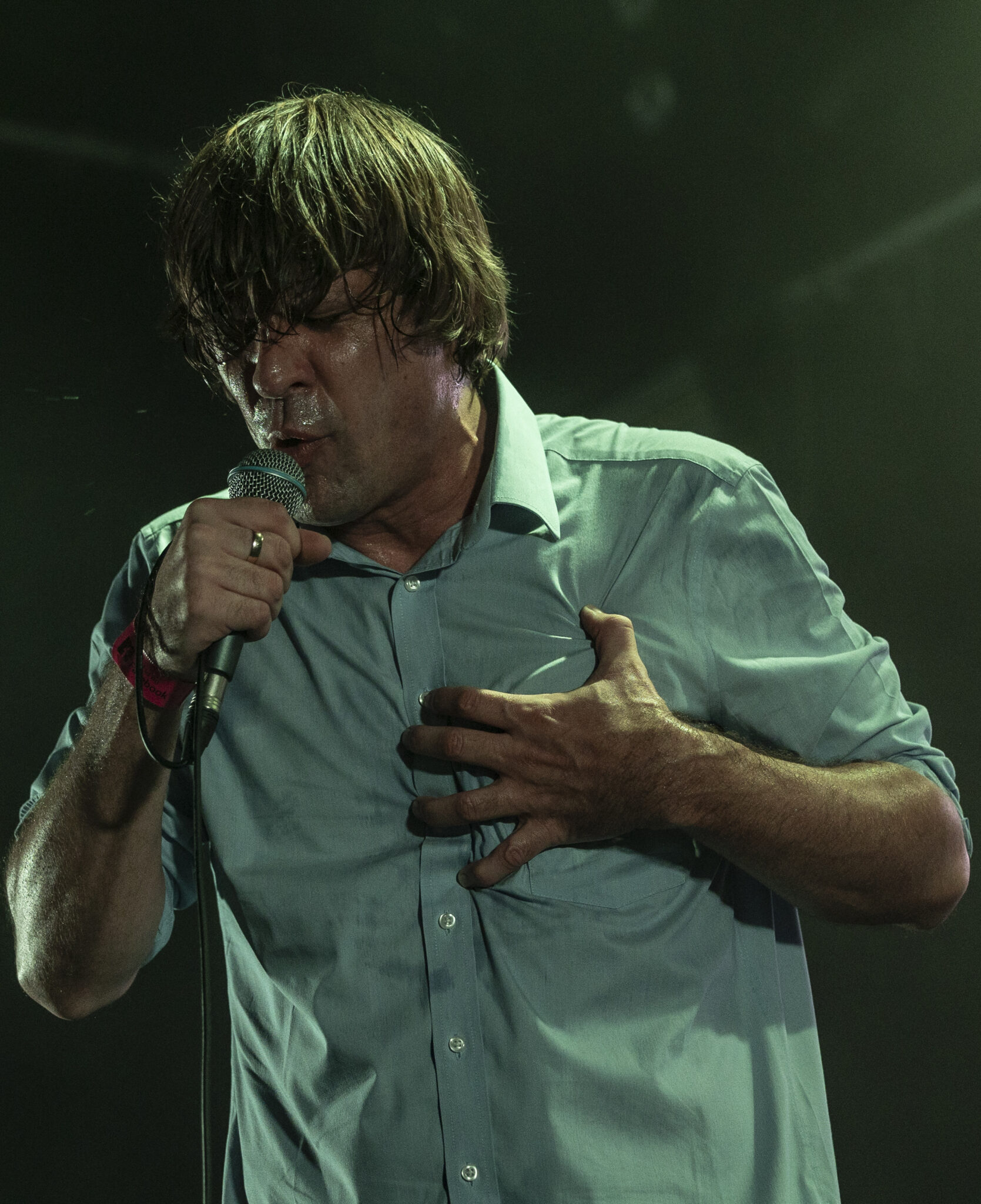
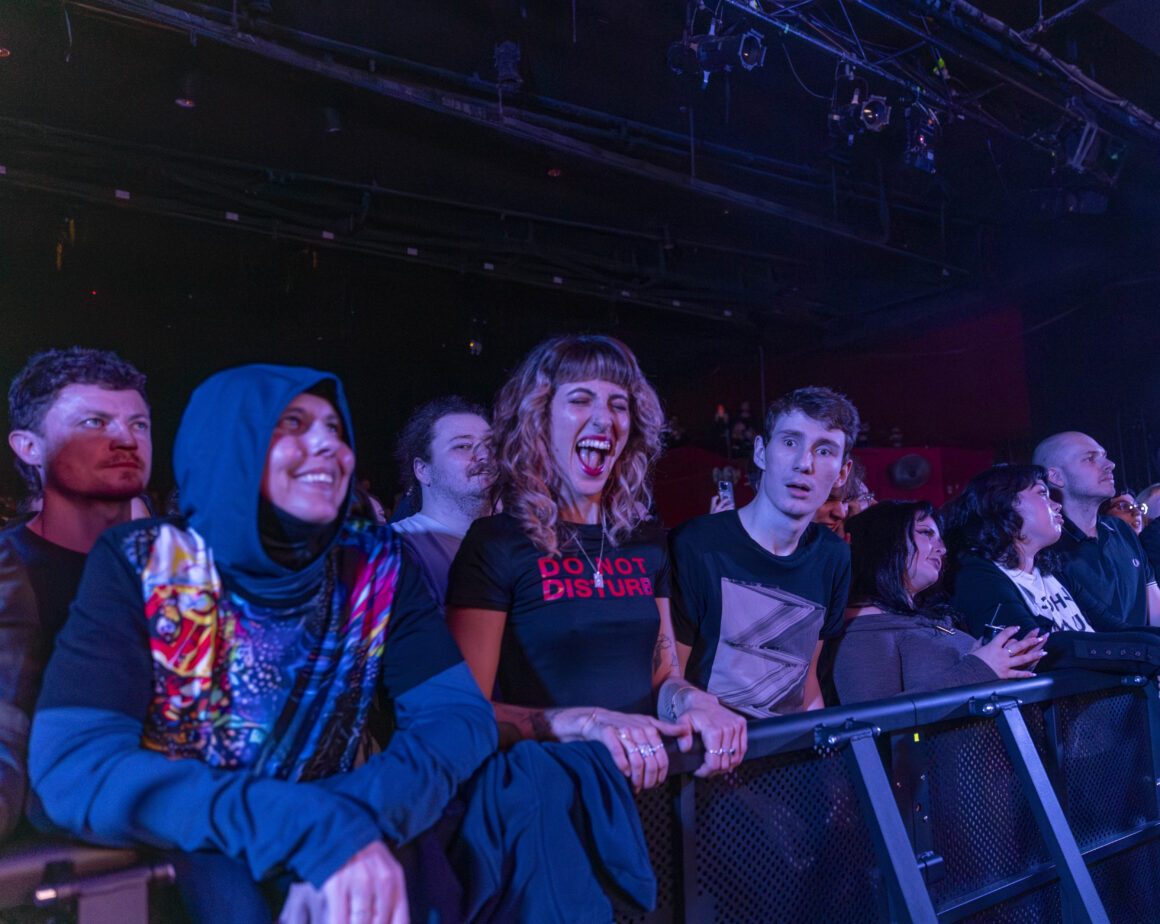
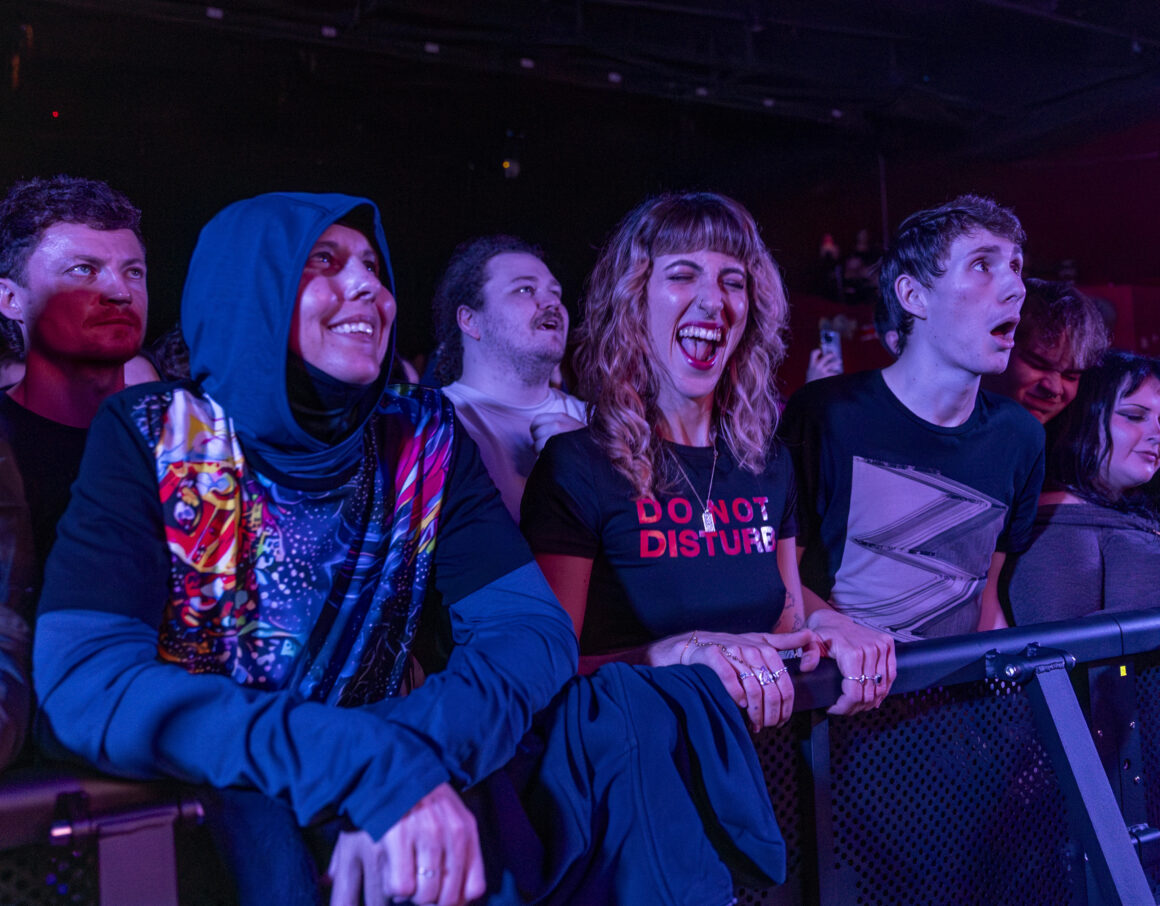
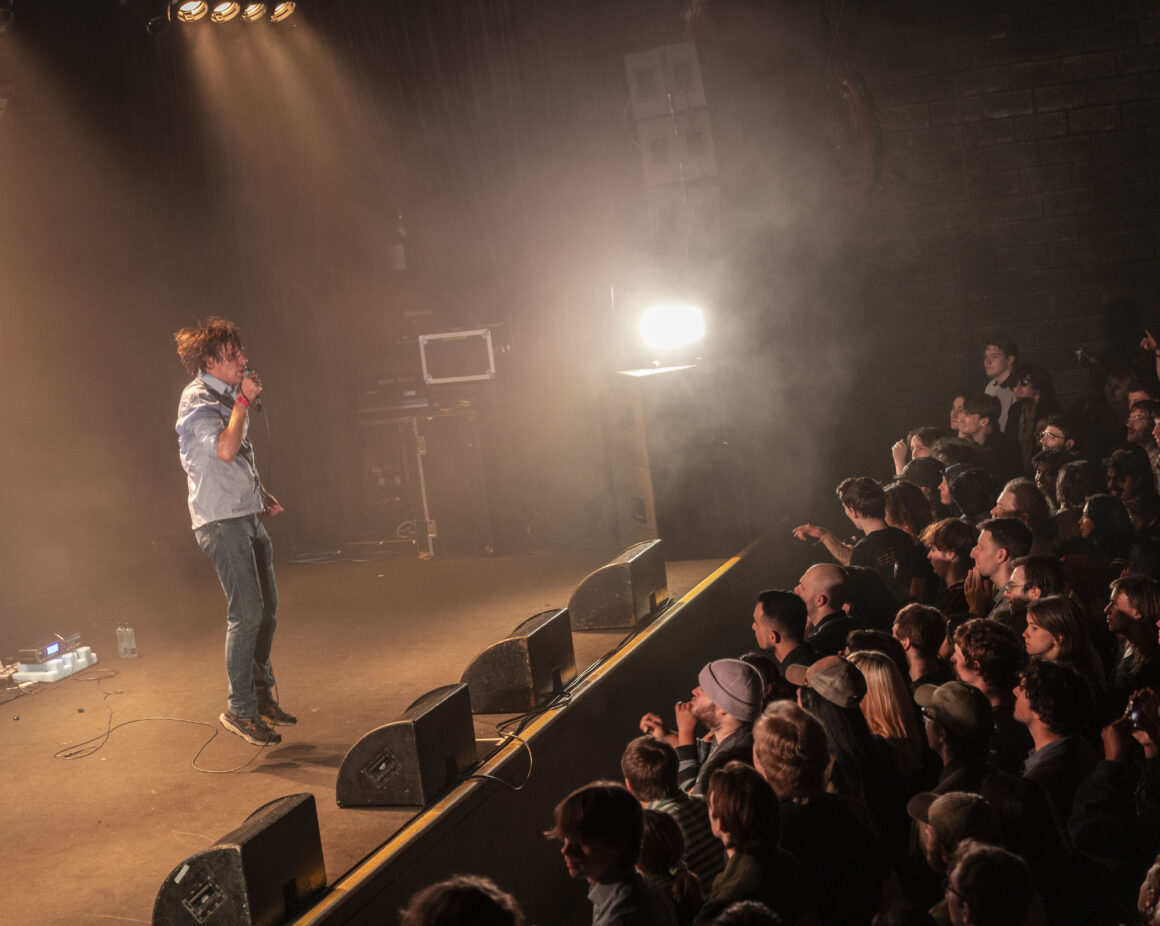
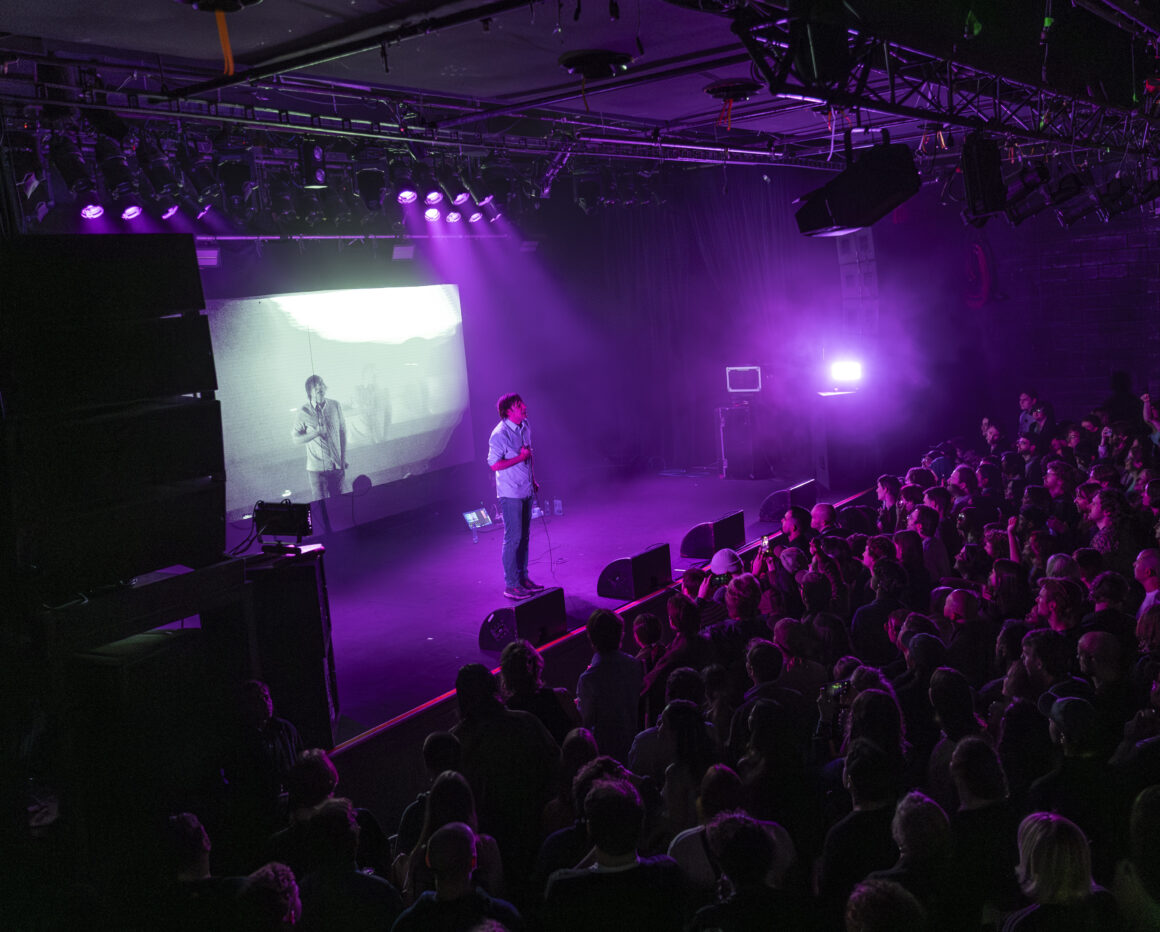
The Metro feels compressed tonight, like it’s holding its breath, pacing itself. John Maus is back in Australia for the first time since 2019, and there’s a sense that whatever happens next won’t sit quietly.
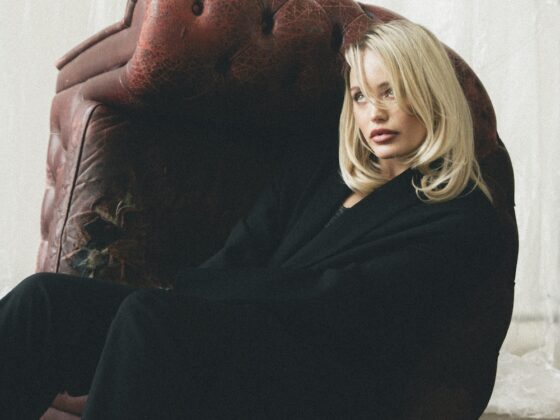
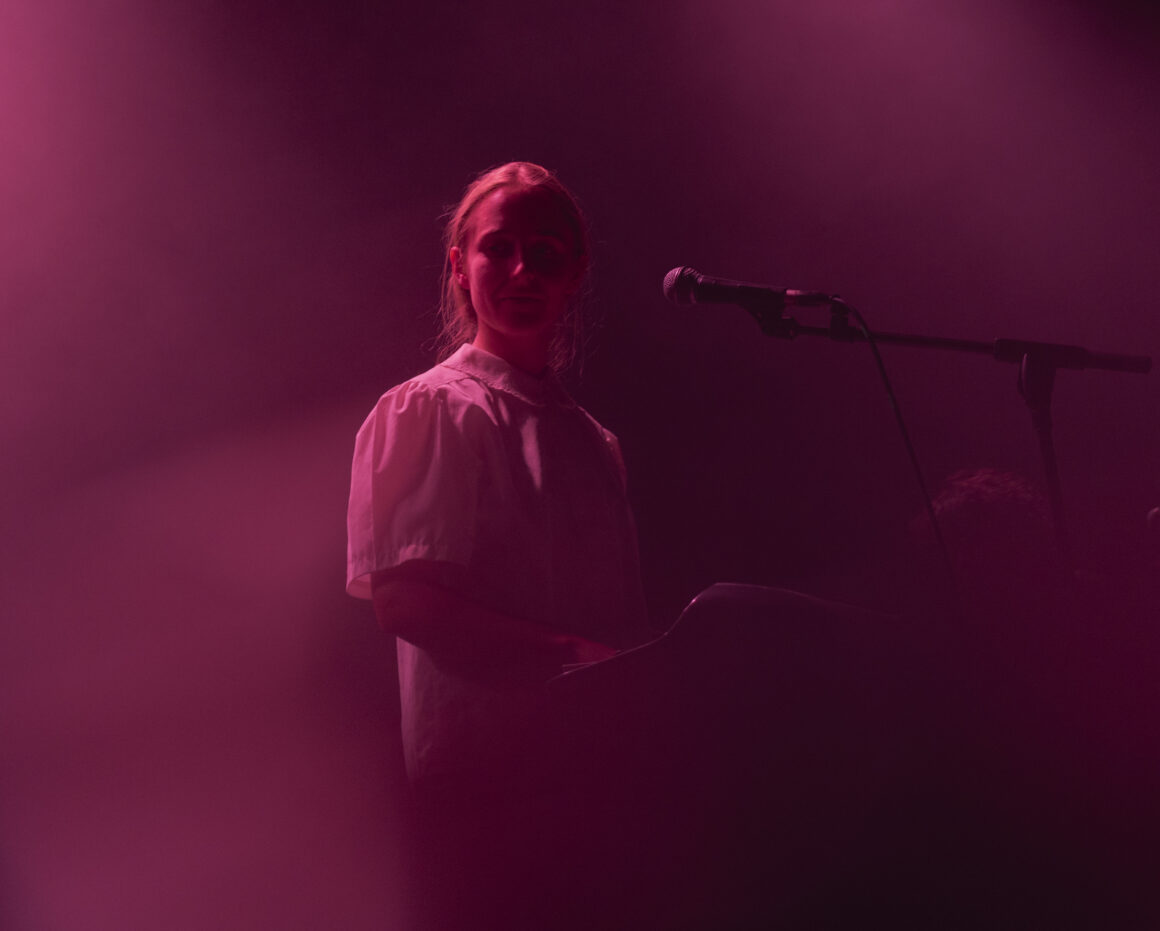
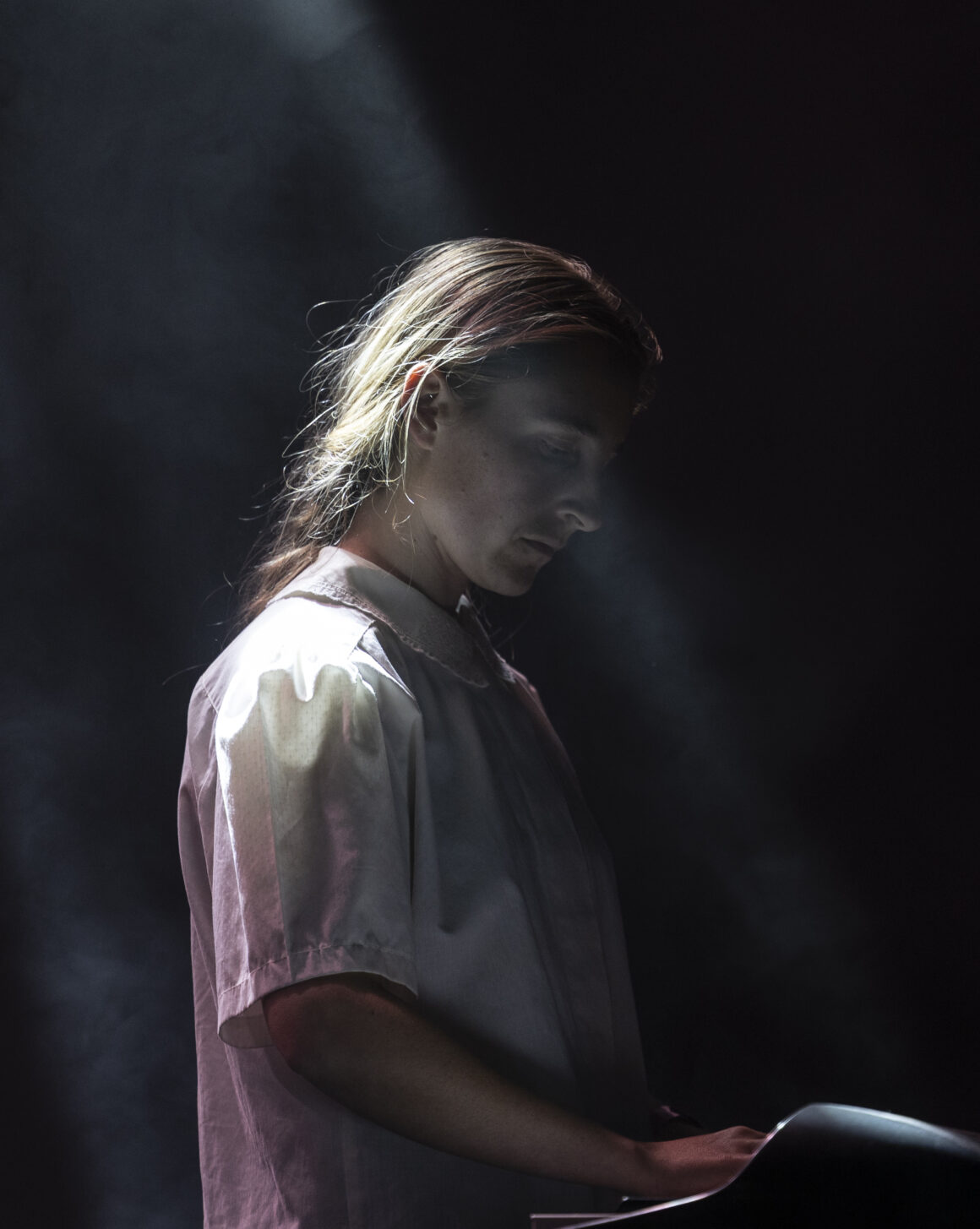
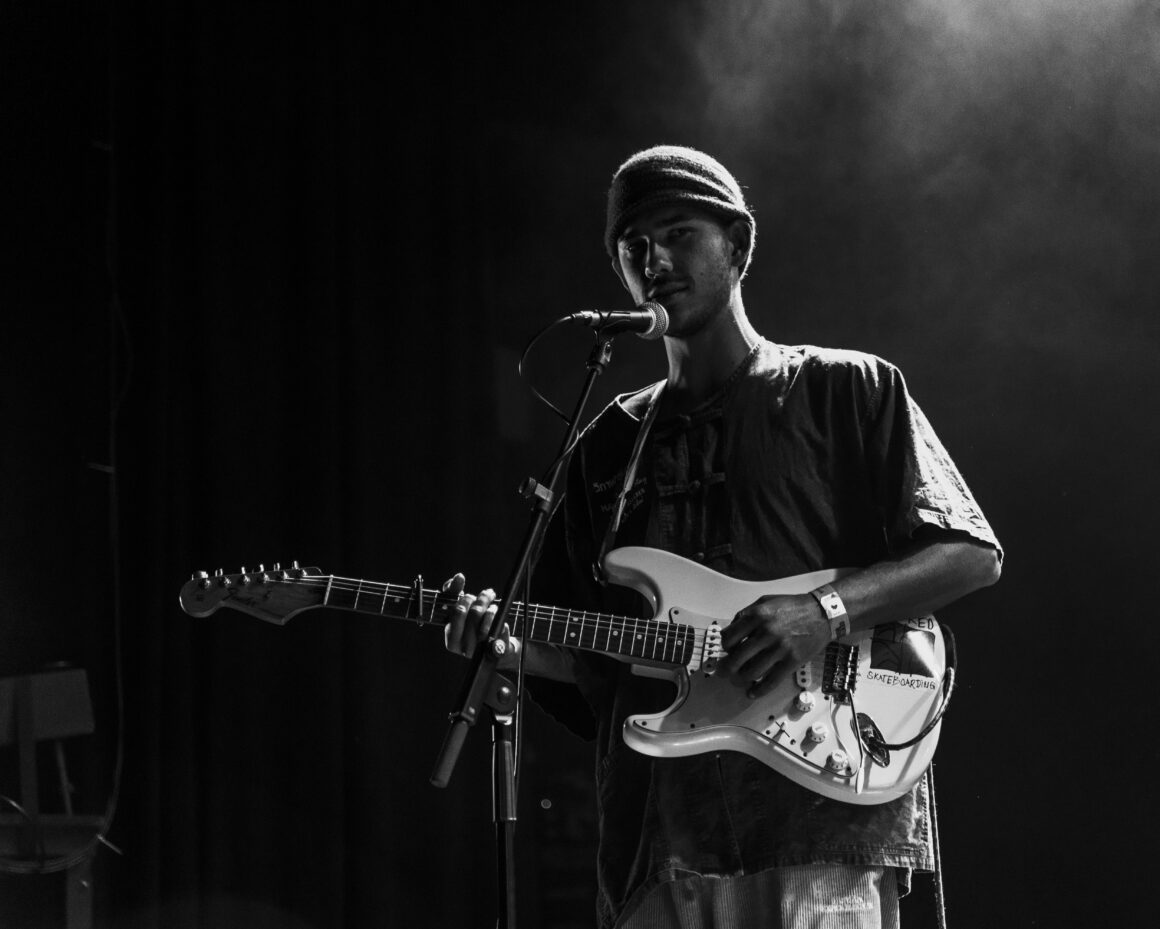
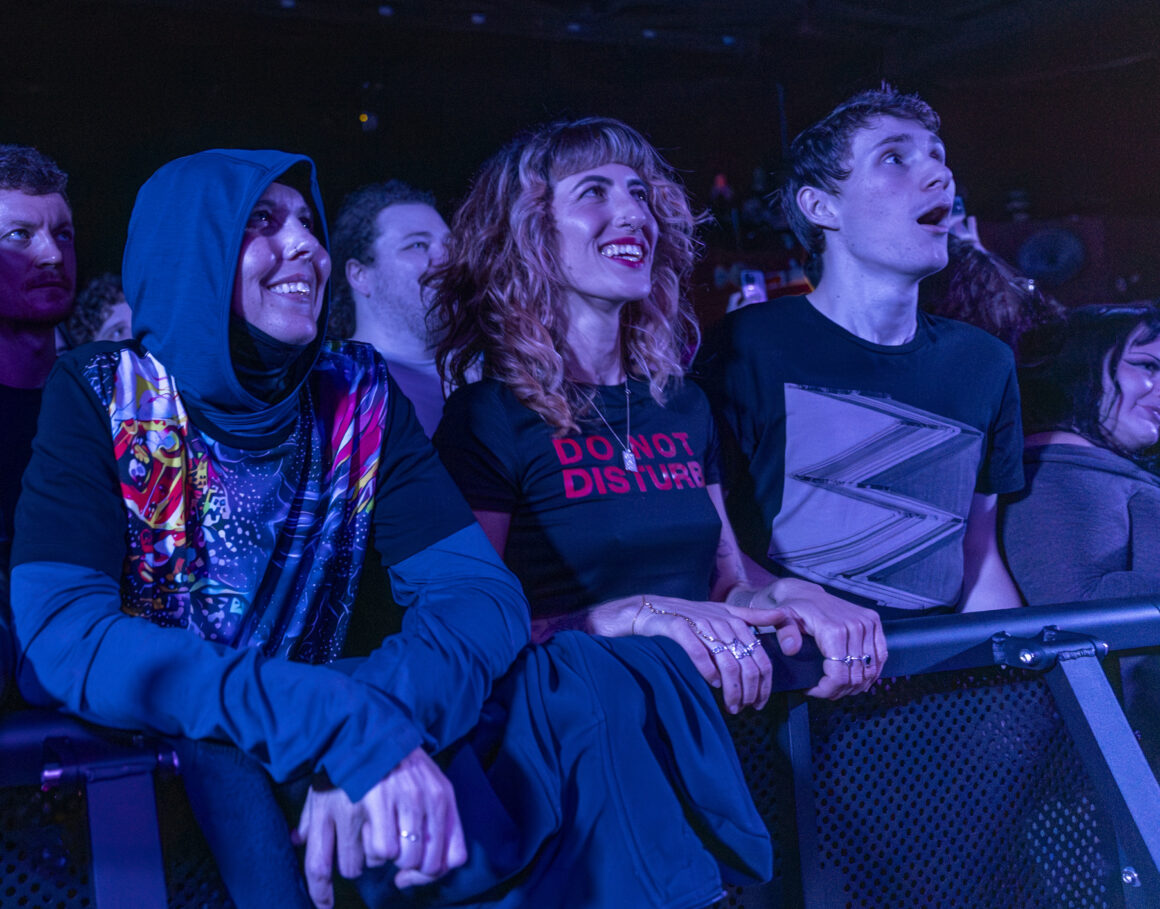
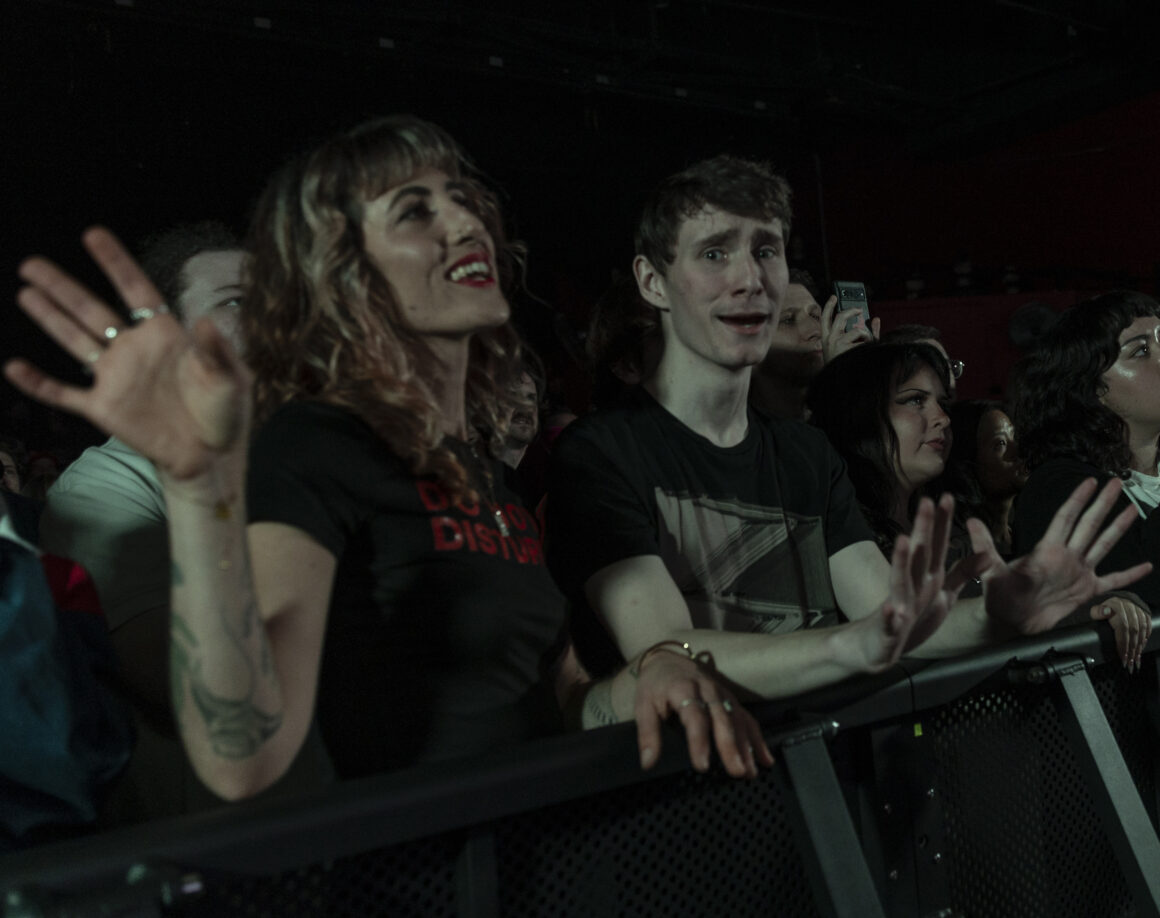
Before that, Romy Church, performing as e4444e, works through a set of fragile vocals and flickering electronic textures. At times, it brushes up against something unexpectedly familiar — a warped echo of The Beach Boys buried in the harmonies — before slipping away again. The crowd is noticeably young, attentive from the outset, and when he finishes they don’t let it end there, calling him back until he returns for one more song.
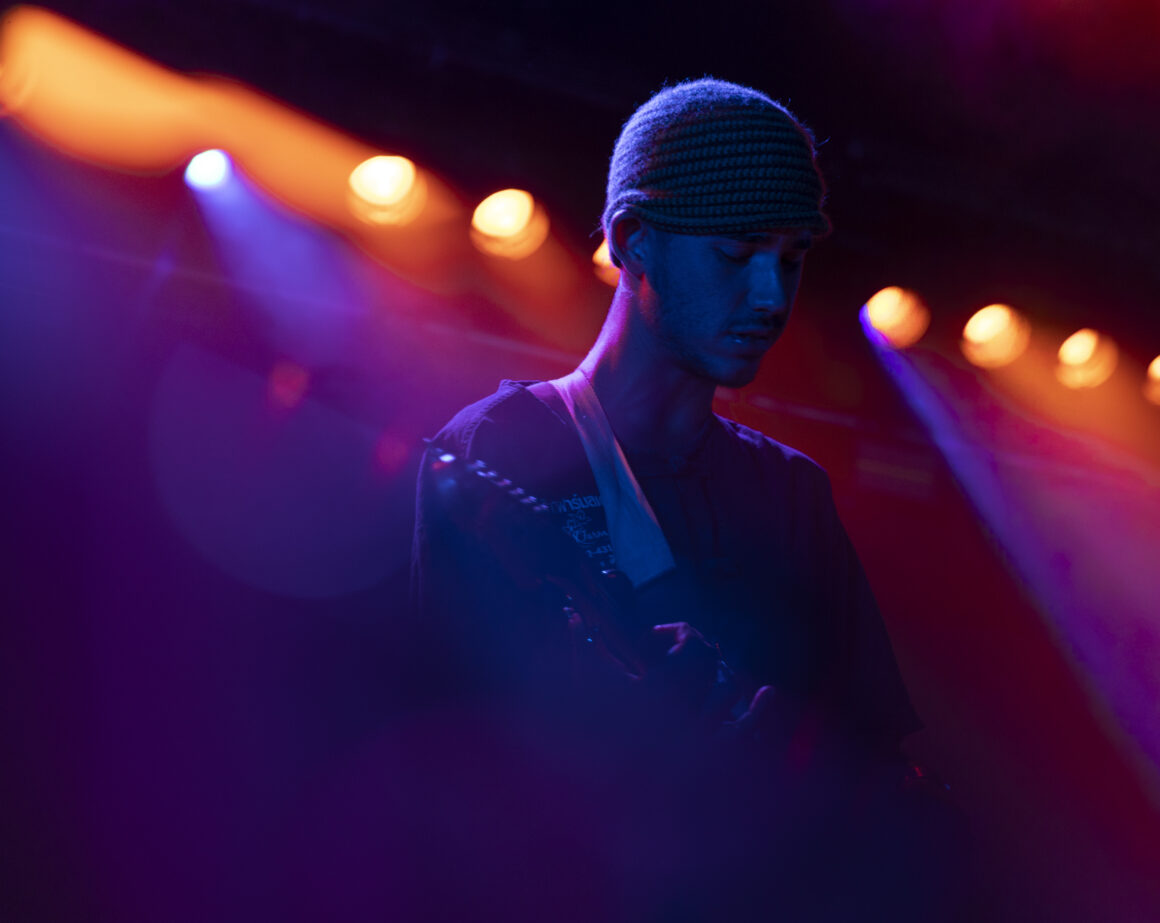
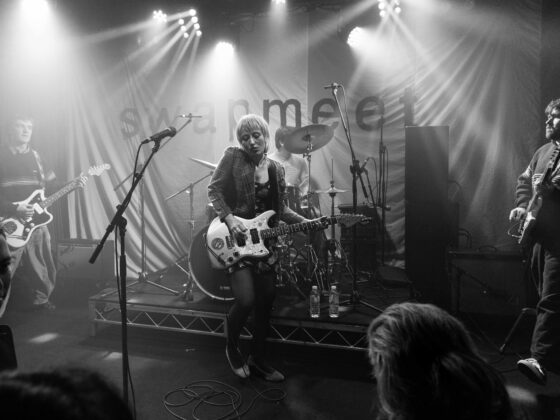
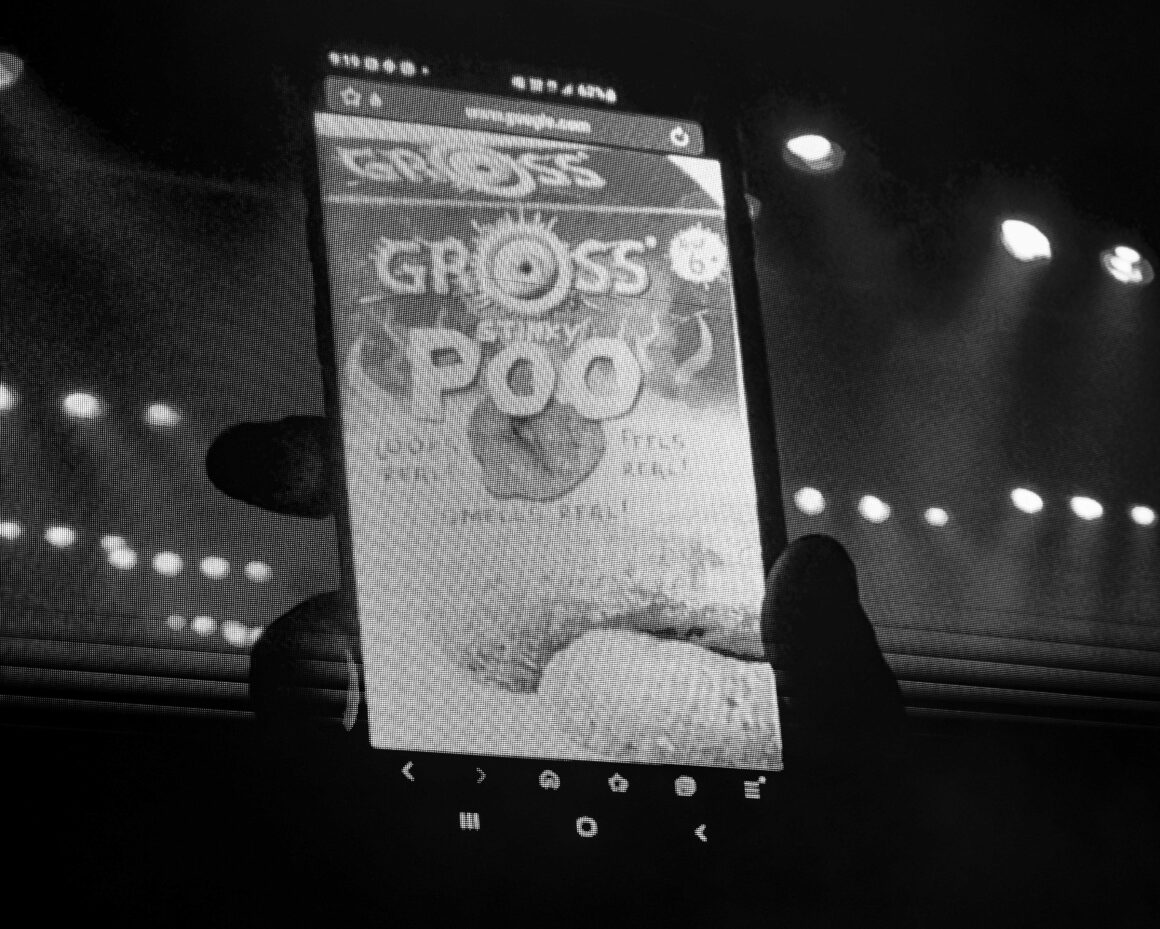
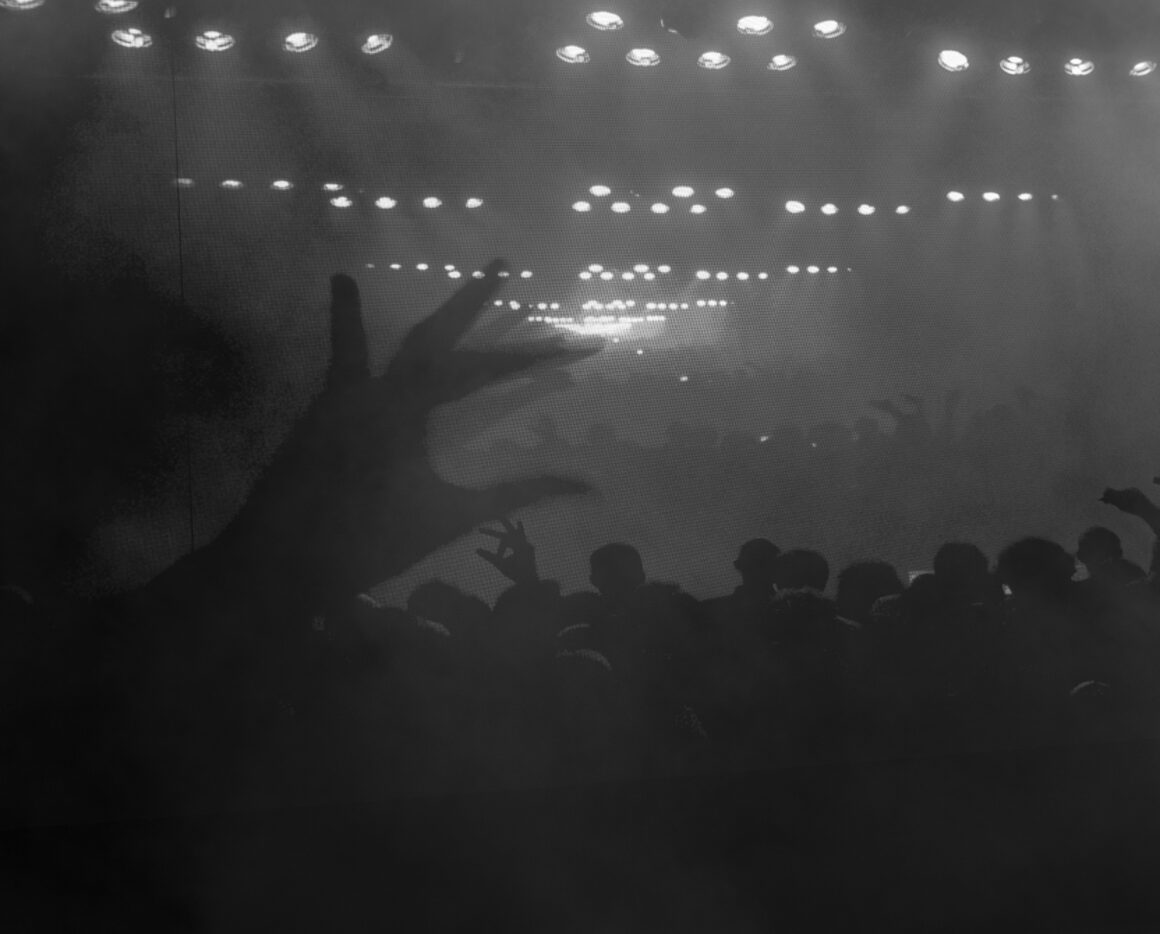
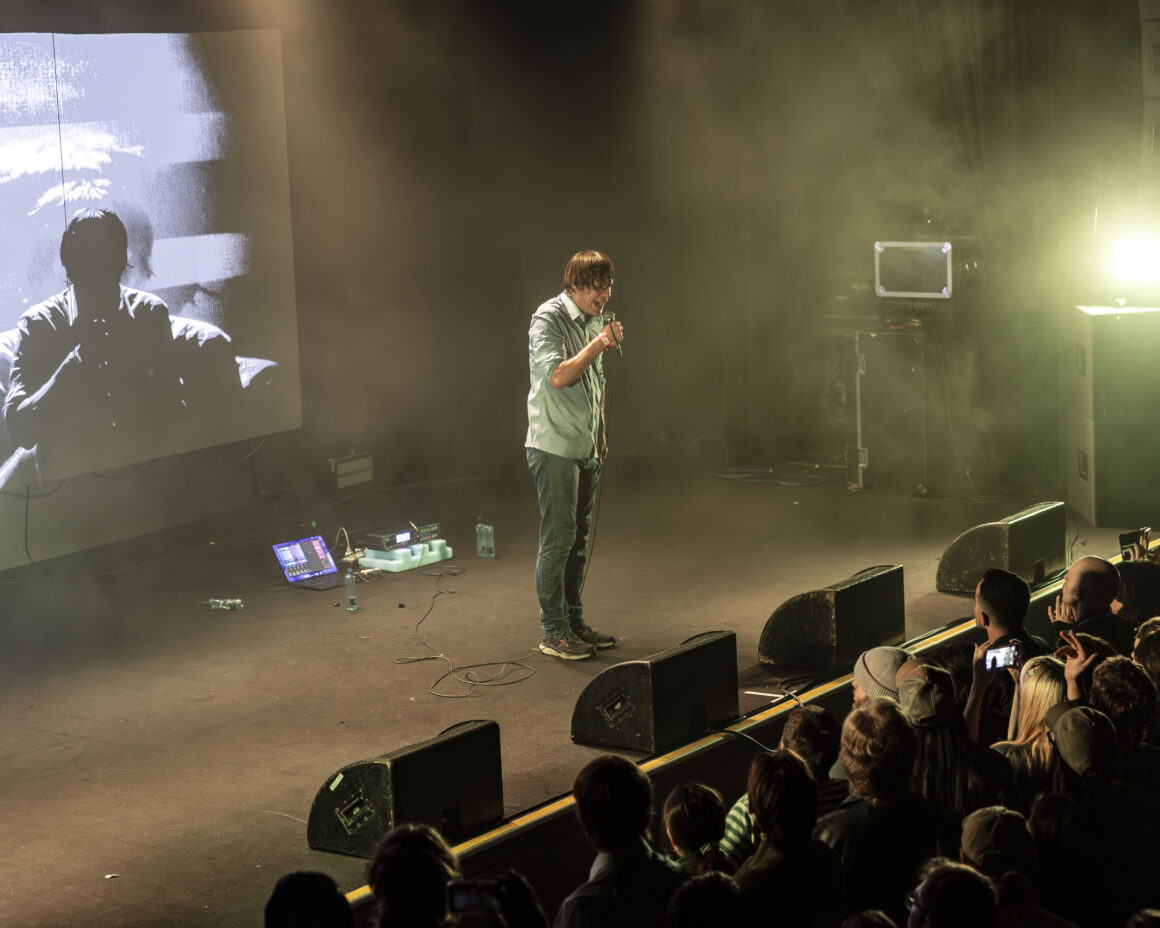
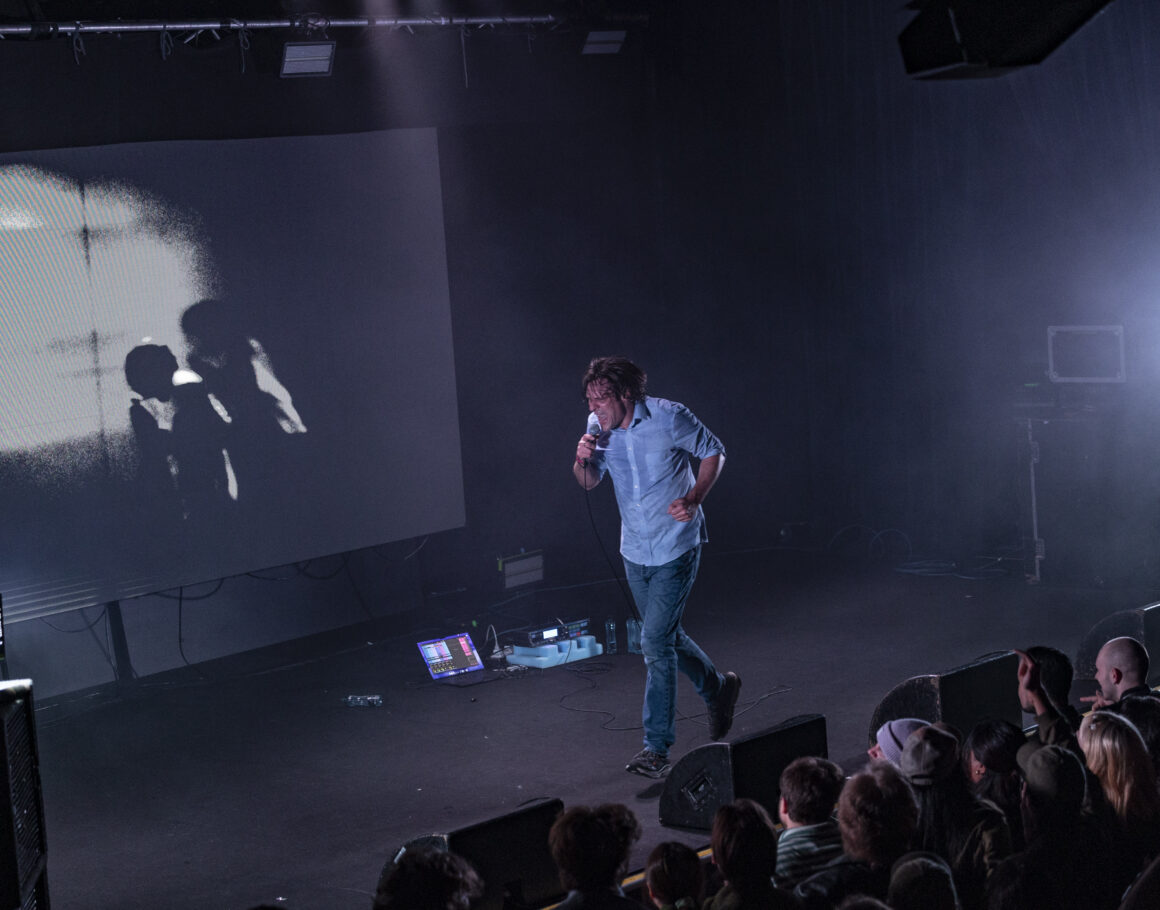
Before Maus appears, a screen behind the stage flickers on, capturing the audience in silhouette. Hands rise into the frame, shaping animals against the light, while others hold up phones, their screens briefly flashing fragments of images across the projection. For a moment, the focus turns inward, the crowd becoming part of the performance before anything has properly begun.
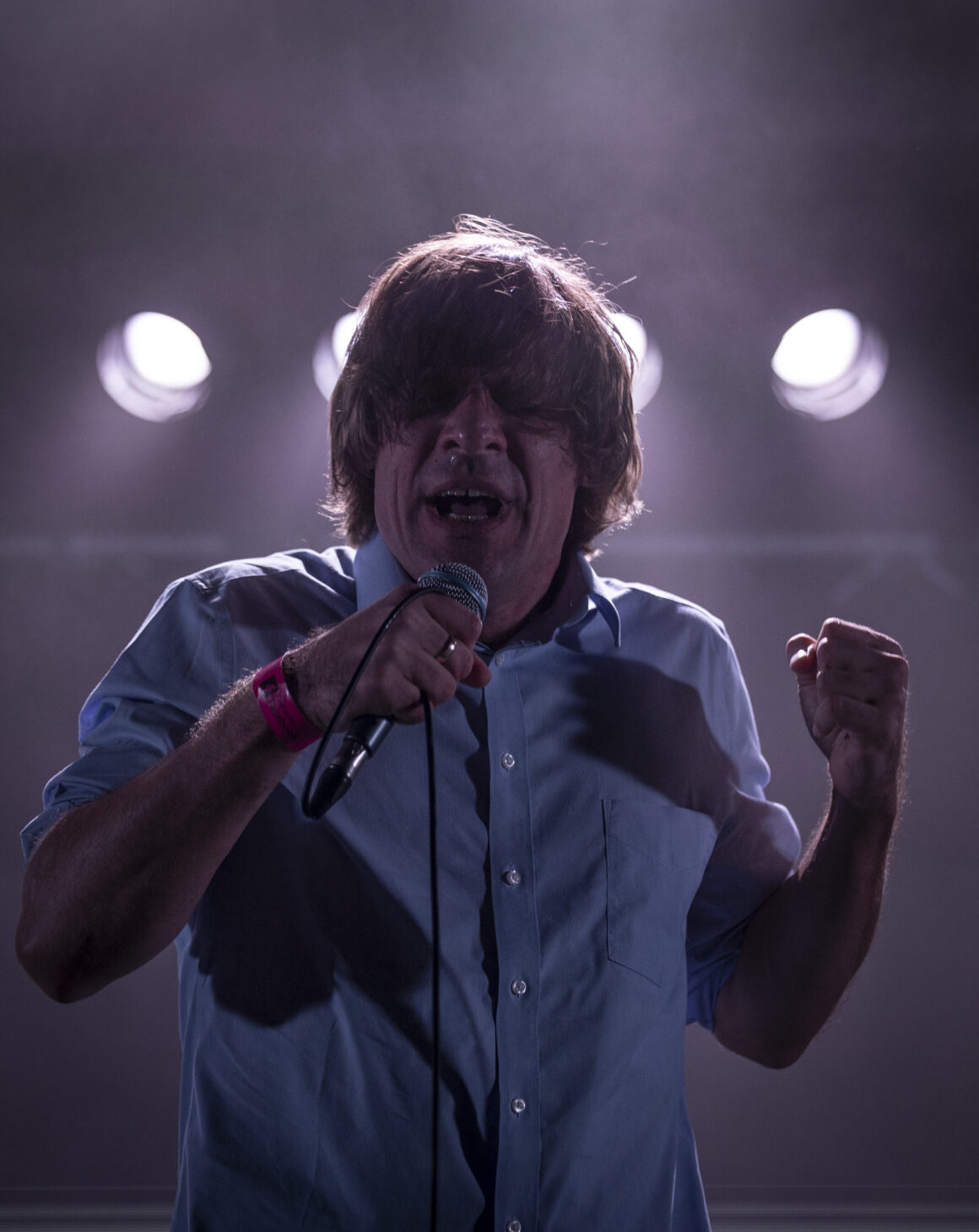
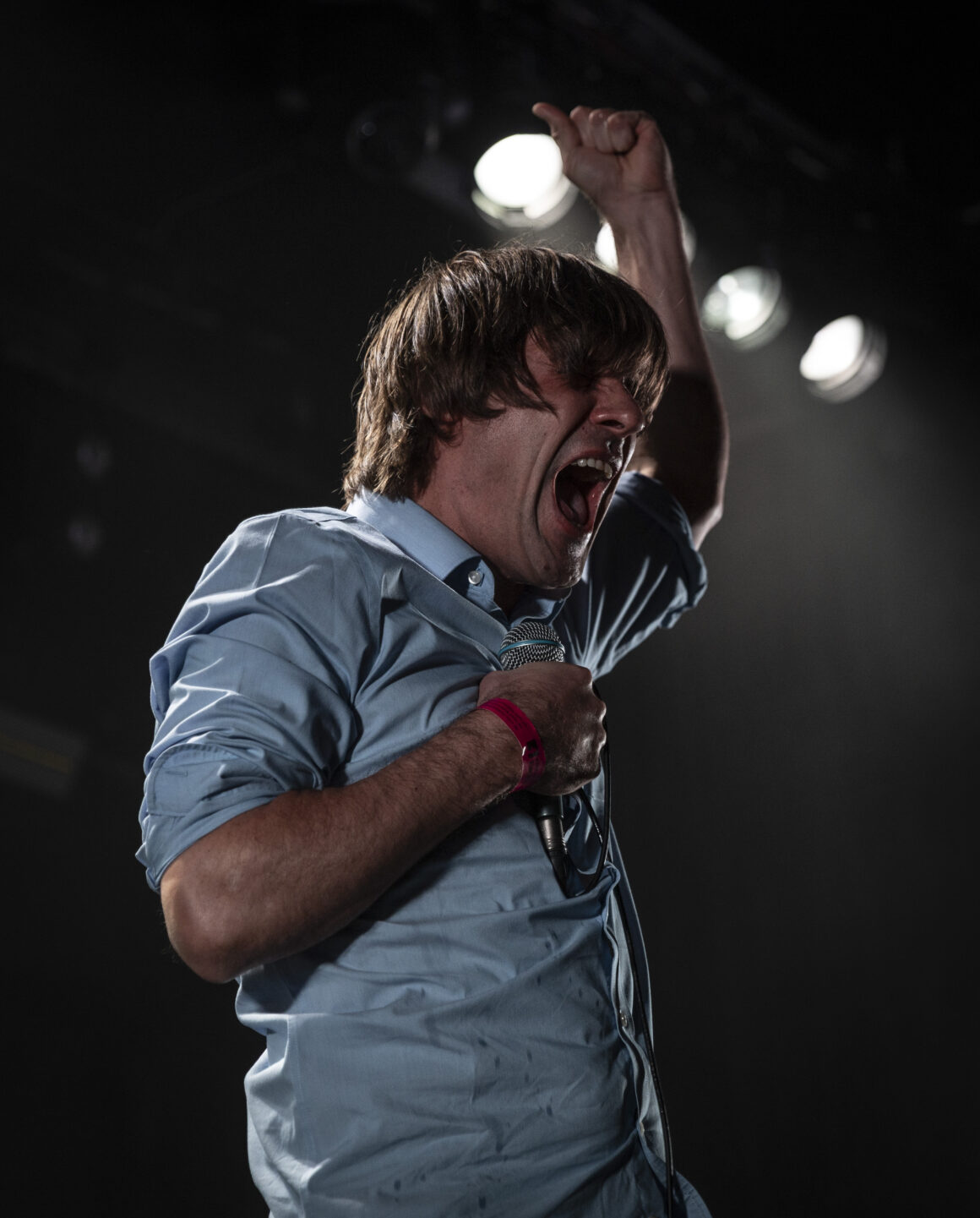
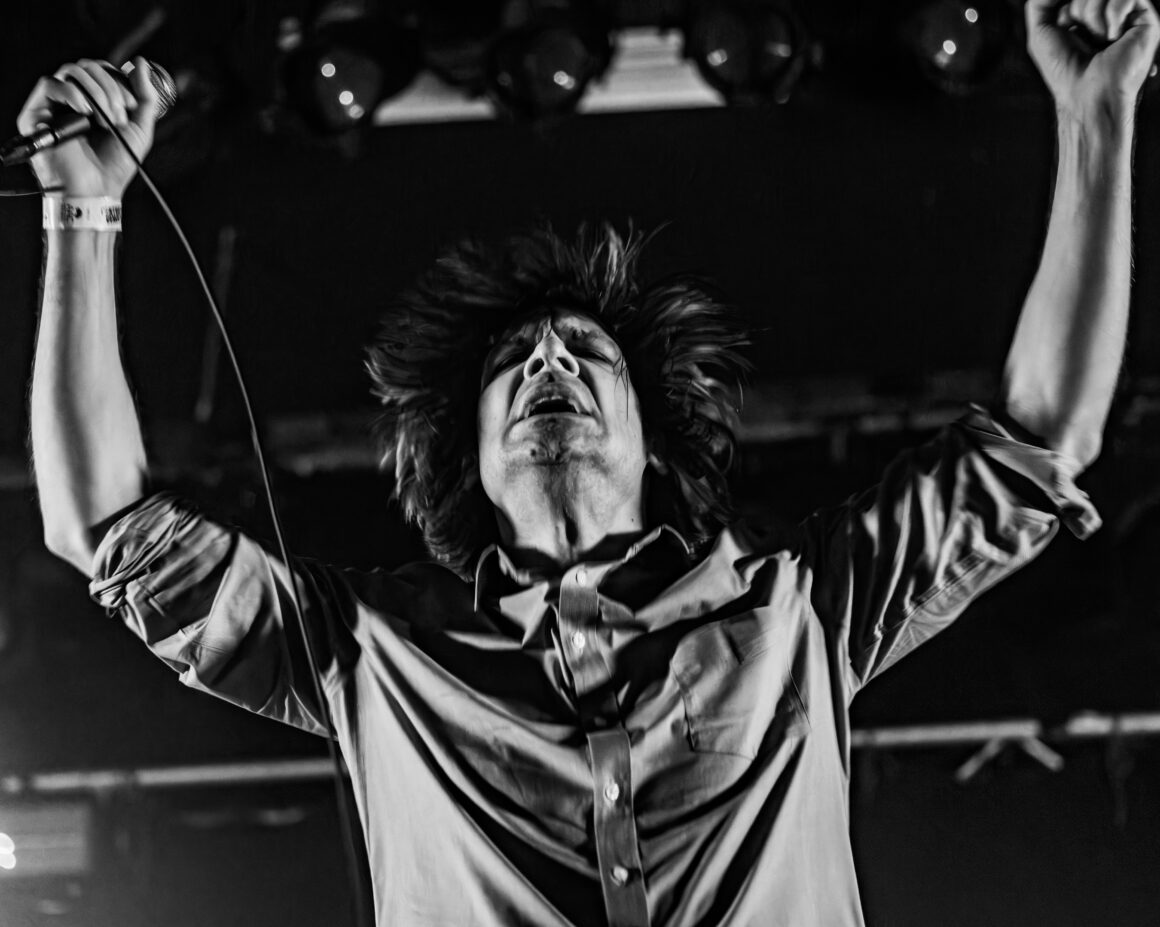
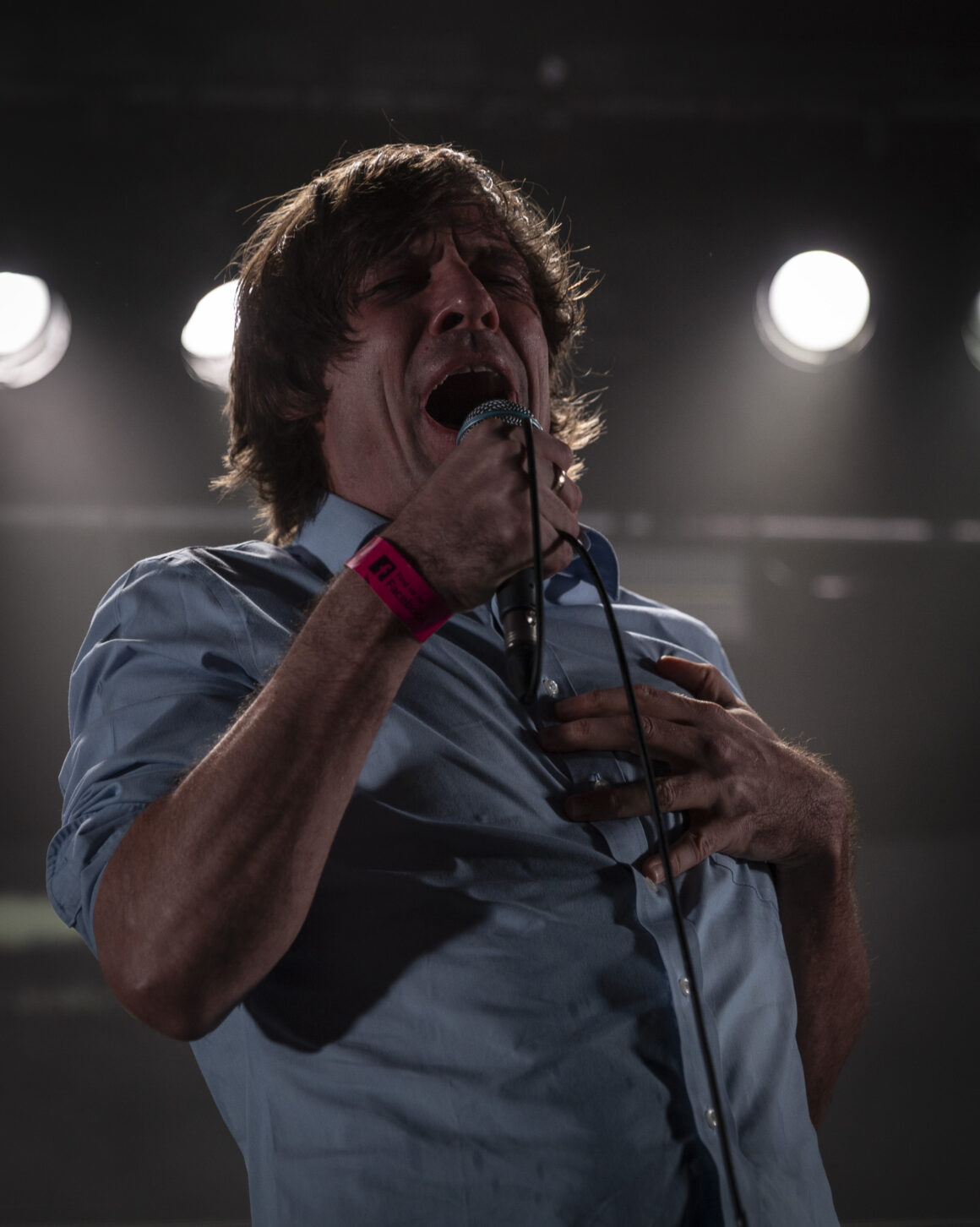
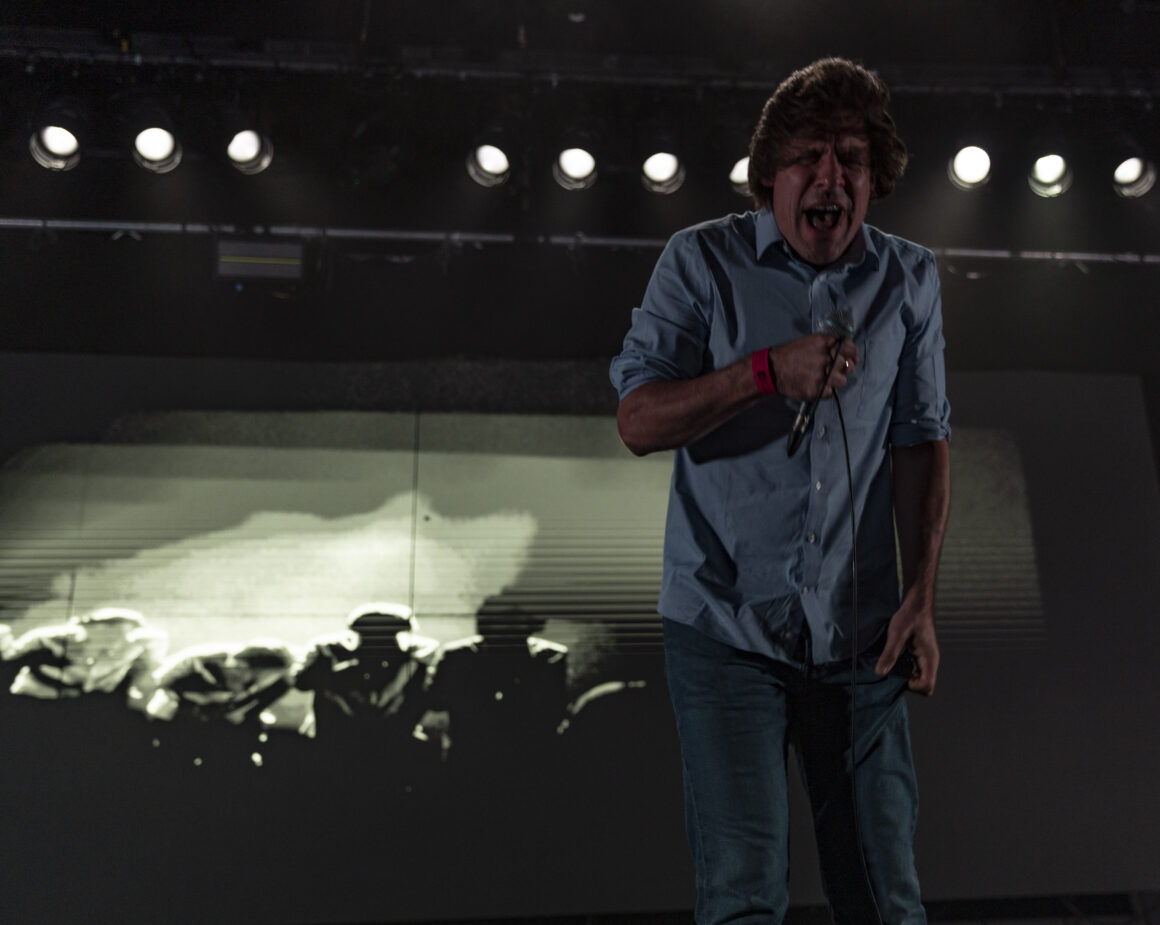
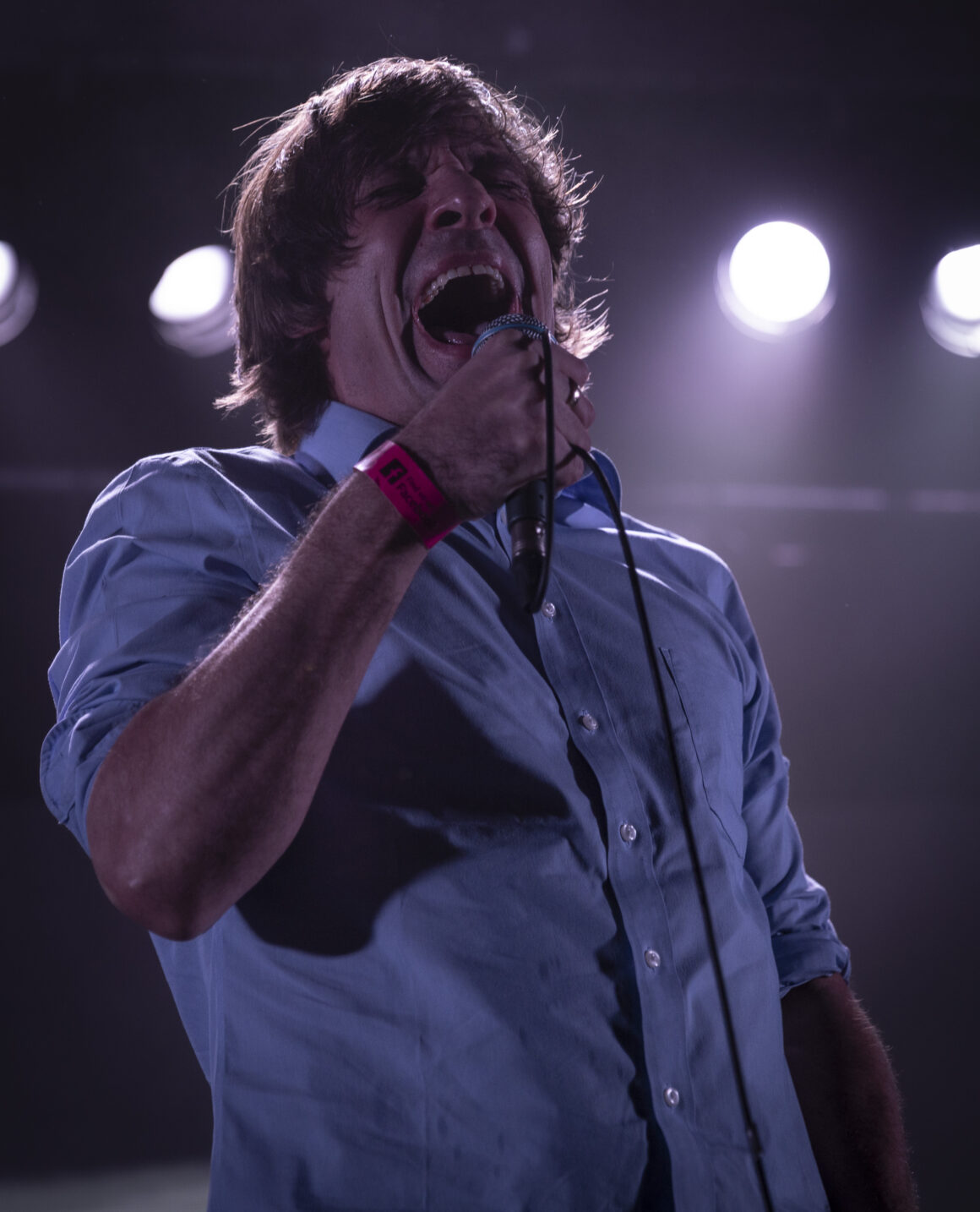
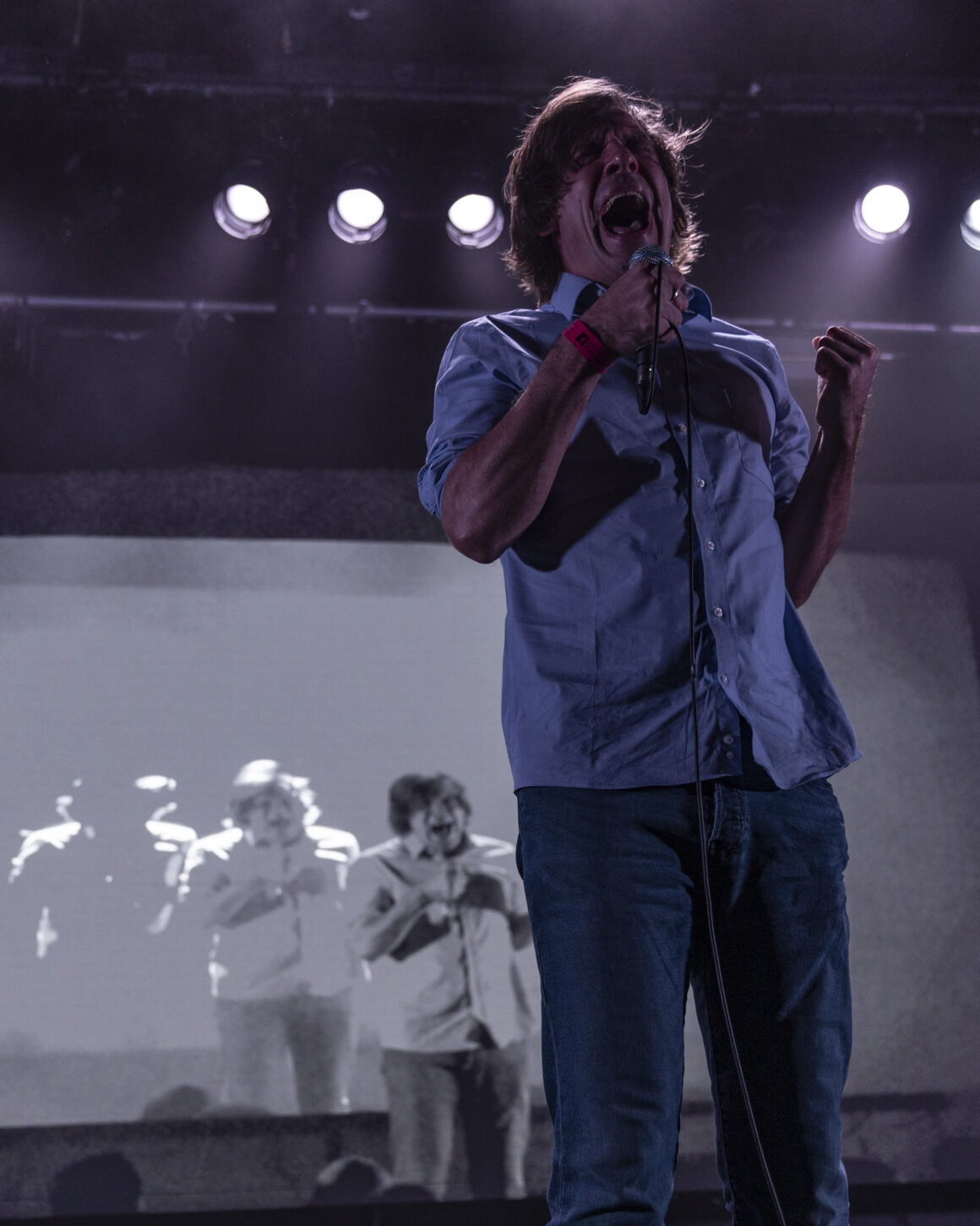
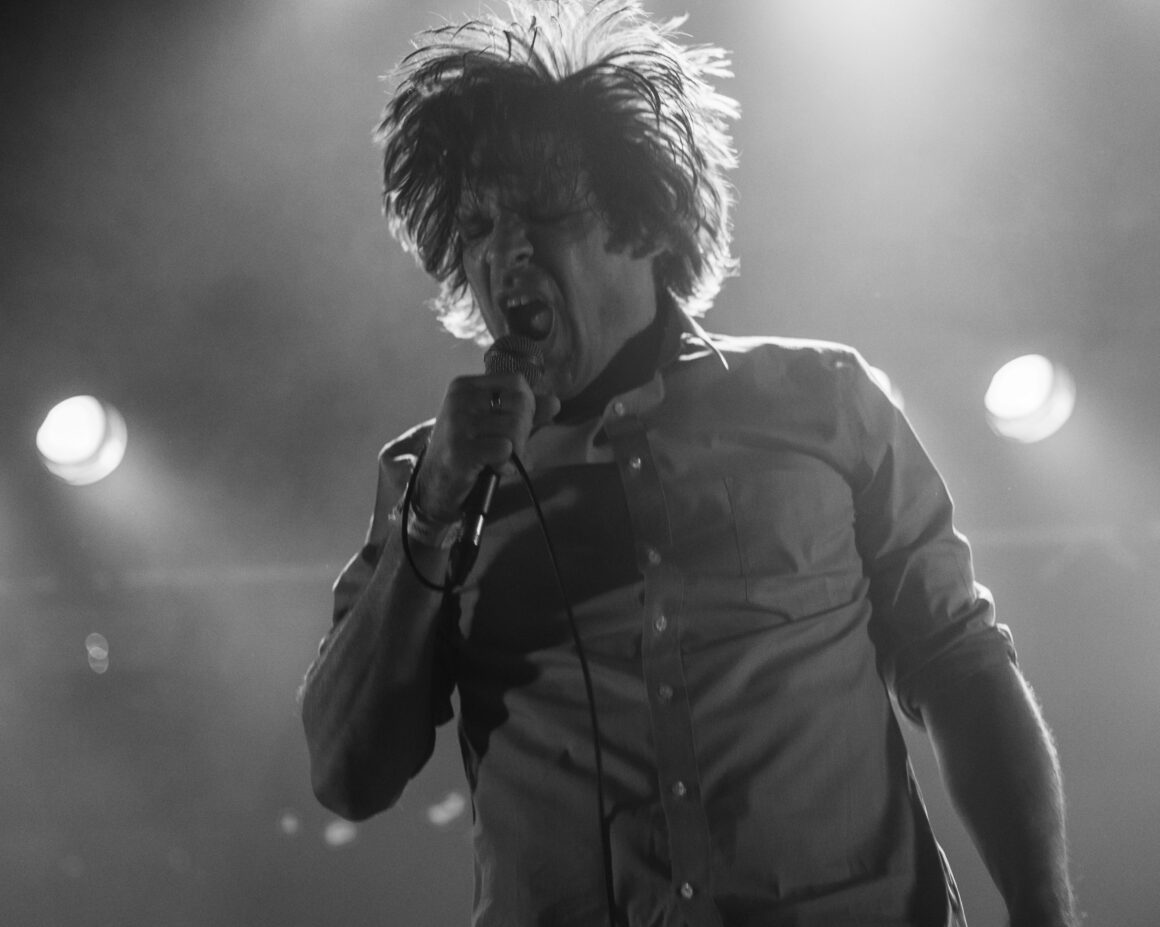
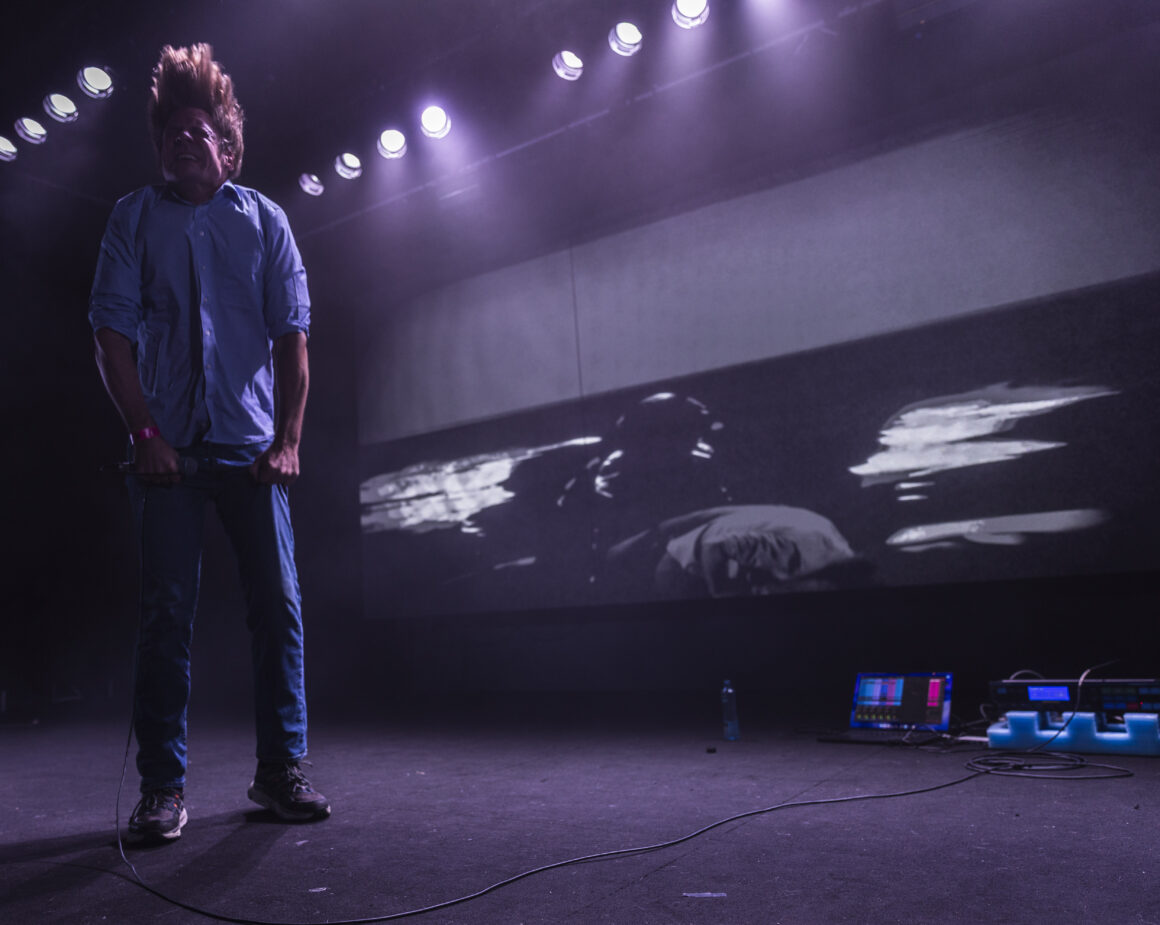
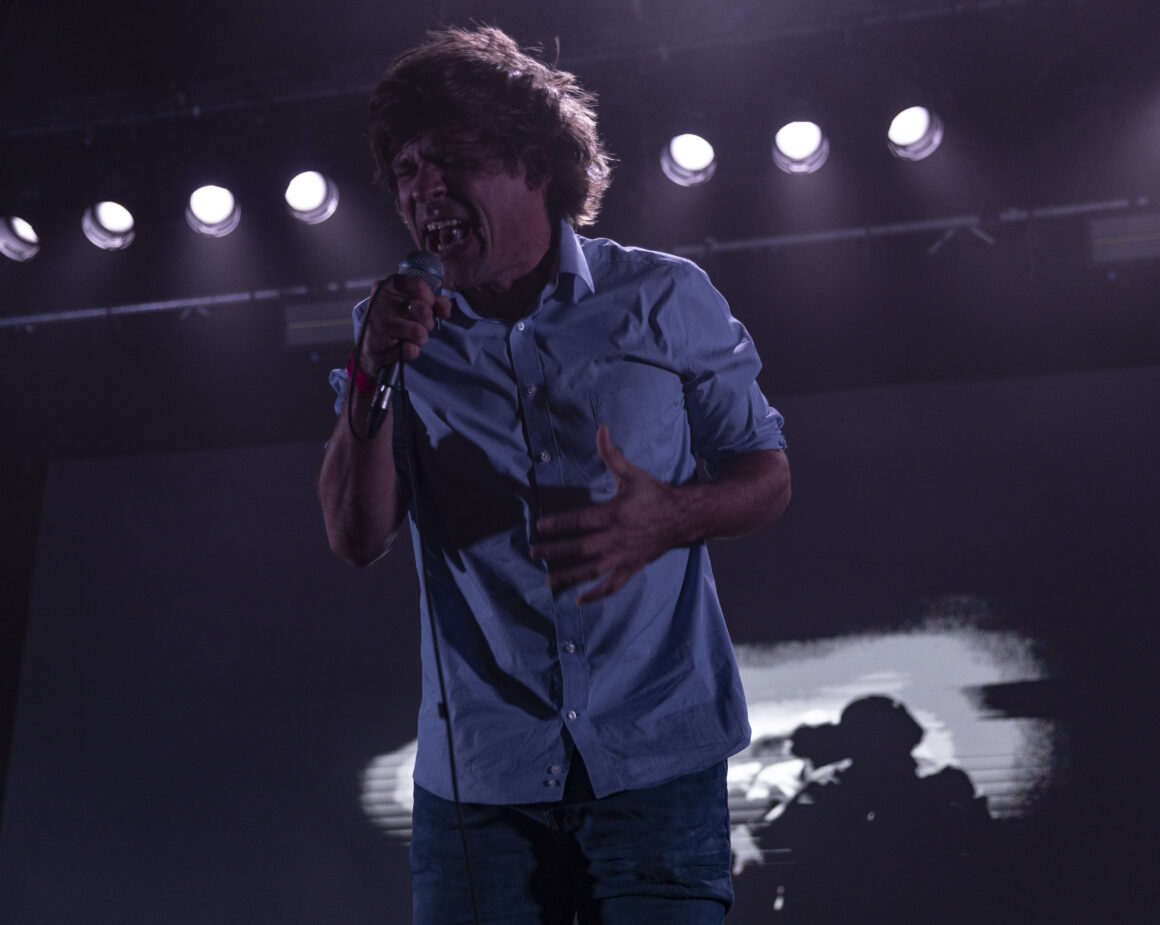
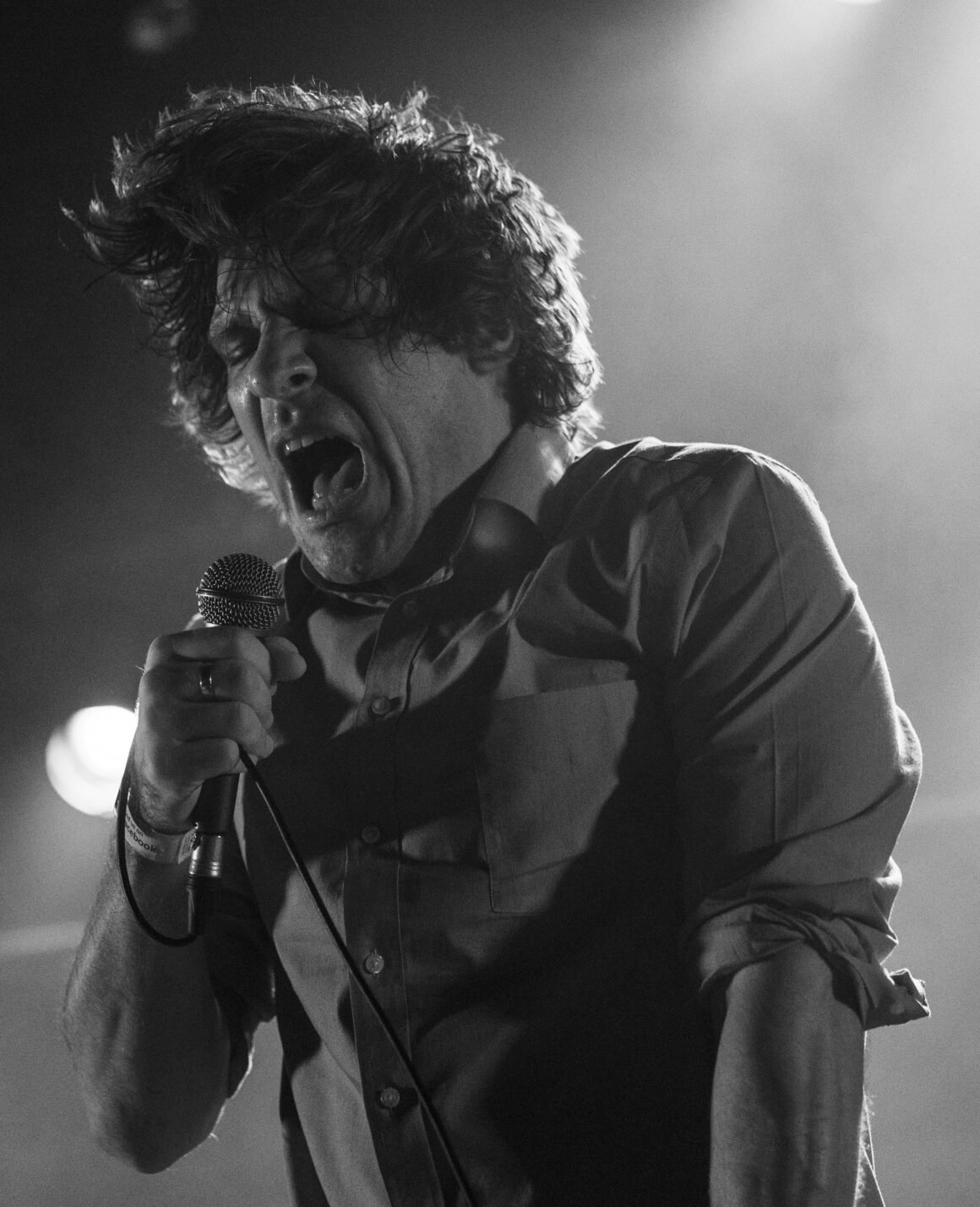
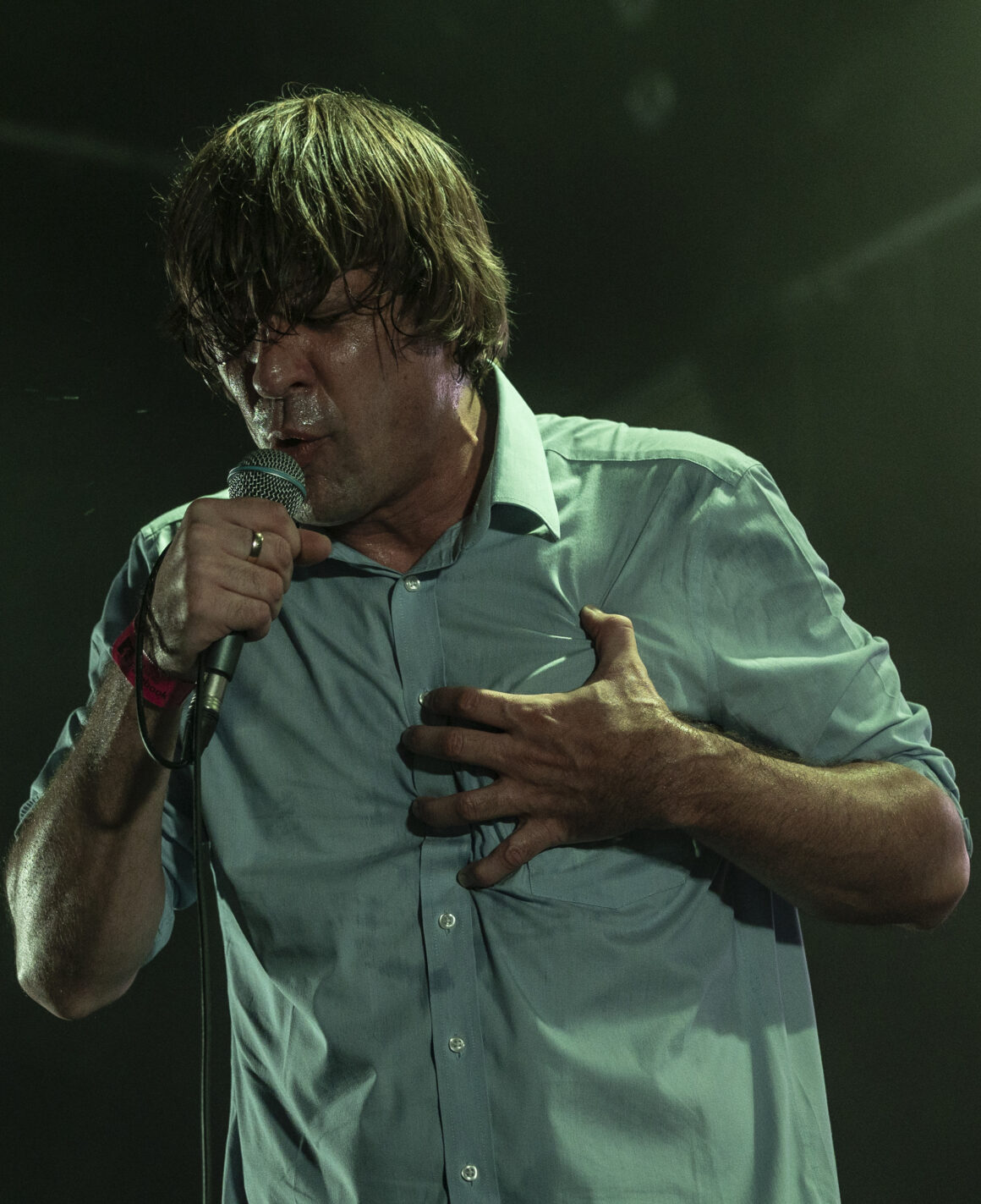
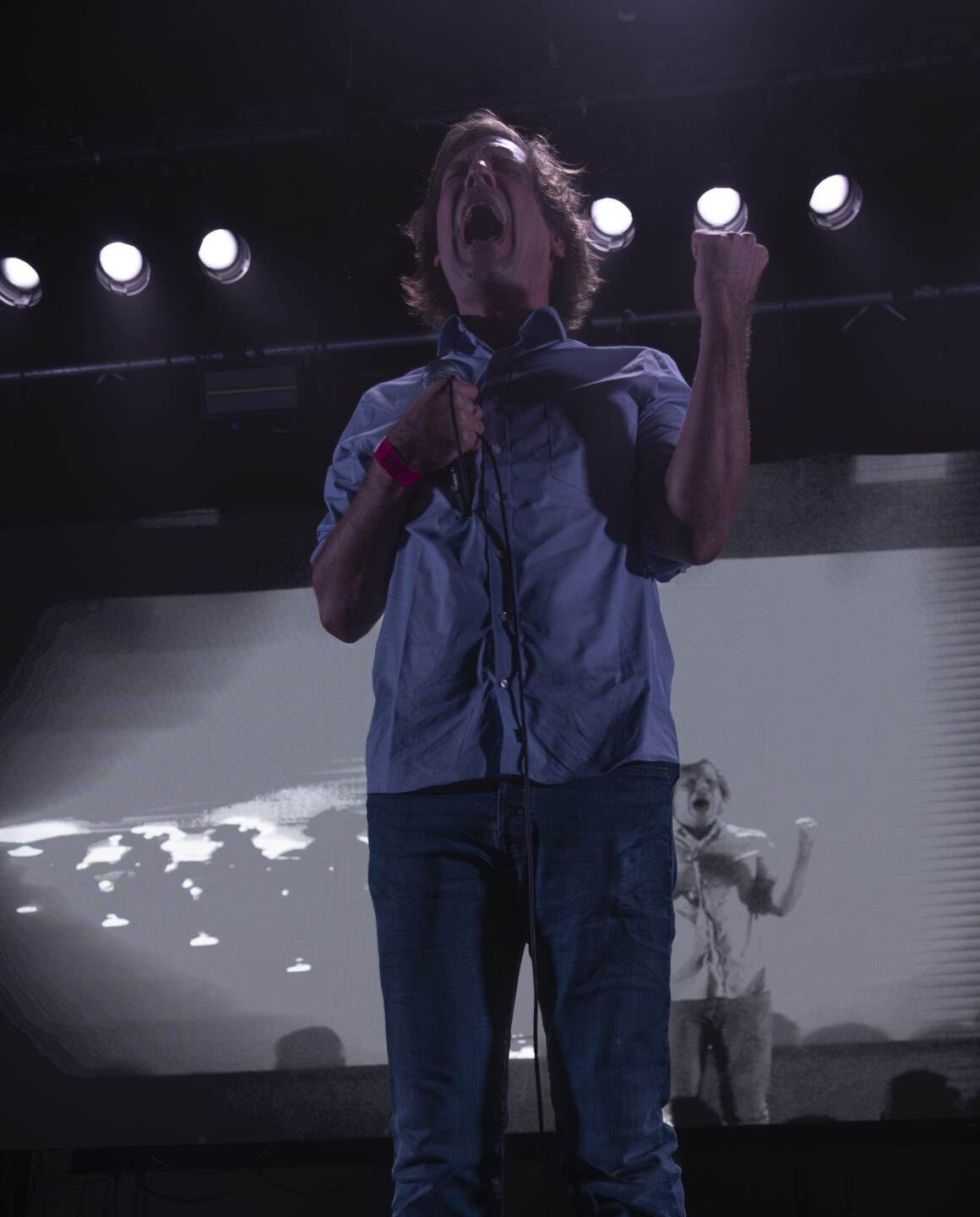
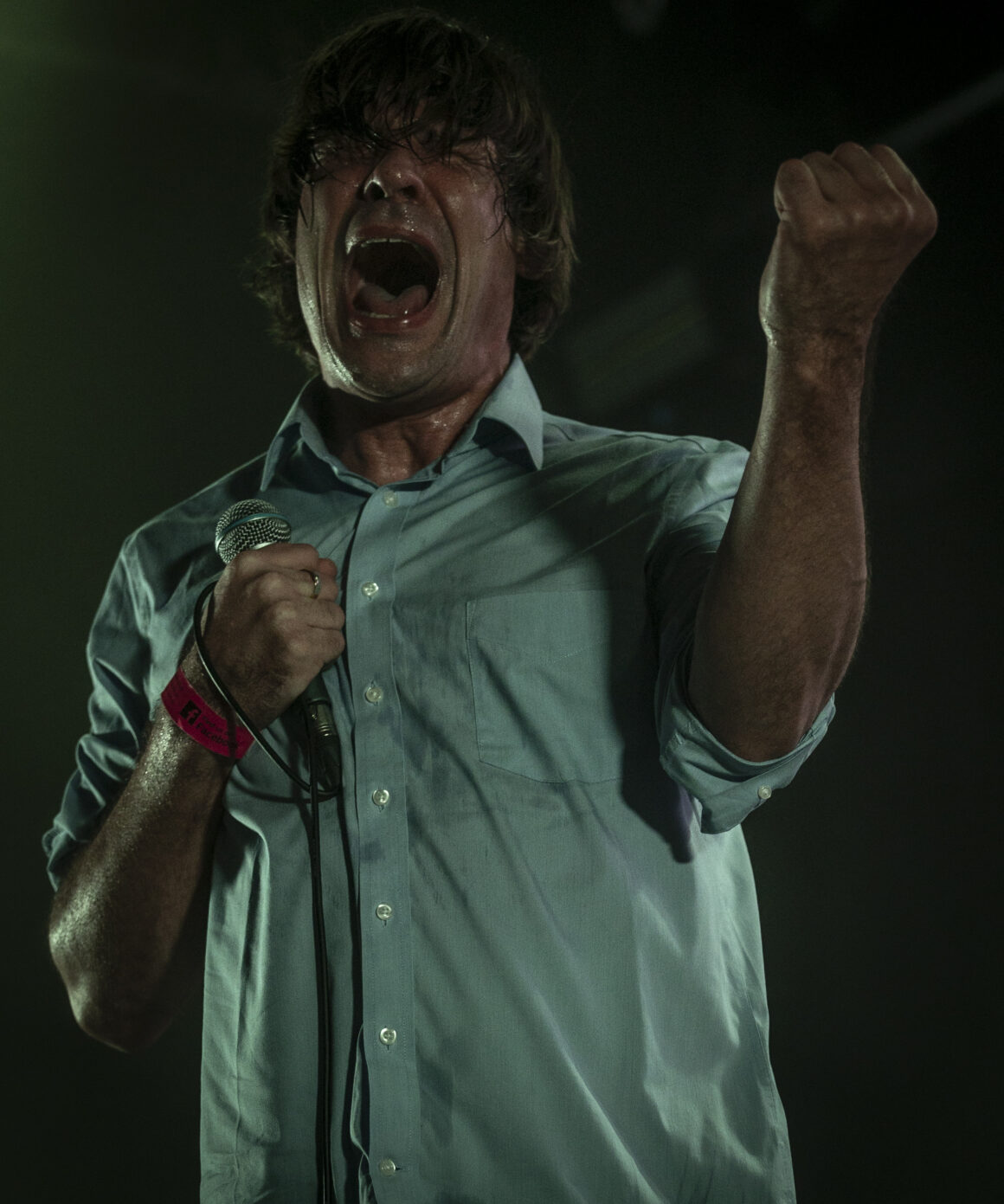
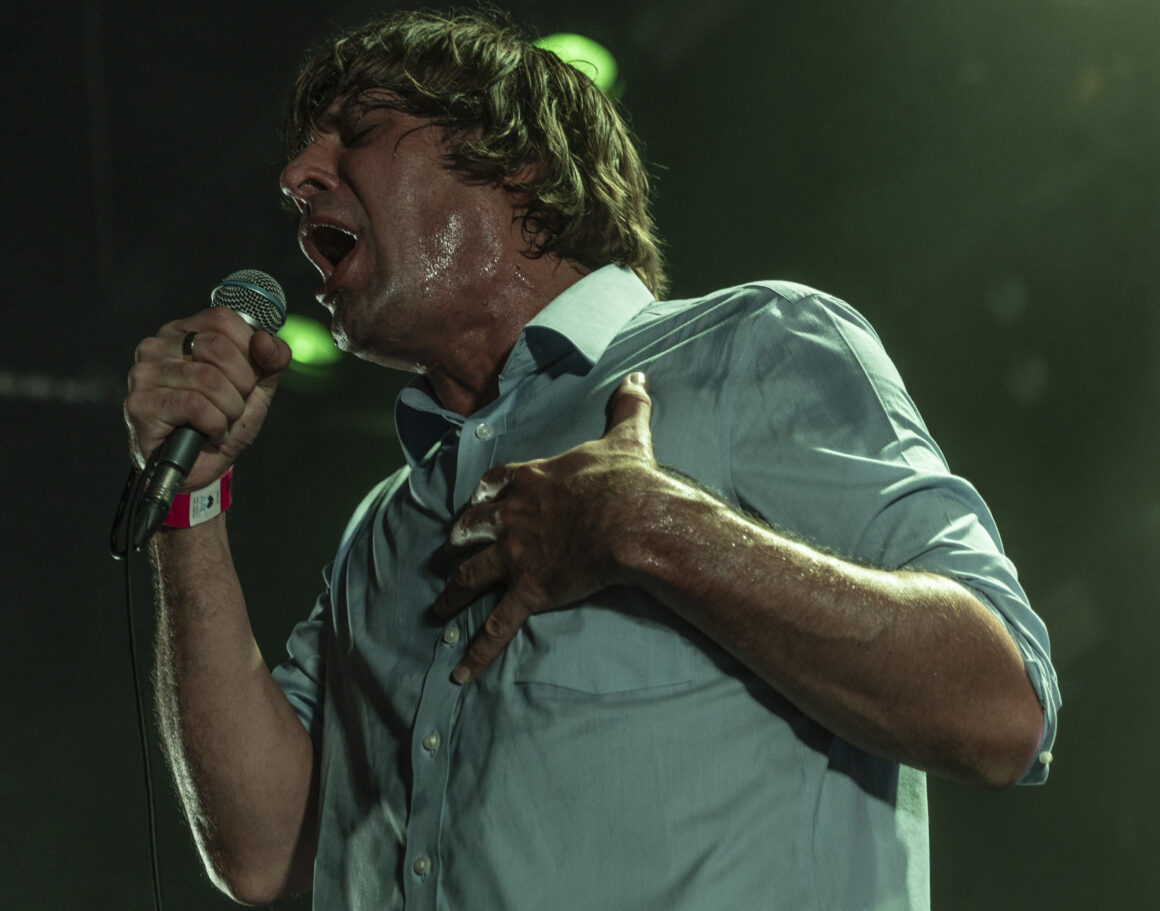
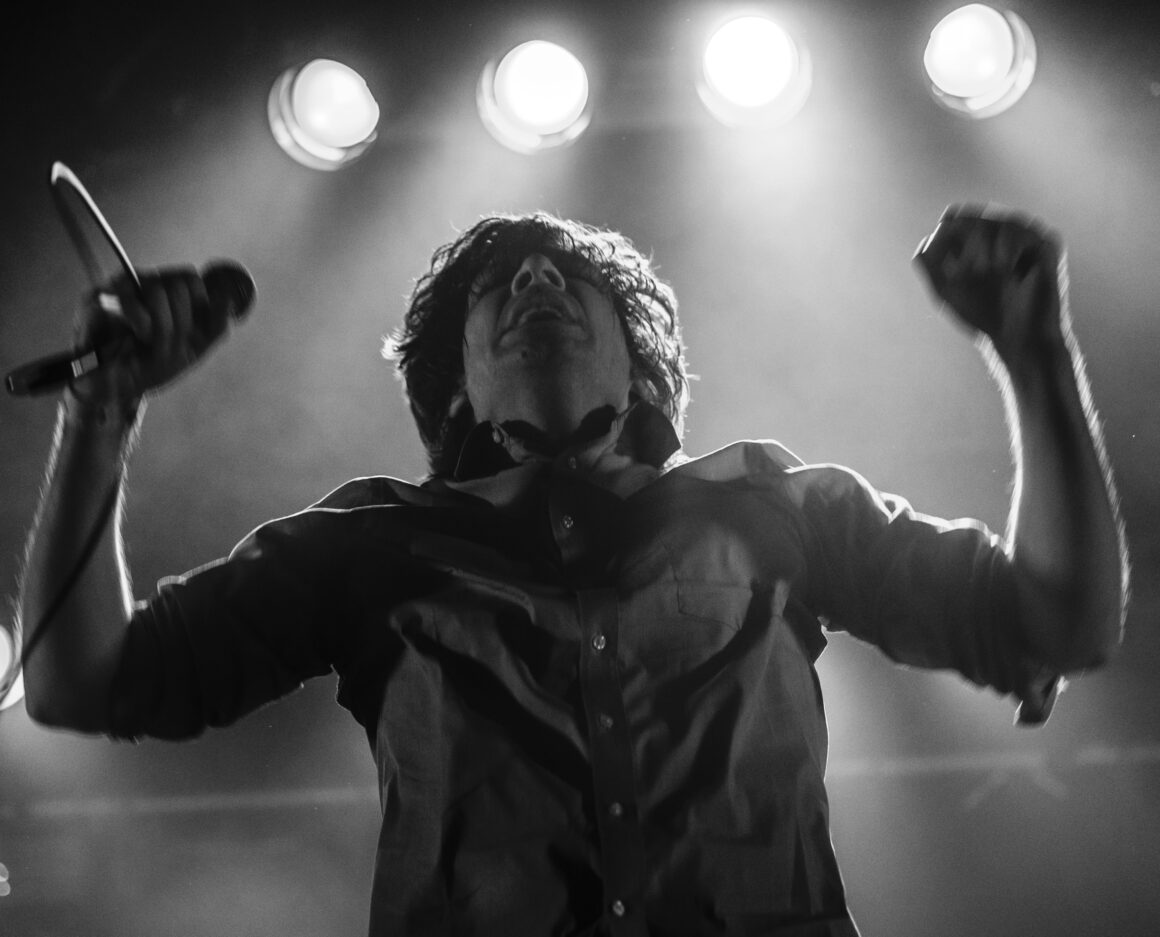
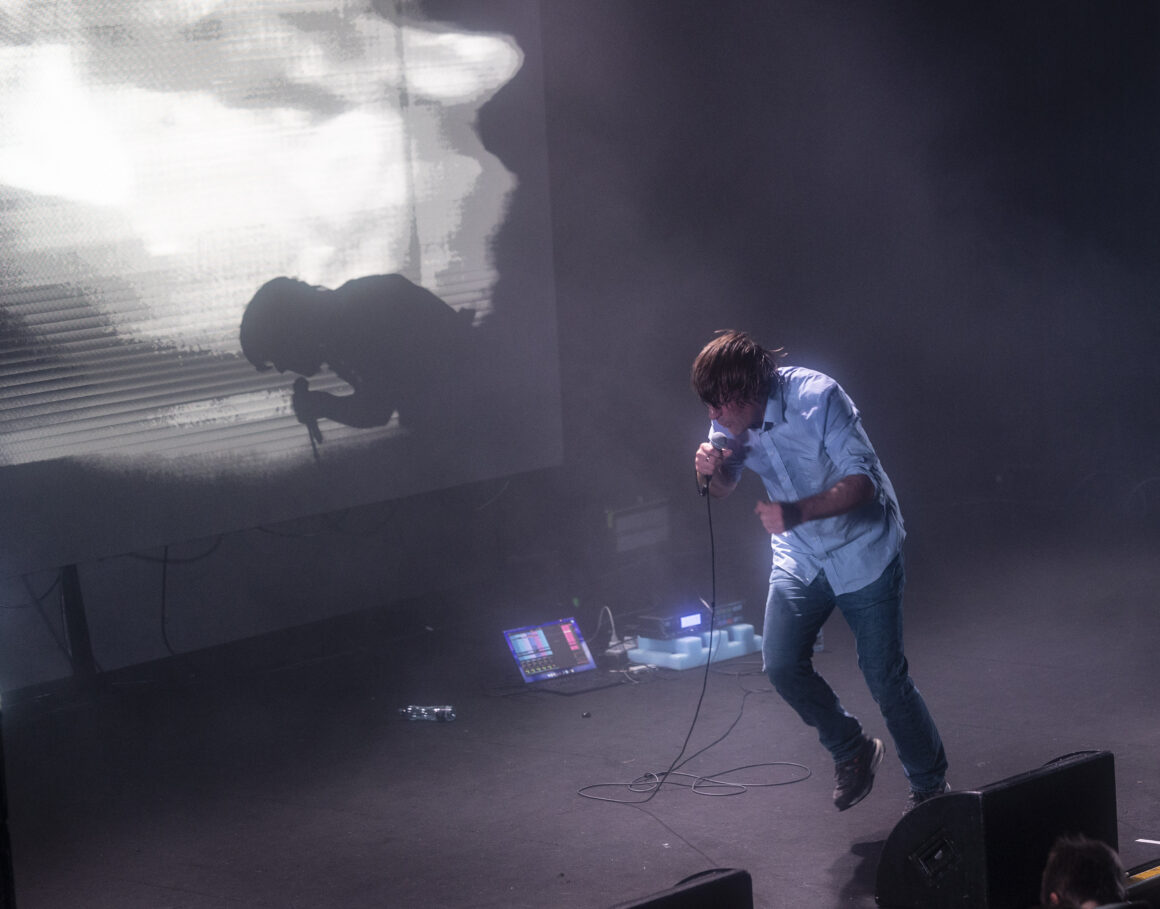
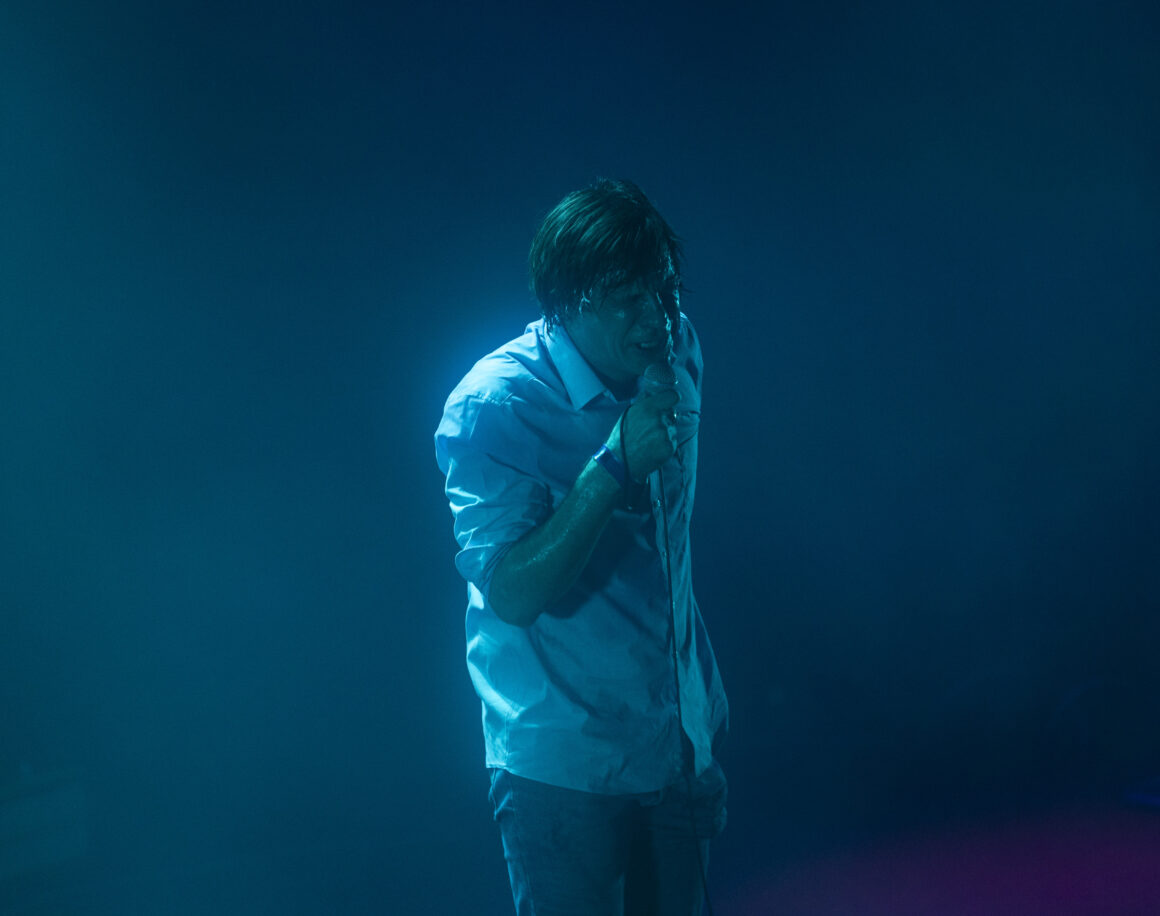
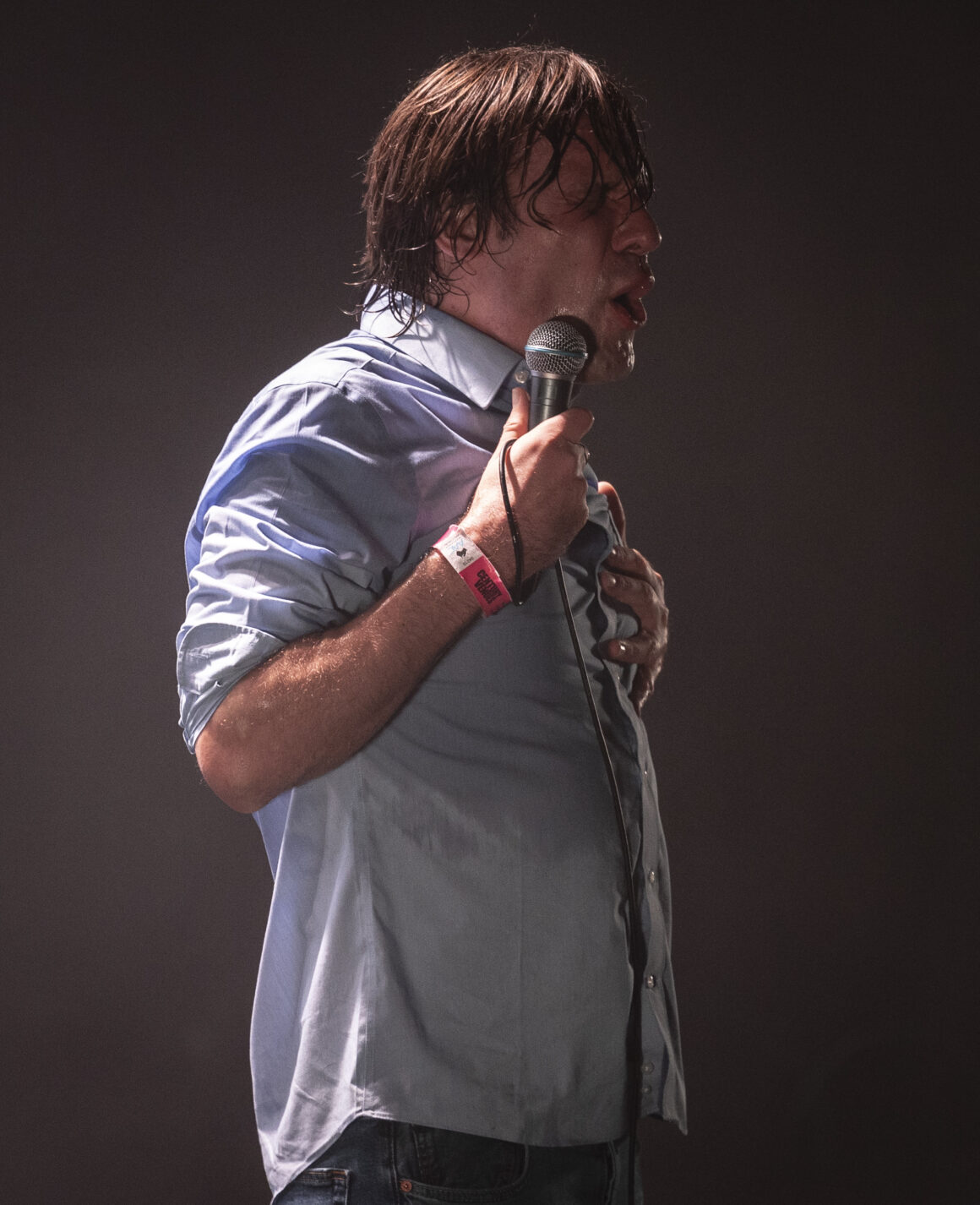
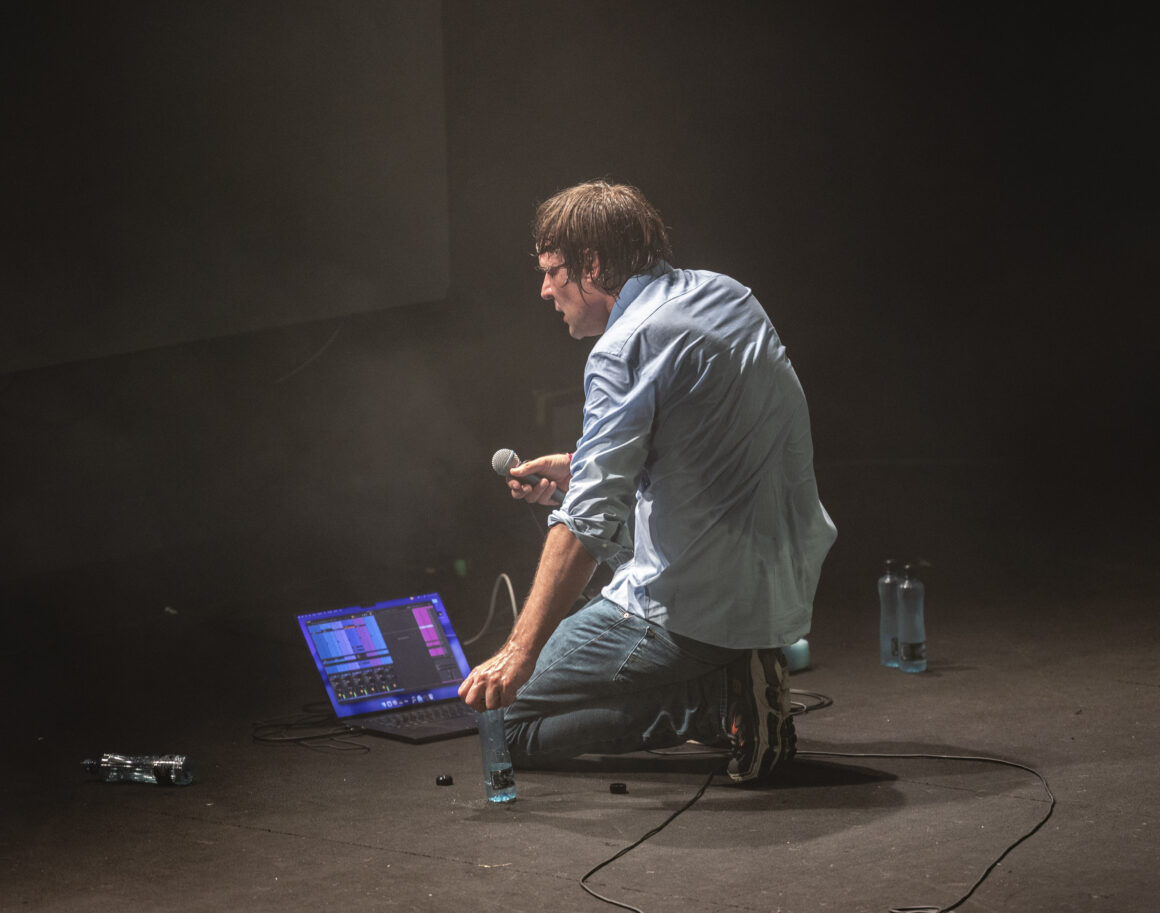
Then Maus arrives already in motion — running on the spot, dropping into burpees, pacing hard, shadow boxing, thumping his chest, like the set demands something physical from him at all times. By the third song he is sweating profusely, and it’s hard not to feel exhausted just watching him. He pulls at his hair, strikes himself with the microphone, and every now and then he bellows out toward the room, the crowd shouting back in response. You cannot take your eyes off him.
The sound hits in waves — basslines that throb, rigid drum patterns, synths that swell and close in. Behind him, the screen tracks everything, capturing each movement in real time so nothing is lost. Every jolt, every sprint, every collapse is doubled, tripled, quadrupled.
That intensity never really lets up. Maus exists in a strange space where control and collapse sit side by side. The songs are tightly structured, almost mechanical at times, but the way he delivers them feels completely unguarded. There’s no distance between him and the material, and because of that, none between him and the room.
Material from Later Than You Think lands with particular weight. Themes of grief, rebirth and spiritual conflict don’t feel theoretical here — they feel immediate, lived through. Repetition becomes something ritualistic, the kind that pulls the crowd in rather than pushing them away.
There’s also a thread of dark humour running through it, cutting through the severity just enough to stop it from becoming suffocating. Maus has always balanced sincerity with something stranger, something slightly off-centre, and it shows here.
What’s striking is how physical it all feels. The sound is big, but it’s the movement that defines the night. Maus doesn’t just sing the songs, he literally throws himself into them, each one feeling like it’s being dragged out in real time.
By the end, the Metro doesn’t feel like a venue so much as a pressure chamber. What lingers isn’t just the sound, but the force of it — the sense that you’ve witnessed something that refuses to sit still, to be neatly understood or easily repeated. You step outside the Metro and you want to grab strangers and try to explain to them what the hell you just saw.
The tour moves to Brisbane and Coorabell next. Full tour details and tickets available at mistletone.net/news/john-maus/
Images Deb Pelser