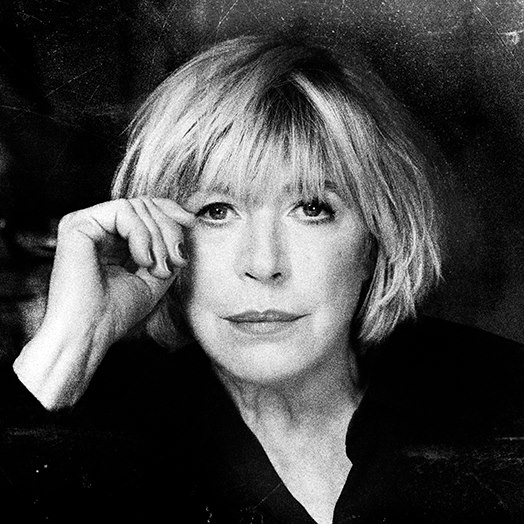
The news of Marianne Faithfull’s death this week hit like a forgotten mixtape unraveling in the stereo—fragile, worn, yet carrying something urgent. For me, Faithfull wasn’t just an icon or a comeback queen, she was a lifeline, smuggled into my teenage rebellion in apartheid South Africa, burned onto a bootleg TDK C90 cassette. It wasn’t supposed to be revolutionary. But when you’re a kid and the regime thinks music will topple their stranglehold, even a scratchy copy of Broken English can feel like contraband.
The censors let Faithfull slip through their nets, probably because they still saw her as the broken waif who whispered “As Tears Go By.” They didn’t bother to listen close. If they had, they would’ve heard the snarl of revolution embedded in that album—acidic and raw, her voice gravel-paved from years of life on the margins. But the censors, as shown in Searching for Sugarman, weren’t great at catching subversion when it arrived disguised in melody. If you think book banning is new, well it isn’t. The apartheid censors famously banned Black Beauty because the word “black” was in the title, but Rodriguez’s Cold Fact became a low-key cultural insurrection, seeping into every corner of the country’s underground. Faithfull, it seemed, did the same for me.
Her version of “Working Class Hero” was the first time I’d ever heard the song. The Beatles were banned after John Lennon had the audacity to say they were bigger than Jesus. It made Lennon public enemy number one for Verwoerd, Vorster and their iron-fisted clan. They couldn’t ban his records fast enough. Faithfull’s cover was a bitter pill—gritty and scornful, soaked in disillusionment. It was the anti-anthem for apartheid youth, though I didn’t fully grasp that then. I just knew it felt dangerous.
They warned us about music. Of course they did. Enter Rodney Seale who wrote a book we were exposed to at school: “Rock Music – The Right to Know” (my translation). It was the soundtrack of paranoia. Chapter one declared that rock music was Satan’s tool, designed to brainwash kids into rejecting authority. Seale’s villain lineup featured predictable names like Iron Maiden and Ozzy Osbourne, but even Boney M and John Denver weren’t safe because, apparently, Denver, singing about Apollo—the sun god—meant you were in bed with Lucifer. Rod Stewart, Boy George, and Mick Jagger were also targeted for their “confused gender identities.” The book claimed that Patti Smith, was promoting lesbianism. Never mind that the lyrics Seale cited from her cover of “Gloria” (“Oh she looks so fine, I’ve got this crazy feeling I’m gonna make her mine”) were originally written by Van Morrison. The fear of rock wasn’t about the lyrics—it was about the loss of control.
I think of Faithfull and her defiance in that context. I think of the many black artists (Mariam Makeba, Hugh Masekela and others) and Afrikaans punk bands that rose up in the late ’80s, like Johannes Kerkorrel and his Voëlvry movement, cranking out songs that spat in the face of nationalist dogma. Inspired by James Phillips’ satirical work as Bernoldus Niemand, they made it clear that apartheid wasn’t just a crime against humanity—it was a generational betrayal. These white kids, many of whom had been conscripted into the South African Defence Force to fight proxy wars in Angola and Namibia, realised that the same government sending them to die was feeding them lies. Their rebellion wasn’t just musical; it was existential.
The tragic thread continues: Richey Edwards, the enigmatic Manic Street Preachers lyricist, vanished 30 years ago this month. He had written “Kevin Carter,” a song about the South African photojournalist whose Pulitzer Prize-winning image of a starving child stalked by a vulture still haunts the collective consciousness. Carter’s story mirrors the brutal architecture of apartheid. He served in the military, as all white boys had to, and later turned his lens on the horror the government tried to keep hidden. Carter’s photos helped expose the rot beneath the propaganda, but the trauma stayed with him. His suicide was as much an indictment of the system as it was a personal tragedy.
What gets me is how much of this feels recycled. The tactics that kept apartheid alive—the disinformation, the censorship, the scapegoating—are still part of the playbook today. When I see the White House trolling Selena Gomez on X for showing empathy for migrants, I recognize the pattern: vilify compassion, make empathy the enemy. Faithfull’s death isn’t just a closing chapter; it’s a warning that the ghosts of fascism don’t stay buried. The same mechanisms that propped up apartheid—weaponising culture, policing morality—are being repurposed to stoke division globally.
What Faithfull’s death reminds me of, and what Richey’s disappearance underscores, is that music has always been at the front line. Faithfull didn’t just make records; she made statements—about class, about survival, about resistance. Broken English wasn’t just her finest work; it was a battle cry, tucked inside a contraband cassette. When I played it alone in my room, the speakers crackling like distant gunfire, I wasn’t just listening. I was learning.