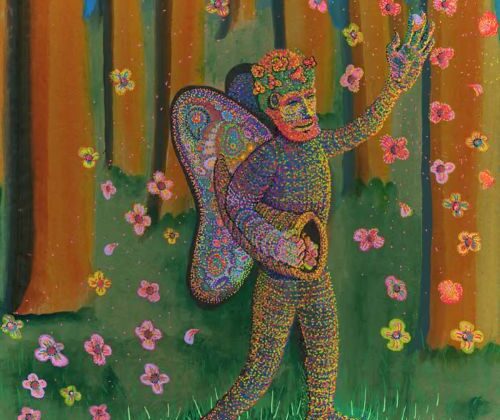

Brooklyn-based, Budapest-born itinerant songwriter Atticus Kane shares ‘Love Me Not’, the latest single from the new album News From Delphi, which is out now.
Brimming with a driving indie-rock energy, the track transforms the artists experience of immigration and belonging into a wider meditation on the contradictions at the heart of American identity. The tracks dry, tight production style leans into a 70s undertone before an unexpected pedal steel guitar enters bringing with it both an atmospheric shift and a country undertone.
As the track progresses, the influence of the likes of Dire Straits and The Rolling Stones come to the fore, encapsulated by the Mark Knopfler-esque guitar solo.
Kane’s songwriting is rooted in what might be described as analog love in an unjust world, moving between intimate experience and broader social uncertainty. On ‘Love Me Not’, that tension emerged from an unlikely source: a string of political robocalls: “The inspiration for ‘Love Me Not’ came from a string of robocalls I was getting from a Florida politician running on a harsh anti-immigrant platform. I used to live in Miami so I must still be on a list.”
For Kane, the calls exposed a contradiction between the rhetoric of anti-immigration politics and the long-established mythology of America as a cultural melting pot shaped by generations of immigrants. That tension provides the emotional and conceptual centre of ‘Love Me Not’, a song that wrestles with the increasingly complicated question of who gets to be considered a “real American.”
“The push and pull is where the ‘love me, love me not’ concept came from,” Kane explains. “I am proud to be an American immigrant, and I believe that if you love something you have to be honest and critical about its flaws. After all, dissent is the highest form of patriotism.”
Rather than reducing its subject to a straightforward political statement, ‘Love Me Not’ inhabits the contradiction at its core. Kane’s lyrics explore the uneasy space between affection and disillusionment, capturing the experience of loving a place while simultaneously confronting its failures. Lines such as “loving you is like a crime” sit alongside the admission that this same relationship can “cure me with what makes me ill,” reflecting the complicated bond between belonging and criticism.
That tension also informs Kane’s understanding of what it means to challenge the country he has chosen to call home. For him, criticism is not necessarily an expression of rejection, but can instead be evidence of investment in the possibility of something better.
“I want to be part of the fight that ensures America continues to aspire to be a more perfect union where anyone regardless of their background, religion, or class, can realize their full potential.”
Listen below: