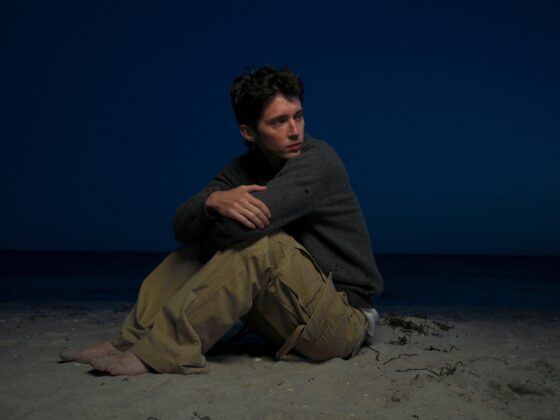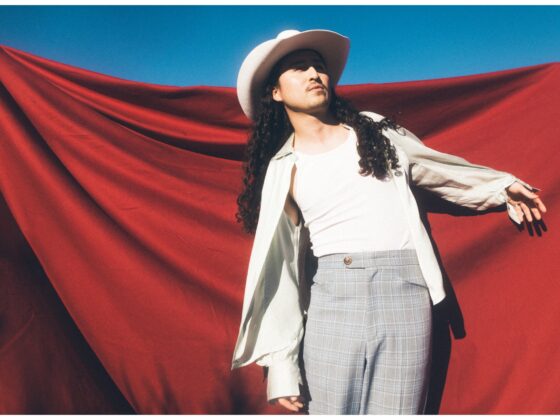
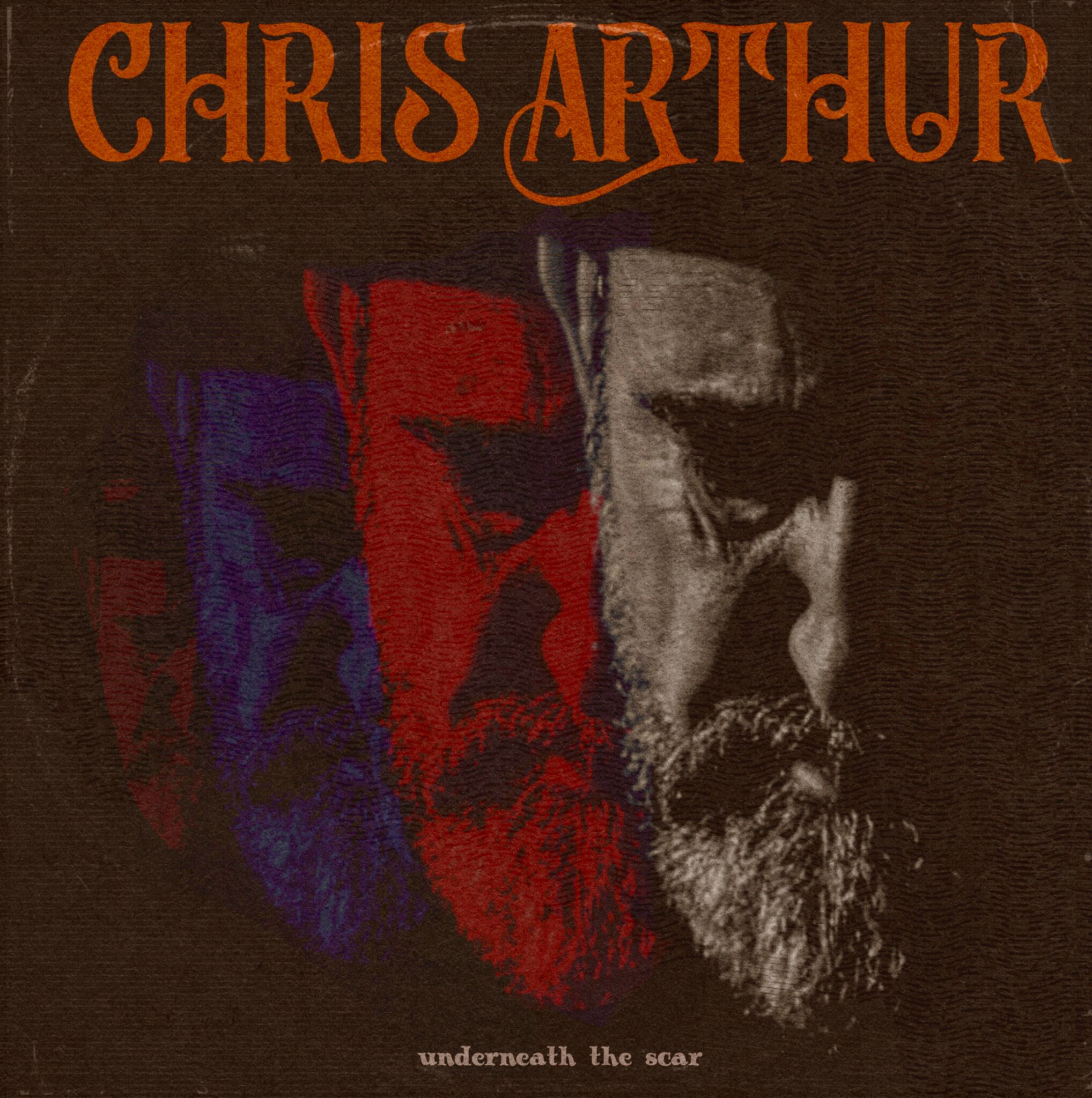
With the release of his debut album, Underneath The Scar, Chris Arthur finally delivers a full body of work having spent years watching from the wings.
For a long time, Arthur remained just outside it, close enough to the music world to understand its pull, but never quite convinced that he belonged at its centre. It was the collapse of a relationship that changed that. Thrown into a period of heartbreak and uncertainty, Arthur found himself reaching for the one thing that had always helped him make sense of difficult experiences: songwriting.
The songs came quickly. At first, there was no grand plan for an album, or even an intention to release them. Arthur simply recorded voice memos and began sending them to a handful of close friends. One of those friends, however, heard something worth pursuing.
That friend was Eric Sanderson, co-founder and multi-instrumentalist of acclaimed New York band Augustines, who would go on to produce, record and mix Underneath The Scar.
For Arthur, Sanderson’s role was about considerably more than stepping behind the studio desk. The two have been friends for more than 25 years, with their paths becoming particularly intertwined when Arthur joined Sanderson’s former band Pela as Tour Manager. He later continued working alongside Augustines in various capacities during much of the band’s rise between 2011 and 2016. Arthur also featured in Rise: The Story of Augustines, Todd Howe’s award-winning documentary chronicling the band’s extraordinary journey.
That history gave Arthur and Sanderson a rare shorthand, one built on trust, familiarity and years of shared experience. It proved crucial when Arthur began confronting the vulnerability at the heart of his own record.
“Eric believed in what I was doing before I fully believed in myself,” says Arthur. “I was broken, dealing with lots of self-doubt and now was adding imposter syndrome into the mix and questioning whether I was wasting everyone’s time. His encouragement and my comfort level with him really provided me the space to be in such a raw and vulnerable state. This album probably doesn’t get made without him.”
If Sanderson provided the confidence to keep going, heartbreak supplied the fuel. Arthur describes the songwriting process as something closer to an emotional necessity than a creative exercise.
“The songs started pouring out like I was bailing water out of me so I wouldn’t drown,” Arthur recalls.
That immediacy remains central to Underneath The Scar. Rather than reshaping the material into a more conventional album narrative, Arthur retained the songs in the order in which they were written. The result is a record that functions almost like an emotional diary, tracing the progression of a relationship’s collapse and the complicated aftermath that follows.
Opening with the first single, “All That Glitters Isn’t Gold,” the album moves through grief, reflection and resilience before gradually arriving somewhere more hopeful. Its chronology gives the ten-track record a sense of movement: these aren’t simply songs about heartbreak, but snapshots of someone attempting to understand what happened while still living through it.
That intimacy is amplified by the album’s musical approach. Built around acoustic-driven songwriting and organic performances, Underneath The Scar favours emotional honesty over studio gloss. There is a deliberate sense of closeness to the material, allowing the songs to retain the imperfections and immediacy of their origins.
In an era when music is increasingly consumed in fragments, a playlist shuffle here, a short-form clip there, Arthur has made something that asks to be experienced as a whole. Underneath The Scar is structured as a complete story, with each song carrying its own emotional weight while contributing to a larger arc of loss, recovery and renewed creative confidence.
For an artist who spent years wondering whether he was ready to step through the curtain, the album’s existence is itself an act of arrival.
Originally from Buffalo, New York, and now based in Southern California, Arthur approaches songwriting as a way of making sense of the experiences that leave permanent marks. Underneath The Scar may begin with his own heartbreak, but its ambition is broader: to take something intensely personal and turn it into a space where listeners can recognise their own stories.